Galinsoga

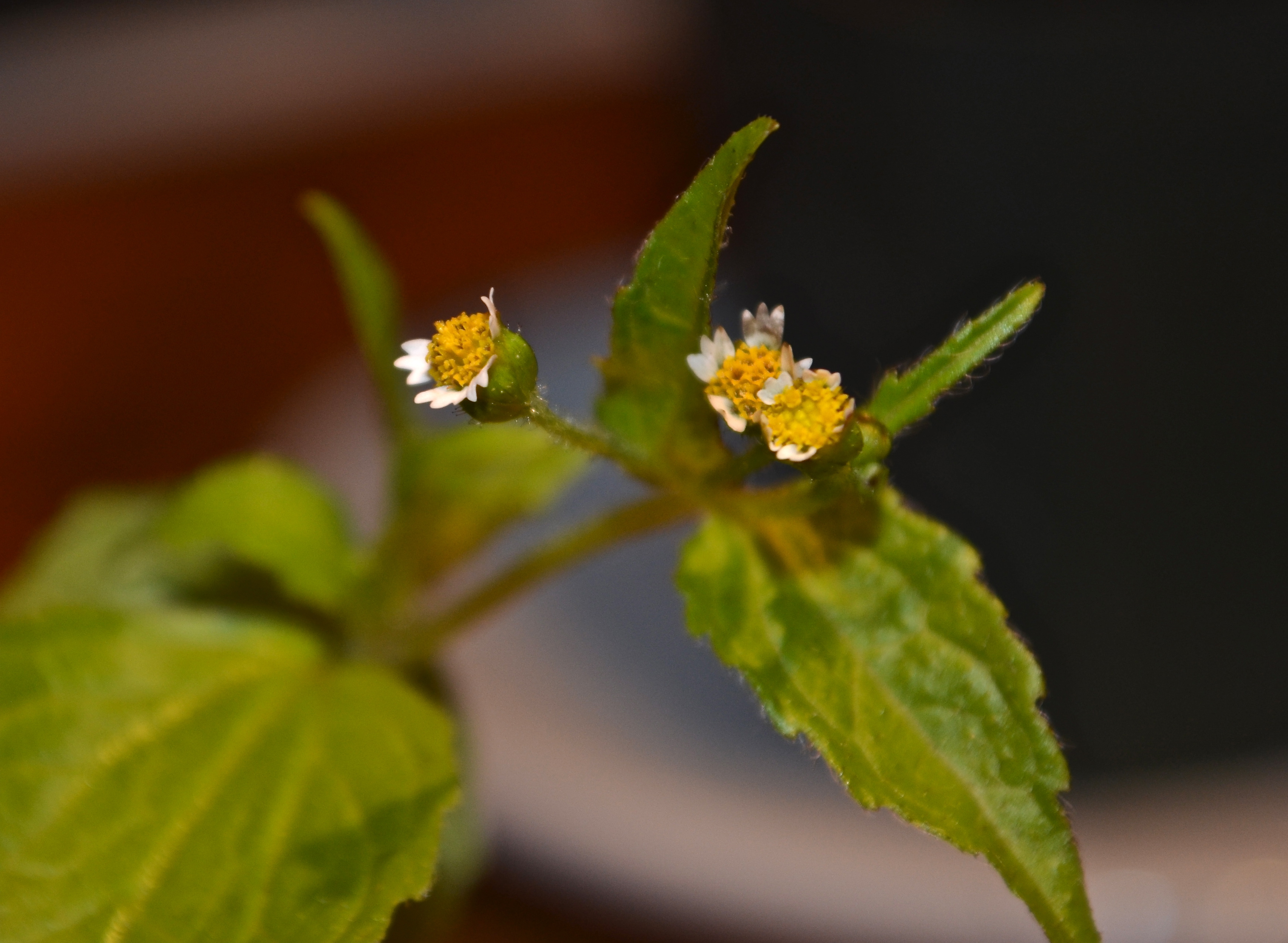
We’ve been getting our vegetables from the Dover Farm. B cleaned the beet greens and found this sprig collected with them. Naturally he saved it for me to identify and I immediately swarmed onto it (do you need more than one person to swarm?) and figured out what it is. Daisy family. Native to Peru, brought to Britain in 1796 where it escaped to the wild. Sometimes in Britain the name Galinsoga turns into Gallant Soldiers, and from there becomes Soldiers of the Queen — an awfully noble name for a pretty humble-looking plant. Used as a spice herb in Colombia, leaves eaten in salads. The juice is a coagulant and antibiotic!

Galinsoga, Guasca, Gallant Soldiers, Potato Weed (Galinsoga parviflora)

Bonus picture: the farm pick-up area.

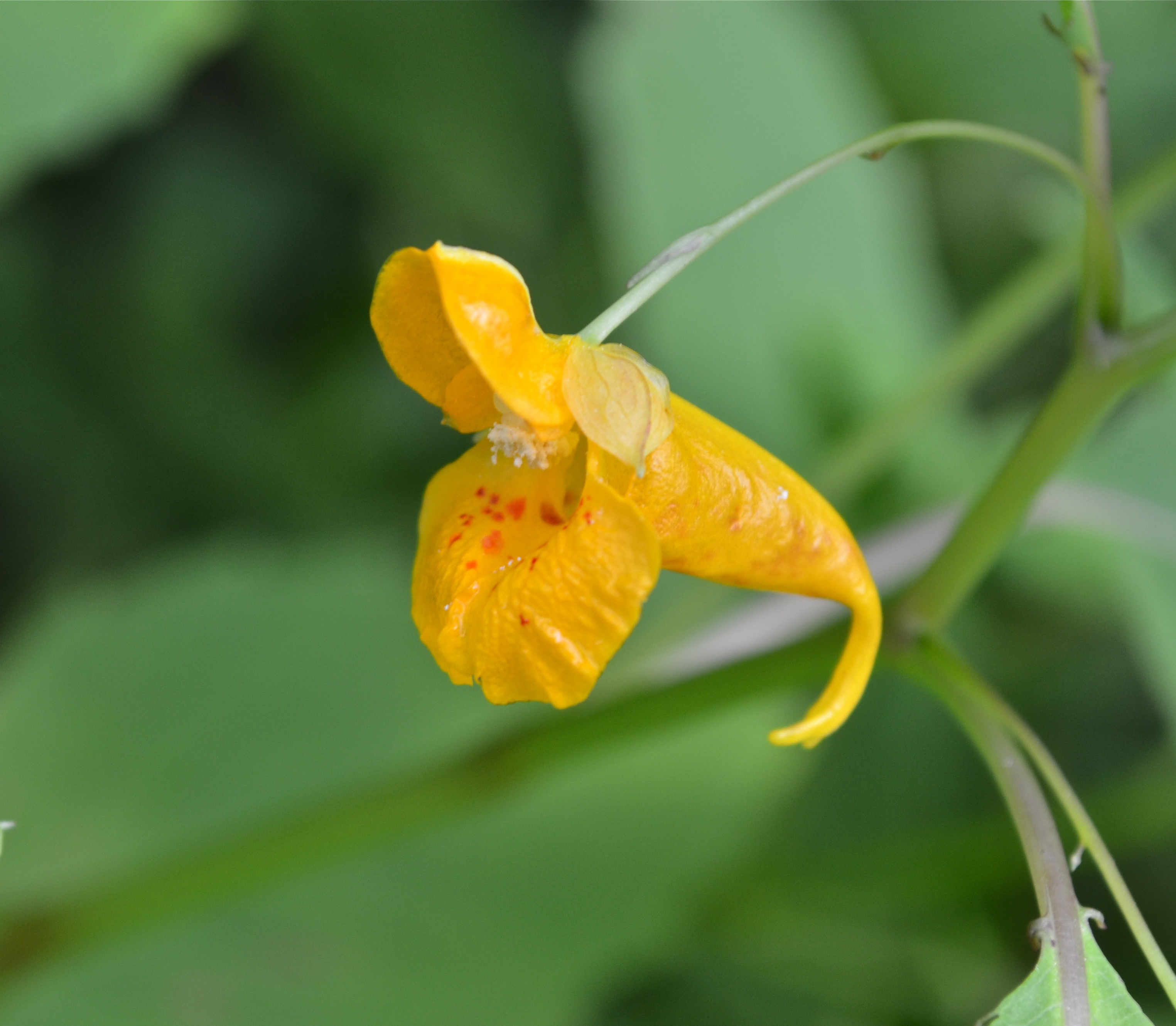
Jewelweed

A plant that loves to be near water. Called jewelweed because if a leaf is held underwater it appears silvery, and called touch-me-nots because when the seed pods are ripe enough, a light touch will make them pop open and shoot out their seeds. Native to the U.S.

Common Jewelweed, Touch-me-not, Spotted Jewelweed, Orange Balsam (Impatiens capensis)

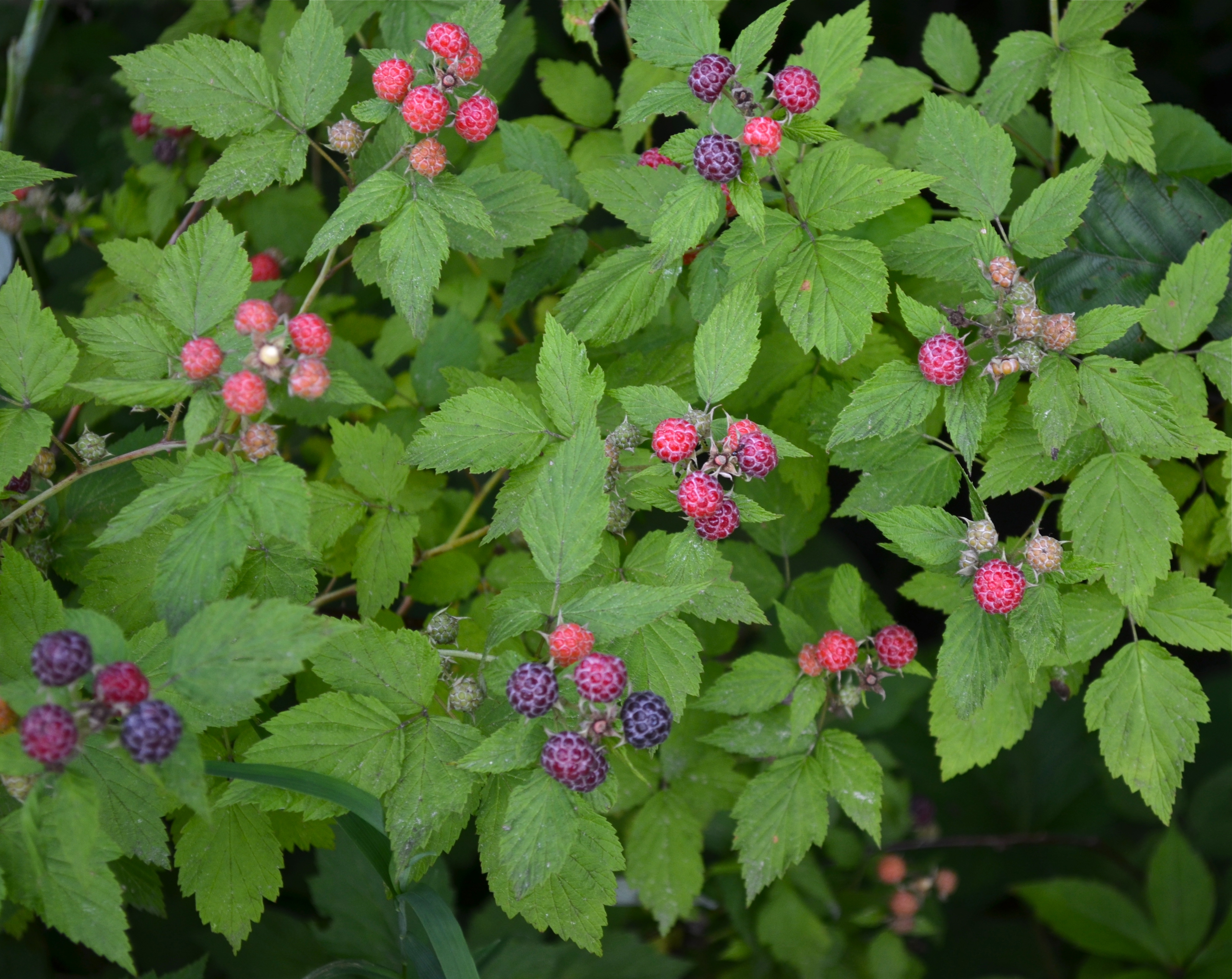
Black Raspberries

I missed these when they were flowering. A shrub with arching thorny canes. Native to eastern North America. Delicious!

Black Raspberries (Rubus occidentalis)

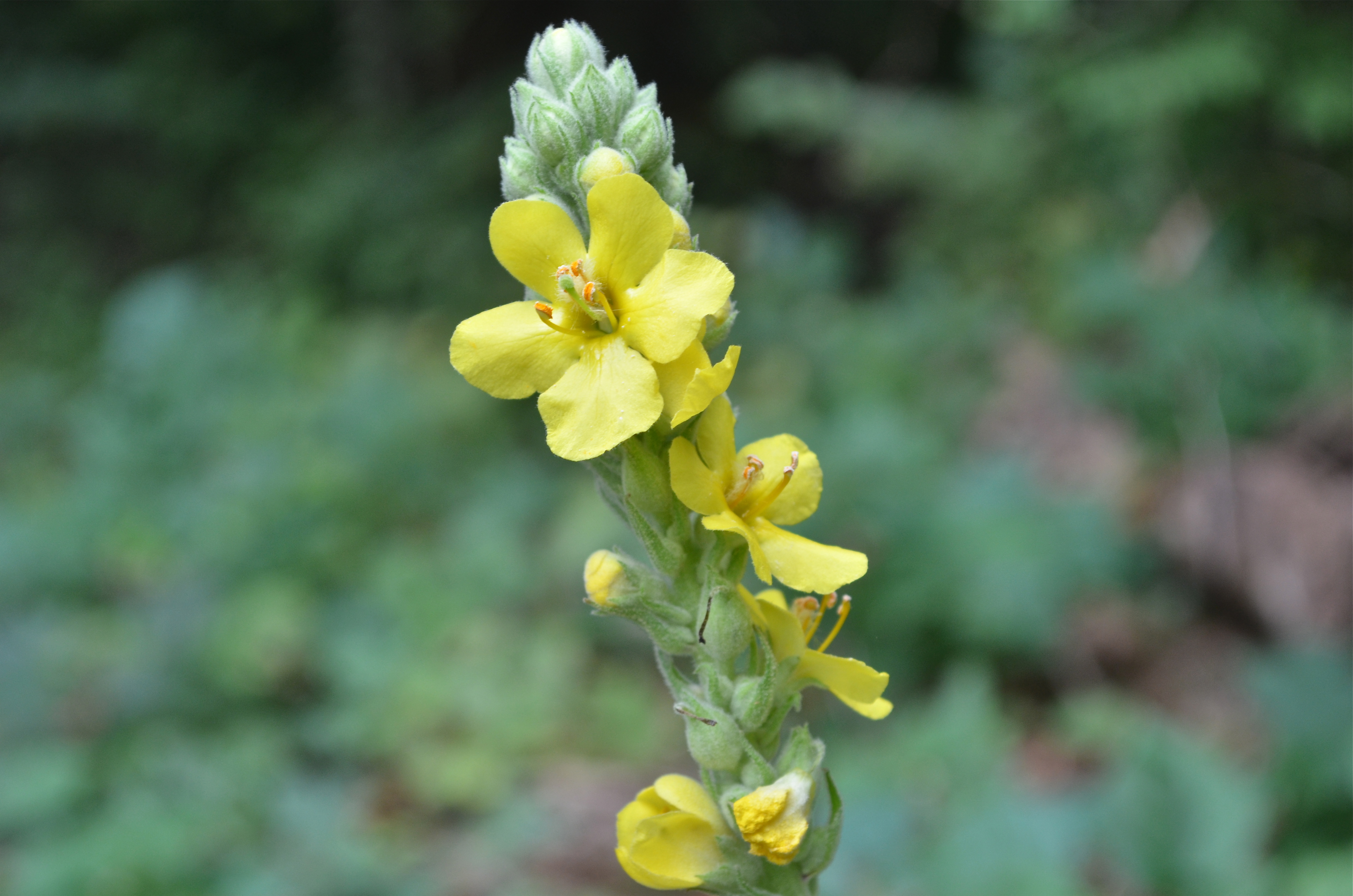
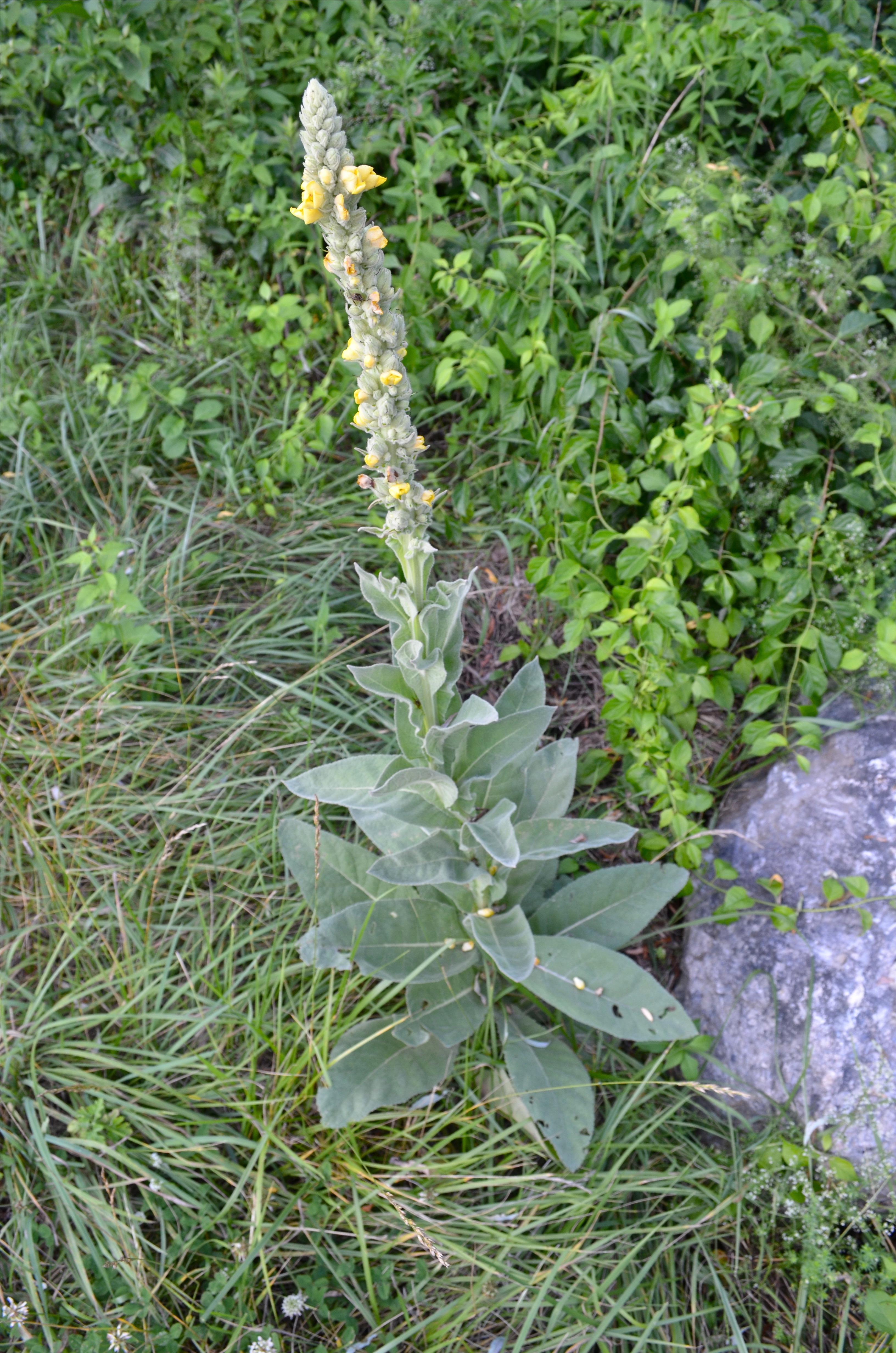
Common Mullein

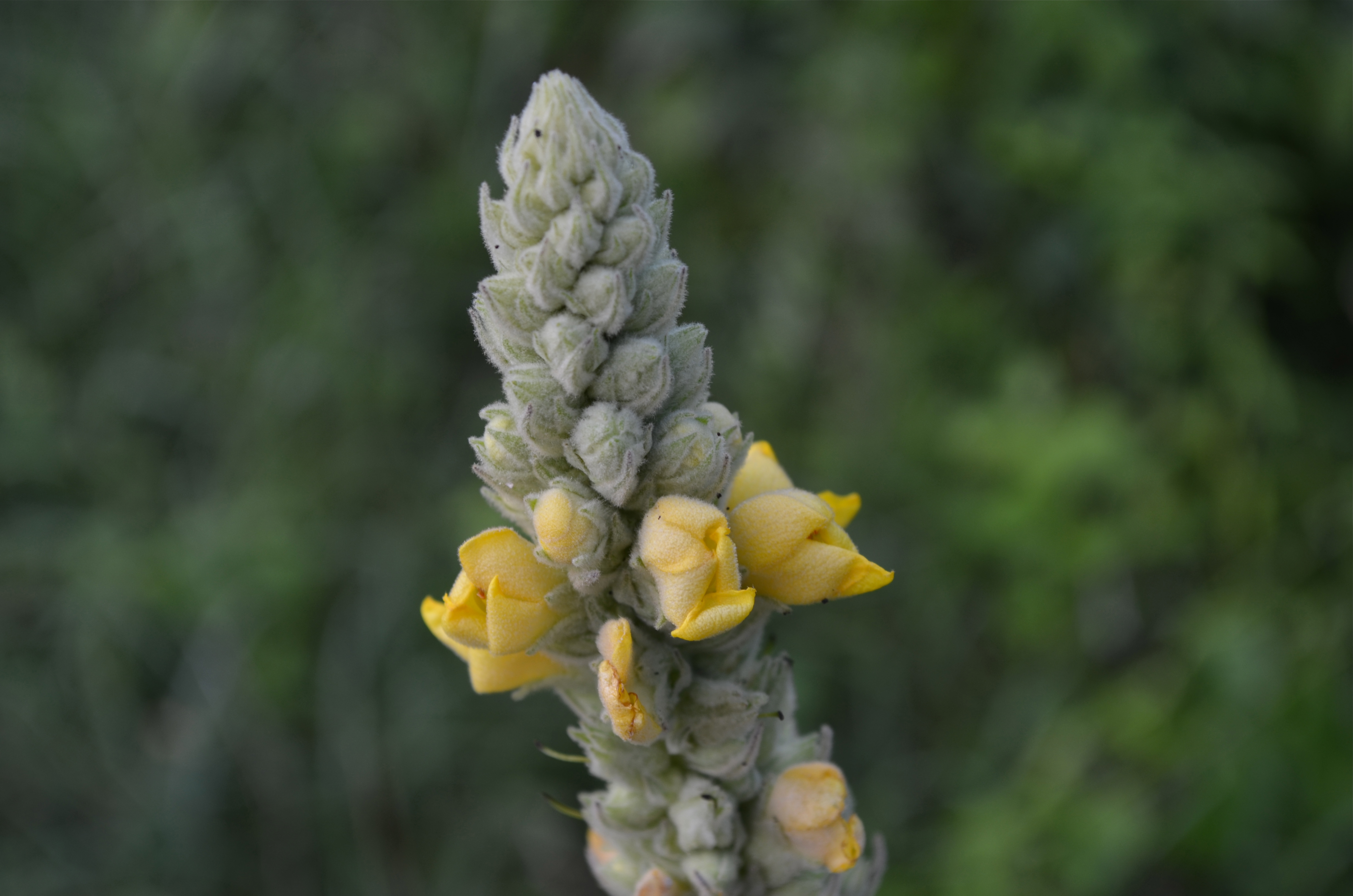
Near a bridge over the Charles in Sherborn. This is one of those really tall vigorous weeds– the flower spikes can reach 10 feet! They live to be 2 years old — the first year they’ll have a rosette of foliage only, and the second year the flower spike will appear, and that’s it. Each plant can make over 100,000 seeds in a year, and the seeds are very hardy and can last for dozens of years… so they can wait in the soil for the right conditions. It’s considered a pioneer plant, meaning when an area has been burned, for instance, this is one of the first plants that will appear. Was introduced to Virginia from Europe. Not many creatures will eat mulleins — mostly insects that also are native to Europe. Some birds eat the seeds. The leaves are soft and furry — hummingbirds line their nests with them!

Update: the new first shot is of an open blossom, shot in my yard in late September.

Common Mullein (Verbascum thapsus)

New Jersey Tea

Perennial shrub.  A favorite of bees, deer, rabbits… During the Revolutionary War, the colonists used it as a tea substitute! The roots contain a blood-clotting chemical. Native.

New Jersey Tea (Ceanothus americanus)

Cow-wheat

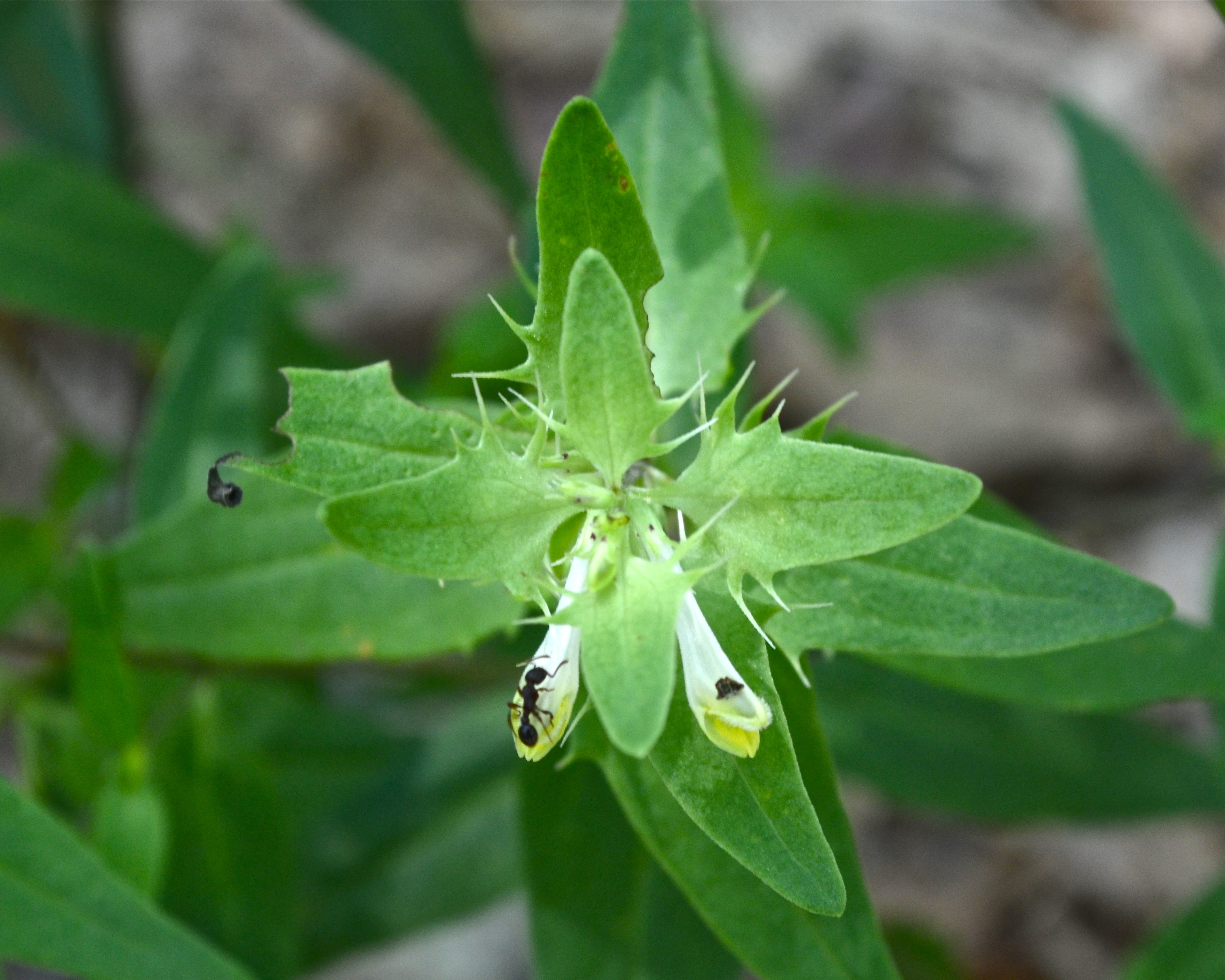
Annual. About a foot tall. Delicate flowers with yellow tongues. Figwort family. Native.

Cowwheat (Melampyrum lineare)

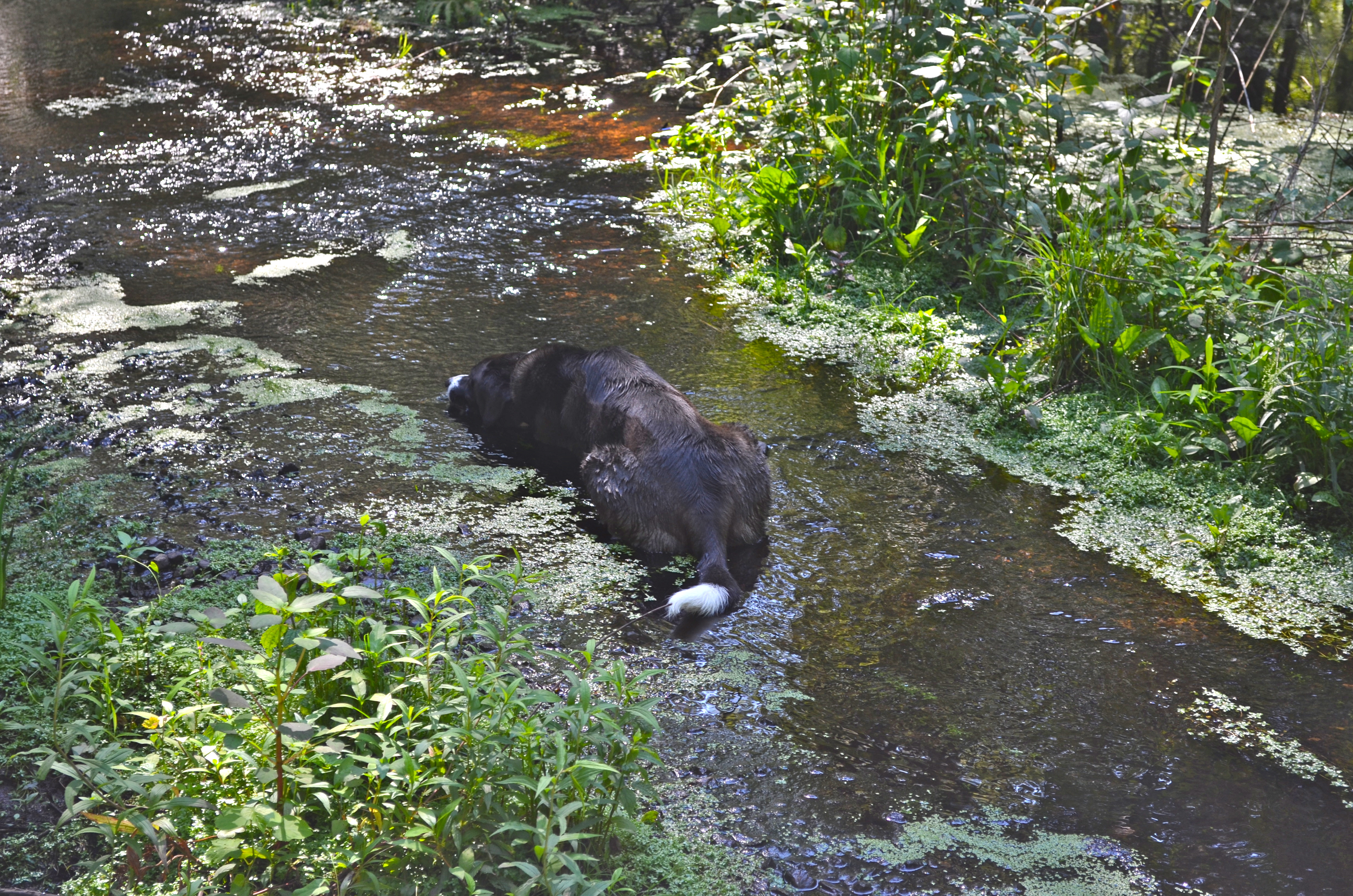
Bonus picture: Beavers have moved into this forest, and their dam has flooded part of the trail. Lucy was hot, so she took the opportunity to get as wet as possible.

Sweet Meadow Rue

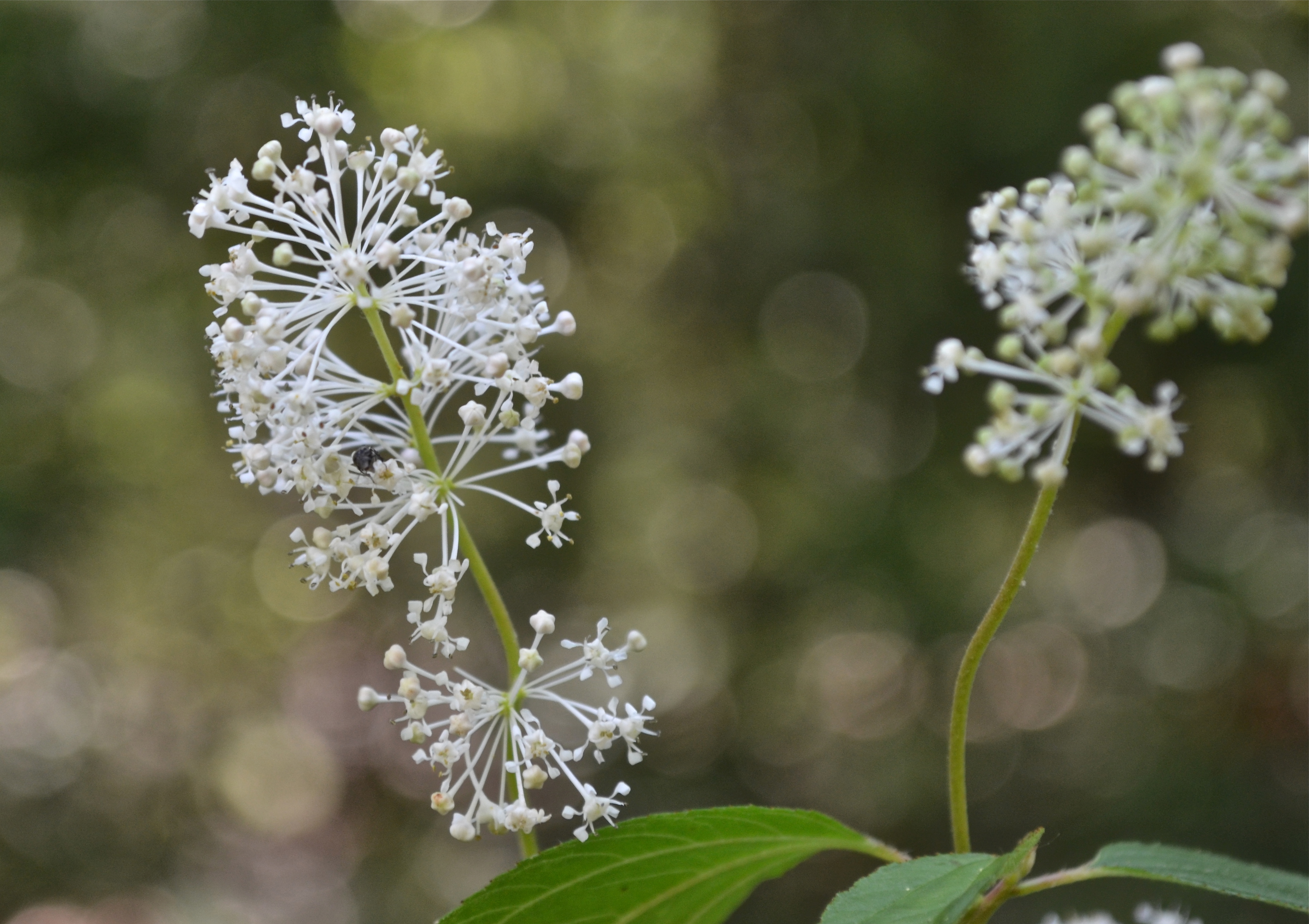
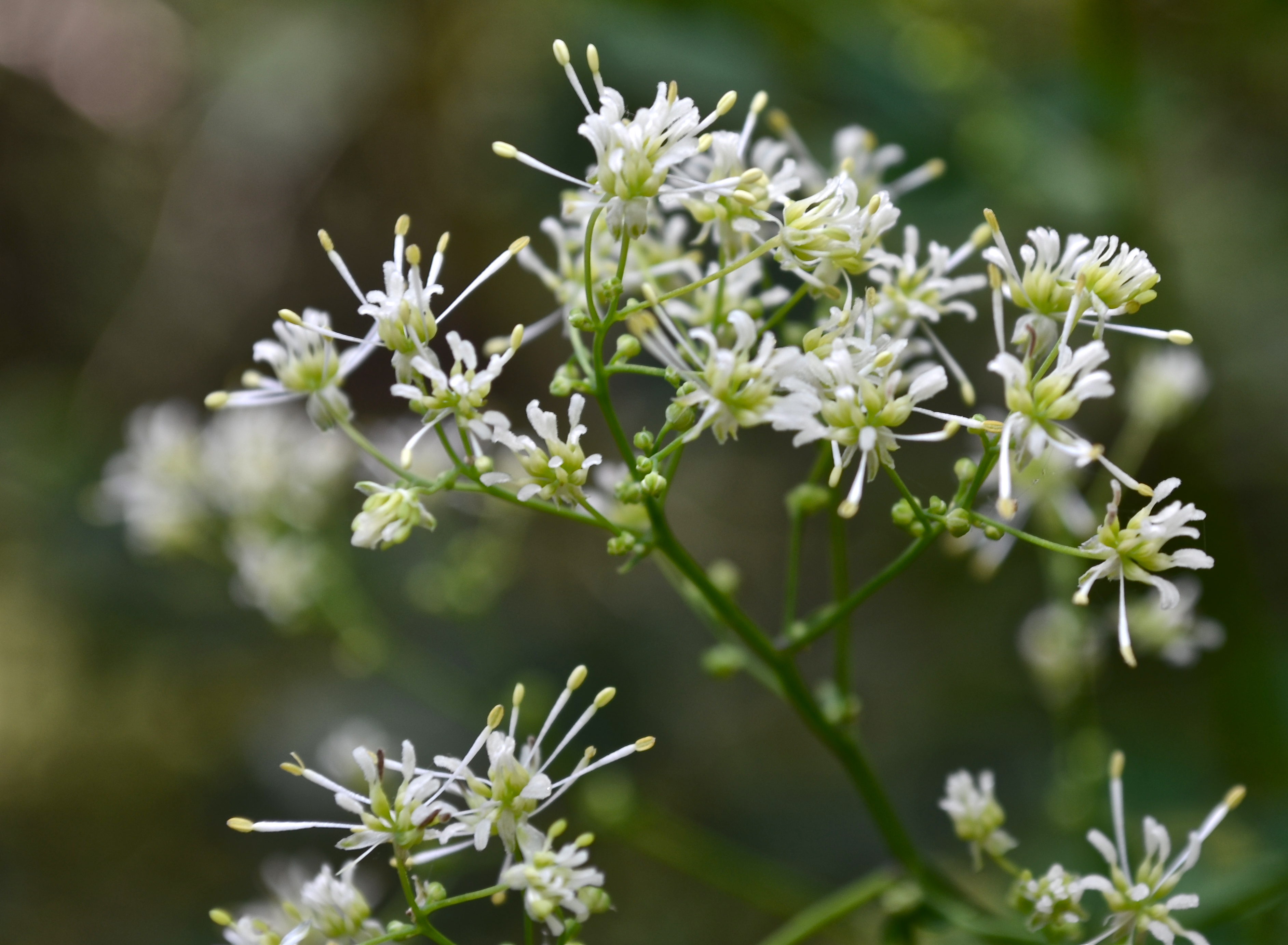
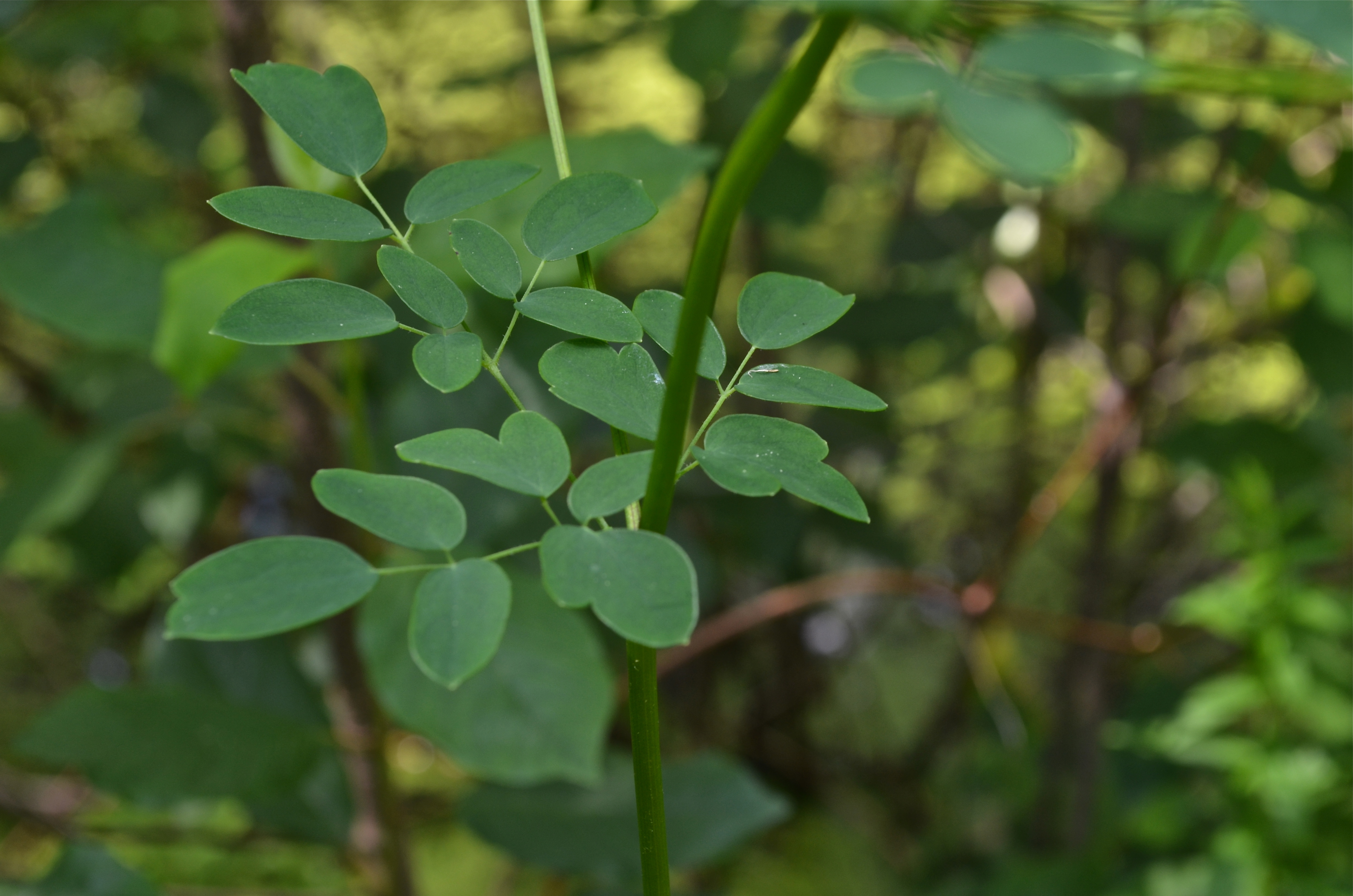
A tall shrub-like wildflower. Foliage similar to columbine. This is an area we haven’t been to for months, and it was full of flowers new to me, and not appearing at our other usual places. This is one of those herbs considered to have magical properties (good for divination).

Sweet Meadow Rue (Thalictrum aquilegifolium)

Enchanter’s Nightshade

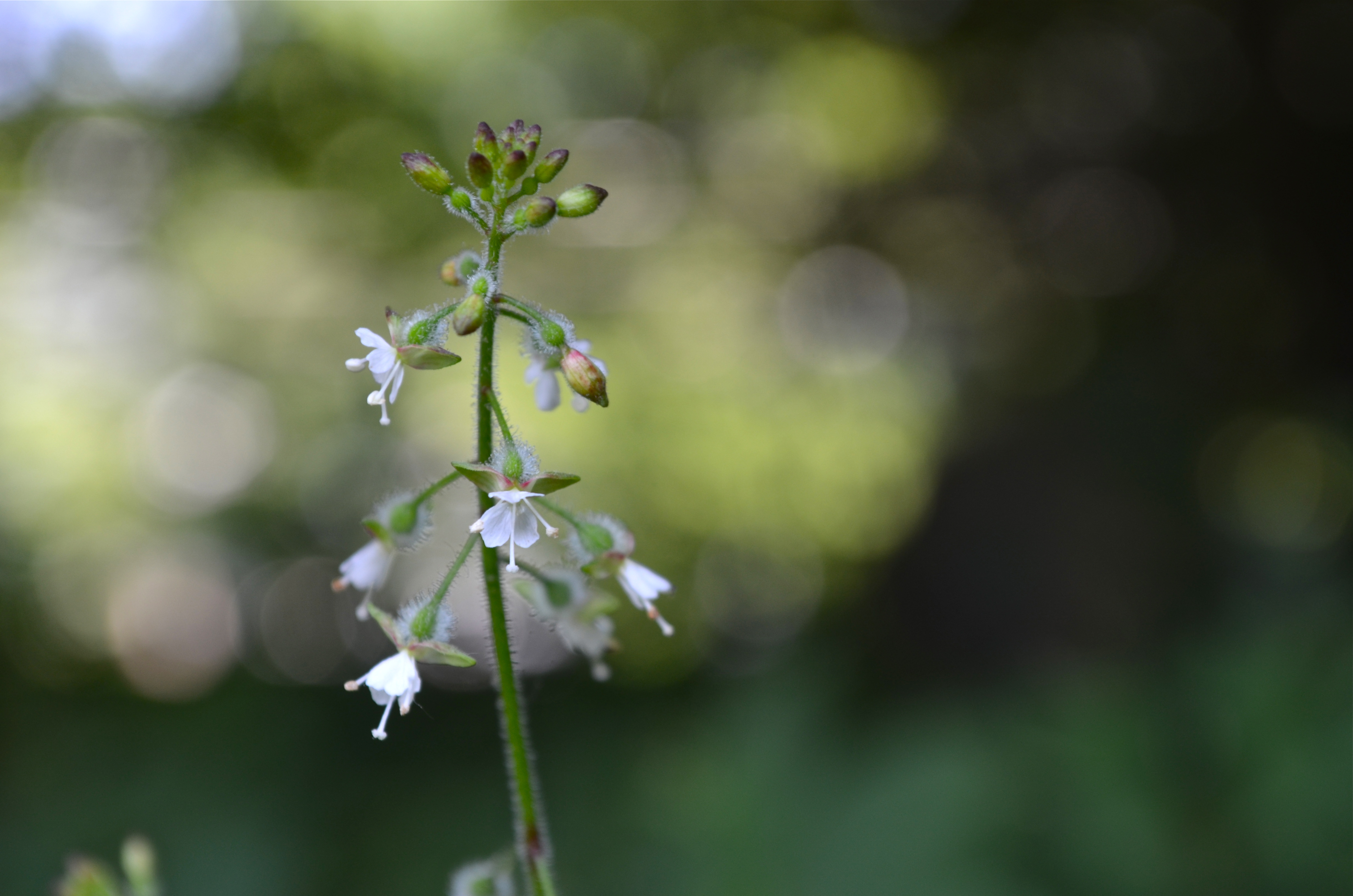
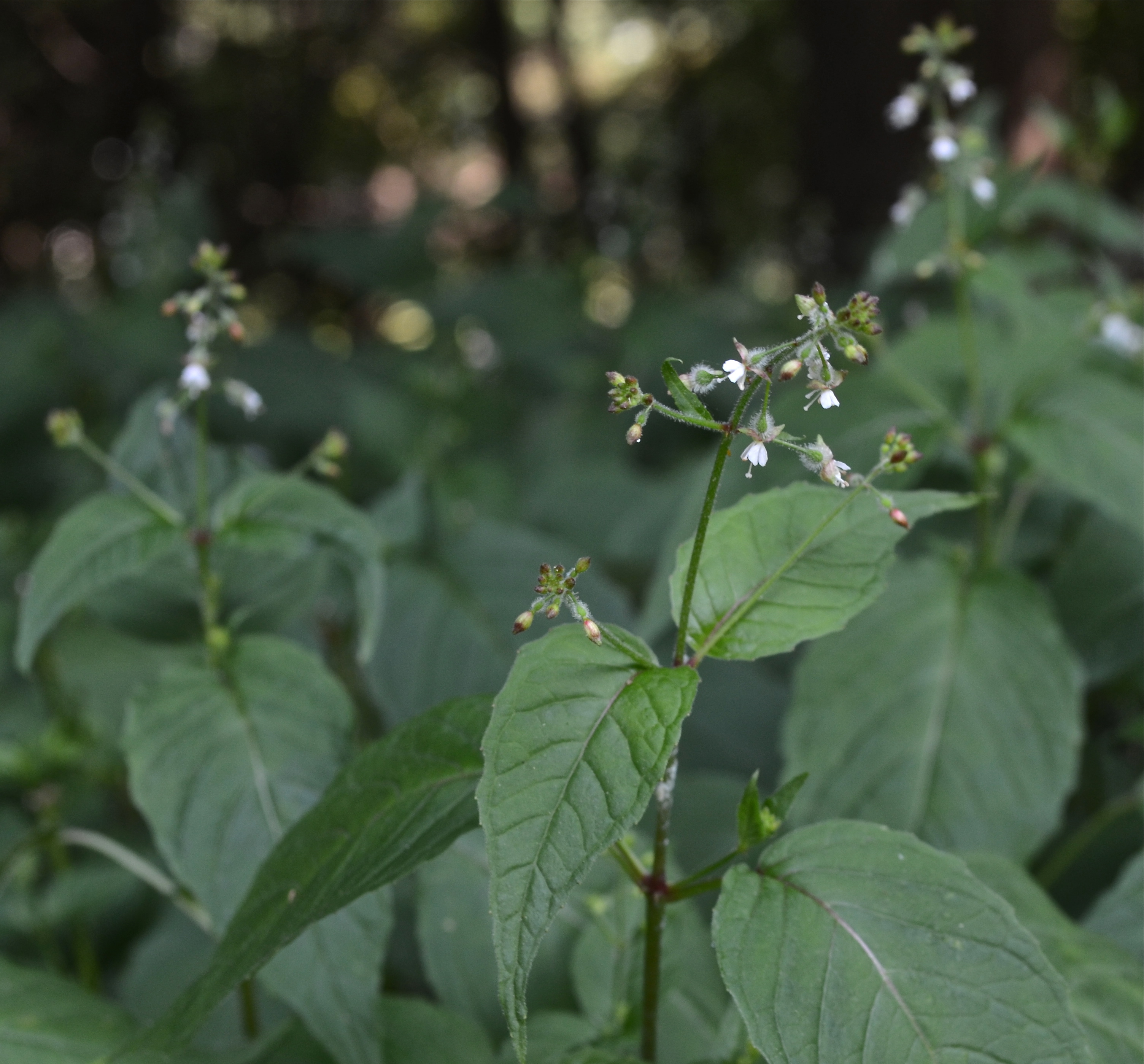
The genus Circaea is named after Circe the enchantress in Greek mythology, who was said to have used this plant for her magical purposes.  I think this is one of the best names! Has only two petals, but they are deeply lobed so they look like four. Evening Primrose family. (Not related to deadly nightshade.) Native.

Enchanter’s Nightshade (Circaea lutetiana)

Asiatic Dayflower


A truly blue flower. Very common and little noticed, but it’s pretty great up close. I can’t believe it doesn’t have a better name! A medicinal herb in China, and a source of dye in Japan. Spiderwort family. Native to Asia.

(Bonus picture: the two blue petals remind me of a photo I took recently at a dance workshop with Alanah of New York.)

Asiatic Dayflower (Commelina communis)

Panicled Hawkweed

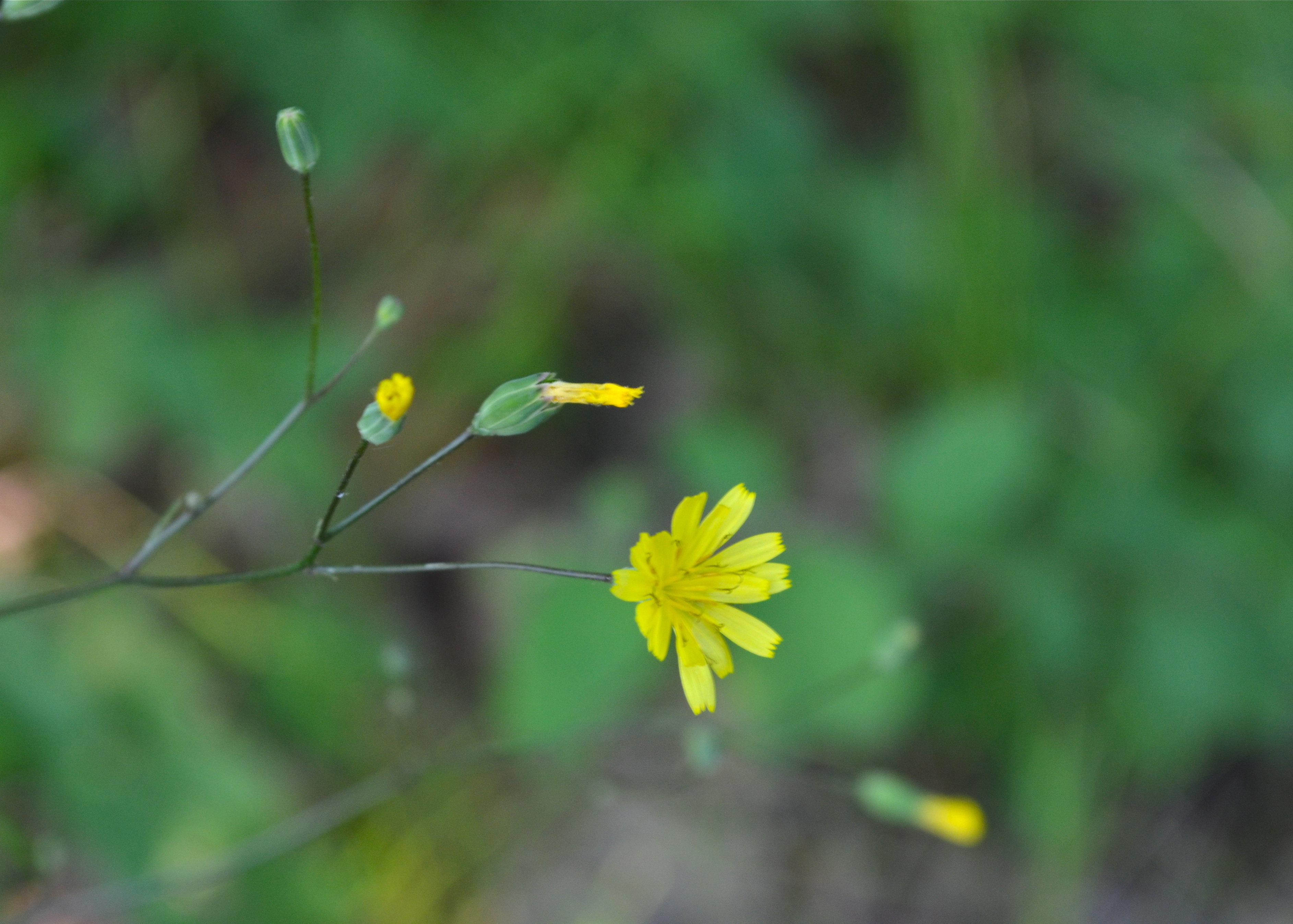
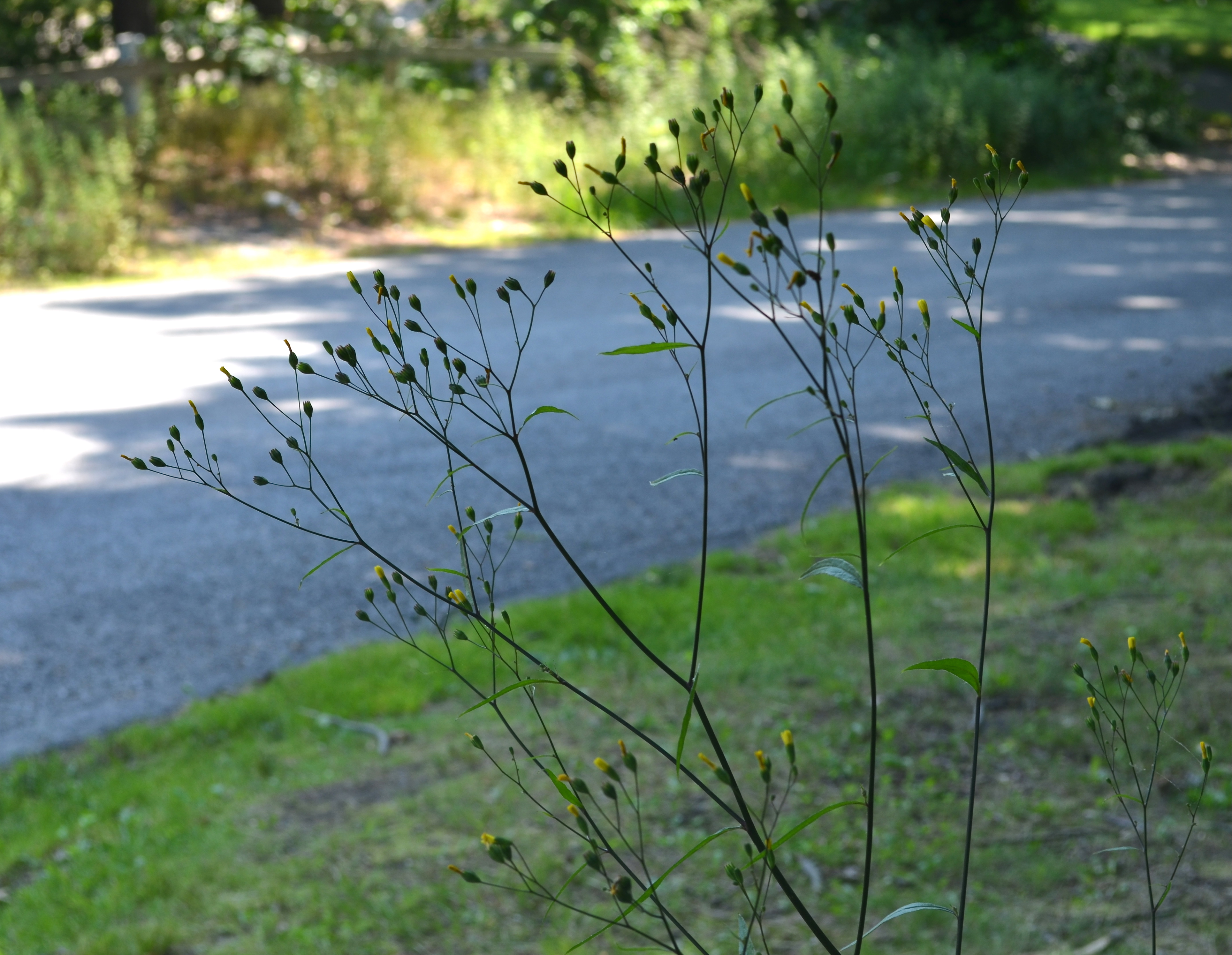
A close-up of the dandelionish head, and a silhouette after it has closed for the evening. There are many varieties of hawkweed around here. This one can be 4 feet tall… They get their genus name, meaning hawk, from Pliny, naturalist of ye old ancient times, who thought hawks ate these plants to improve their eyesight (!). Aster family. Native.

Panicled Hawkweed, Devil’s Paintbrush, Mouse-ear (Hieracium paniculatum)