Beautyberry

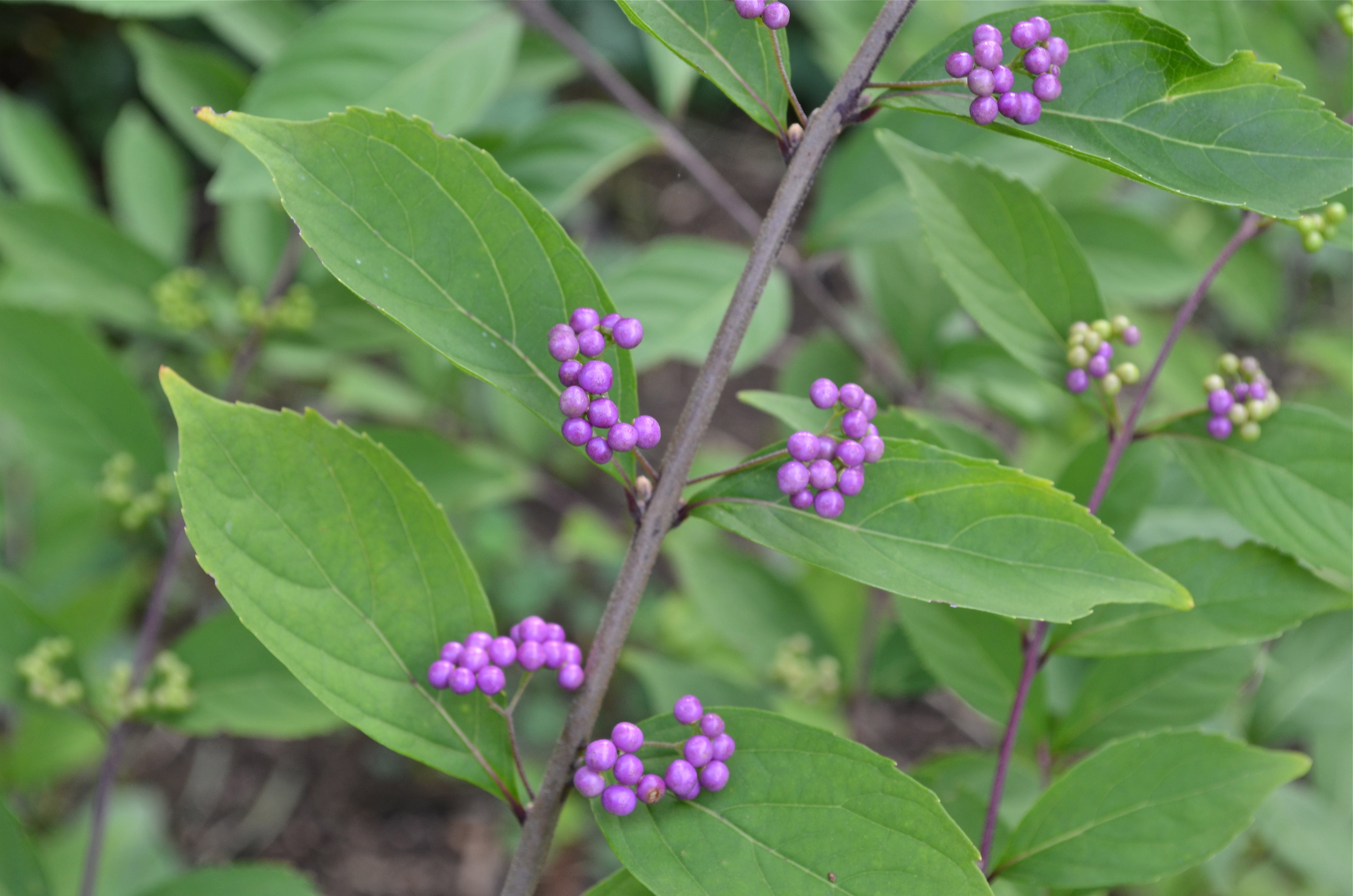
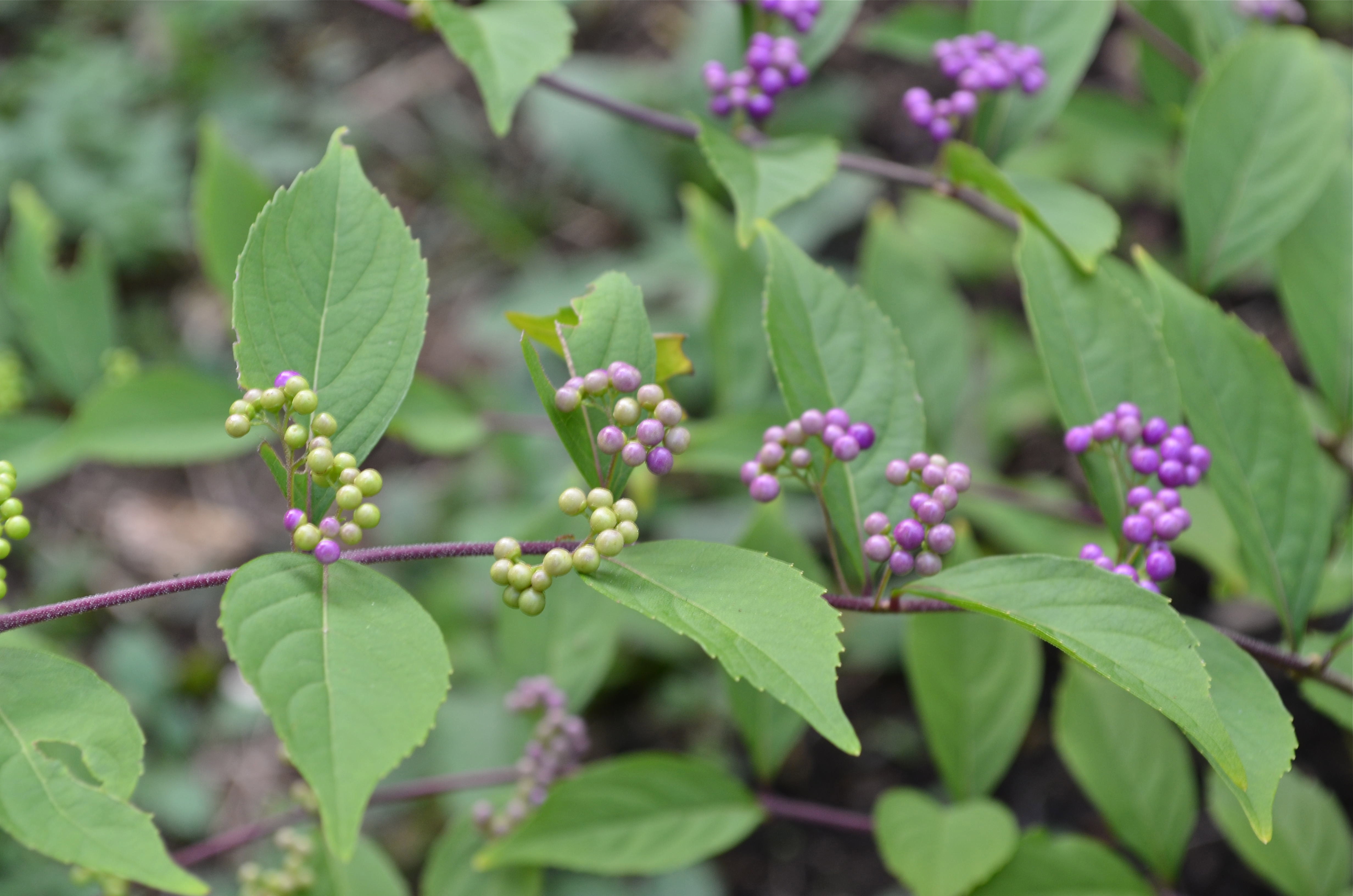
These had feathery little flowers, and now with the cold weather, it’s time for the berries! Dr. Wesley Whiteside gave me these plants because I admired them in his garden, bright purple on bare branches in late October — they were just little twigs but they’ve done well. An important fall survival food for birds, when other sources are gone. Apparently, you can chop up a plant, boil and strain it, mix it with oil and beeswax to make a fabulous mosquito repellent. Also you can make jelly from the berries!  (And yet, you can also use the leaves to make a poison to stun fish. Hm.) There is an indigenous form, American Beauty Berry, which has berries with no stems, clustered closer to the branch. This kind is native to Japan. Verbena family.

Japanese Beautyberry (Callicarpa japonica)
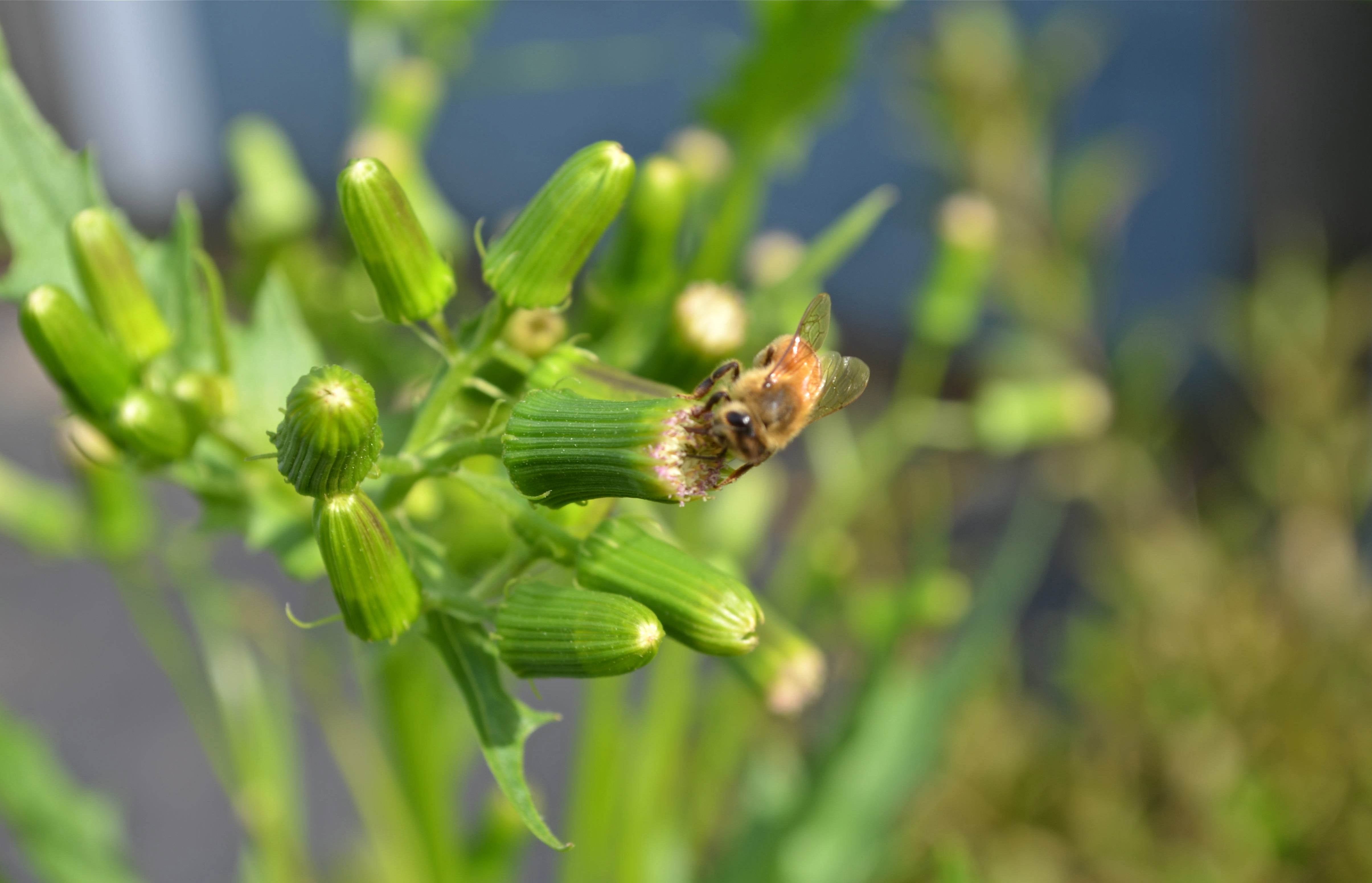
Pilewort

The good thing about being a neglectful gardener is, suddenly you discover a robust new weed right in your own yard. (Actually, I guess not everyone would consider that a good thing.) I had been waiting for this to bloom, but as it turns out, for pilewort, this is full bloom. Also called fireweed because it likes disturbed areas, especially where there’s been a fire. Animals avoid eating it because the foliage is bitter and bad-smelling. Composite family. Native annual.

Pilewort, Fireweed (Erechtites hieracifolia)

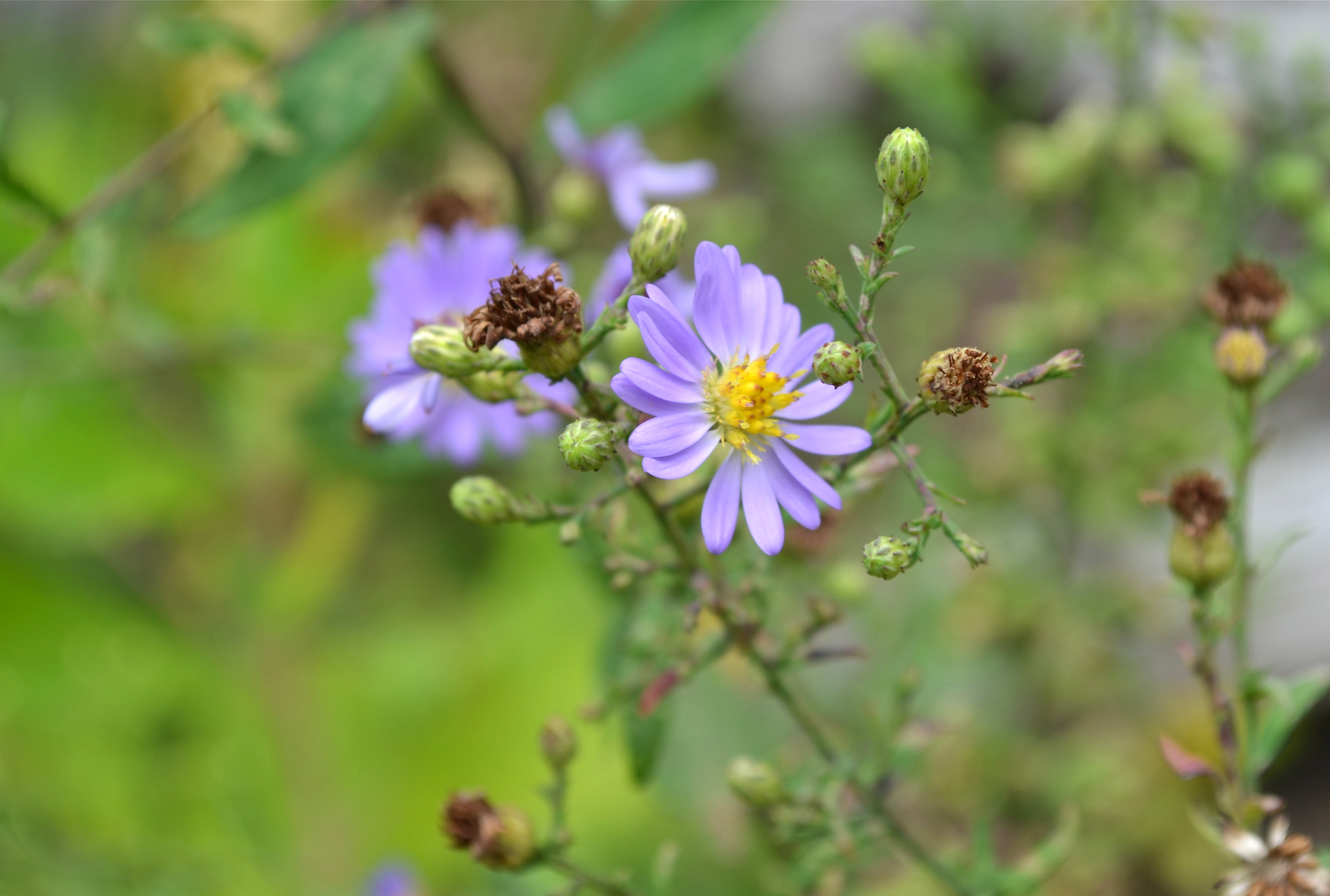
Smooth Aster

Showier blossoms than some of the raggedy varieties that are more common. Up to 3 feet tall. It’s called smooth because the stems and foliage are not hairy or rough like most other asters. Another distinguishing characteristic is the way the leaves clasp the stem. (I don’t usually post the photos I take of the leaves because they’re not pretty, but this would be a more helpful identification tool if I did, because for many plants, leaf formation is the key to figuring out what it is…) Aster family. Native perennial.

Smooth Aster (Aster laevis)

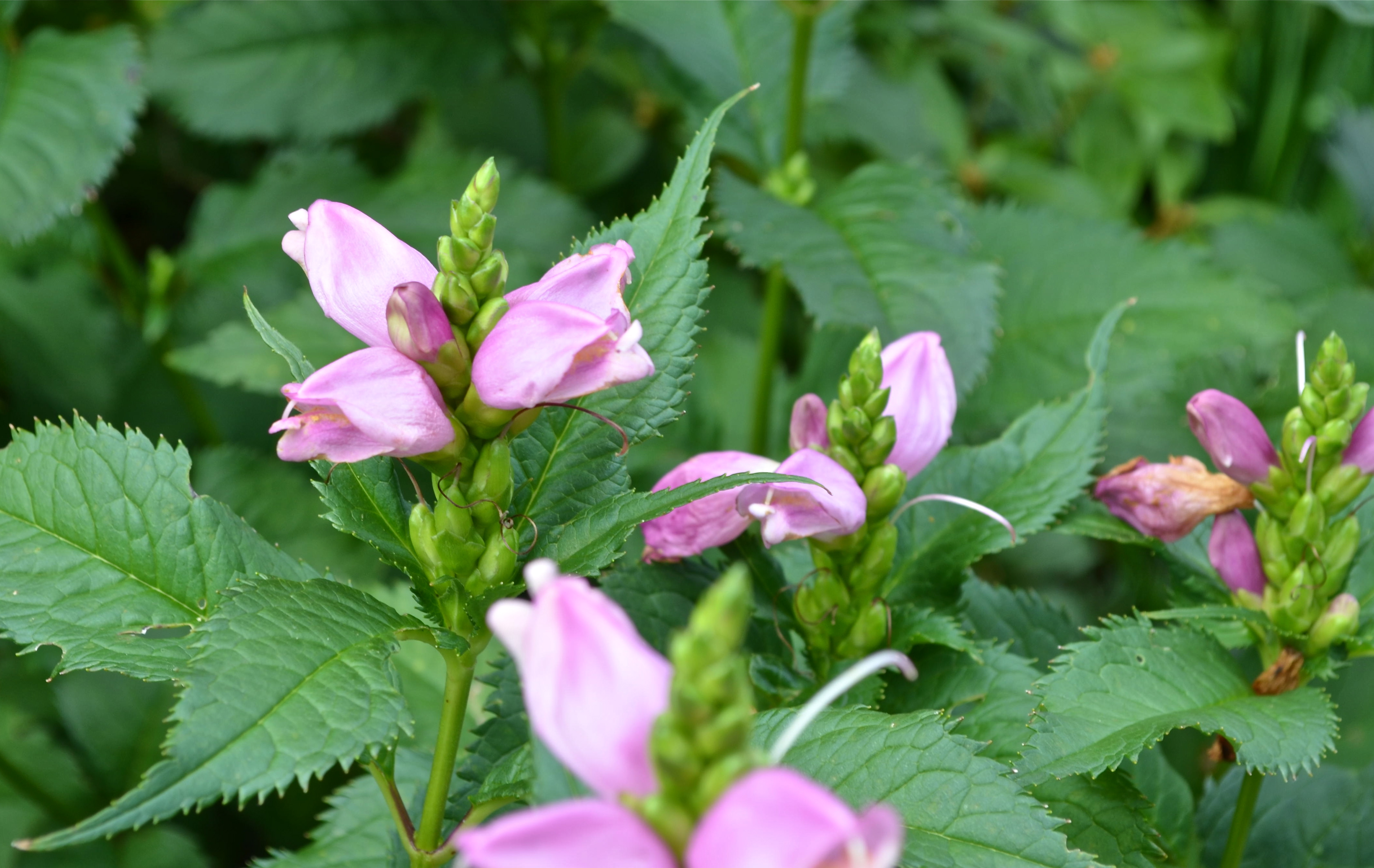
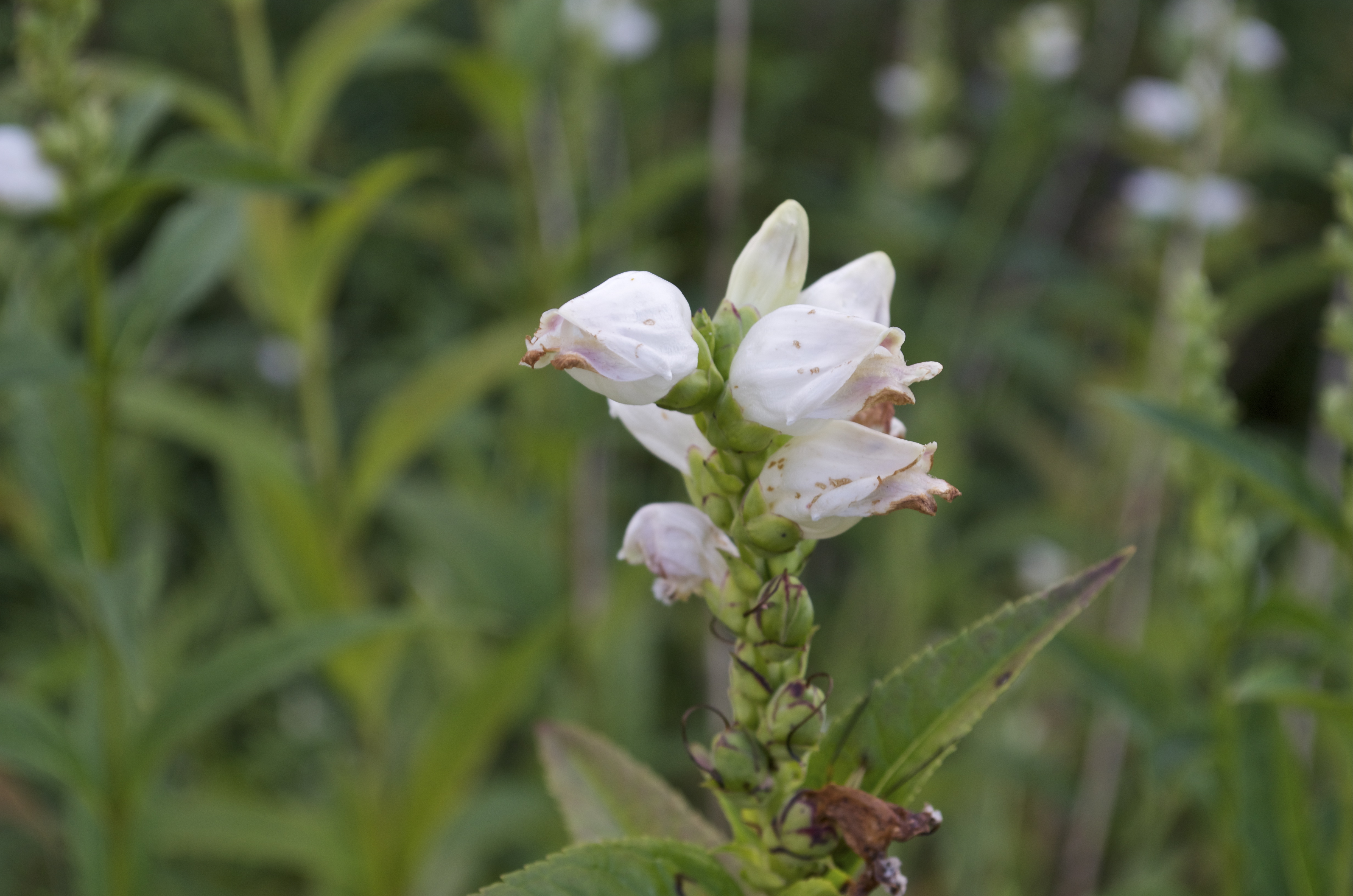
Pink Turtlehead

After seeing white turtlehead growing wild at Charles River Peninsula, it was easy to recognize the pink version in a garden on the Wellesley campus. It’s an unusual flower to see this late in the season; it looks like something that would be out in the spring. Bitter foliage avoided by animals. Pollinated by bumblebees. Figwort family. Native perennial.

Pink Turtlehead (Chelone obliqua speciosa)

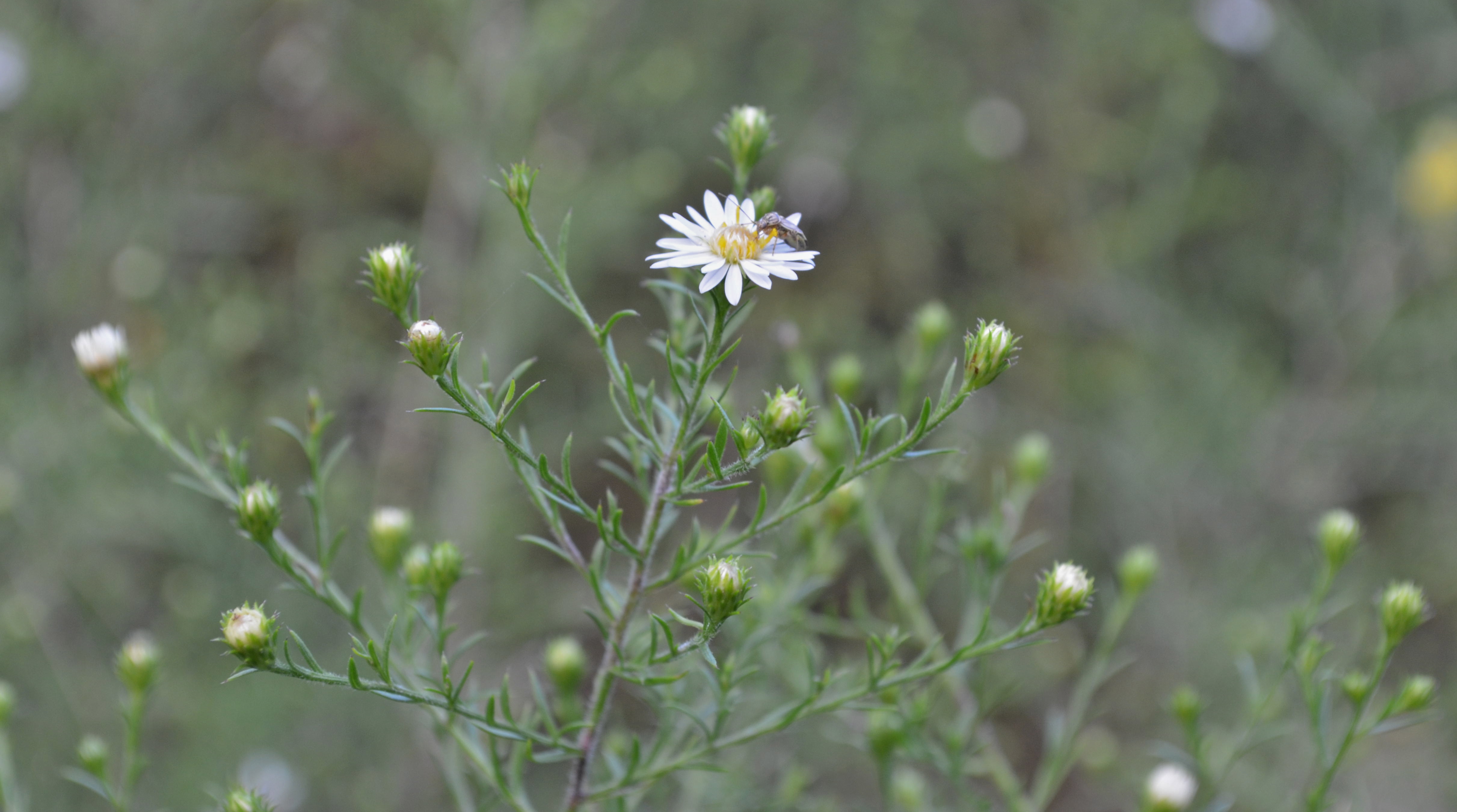
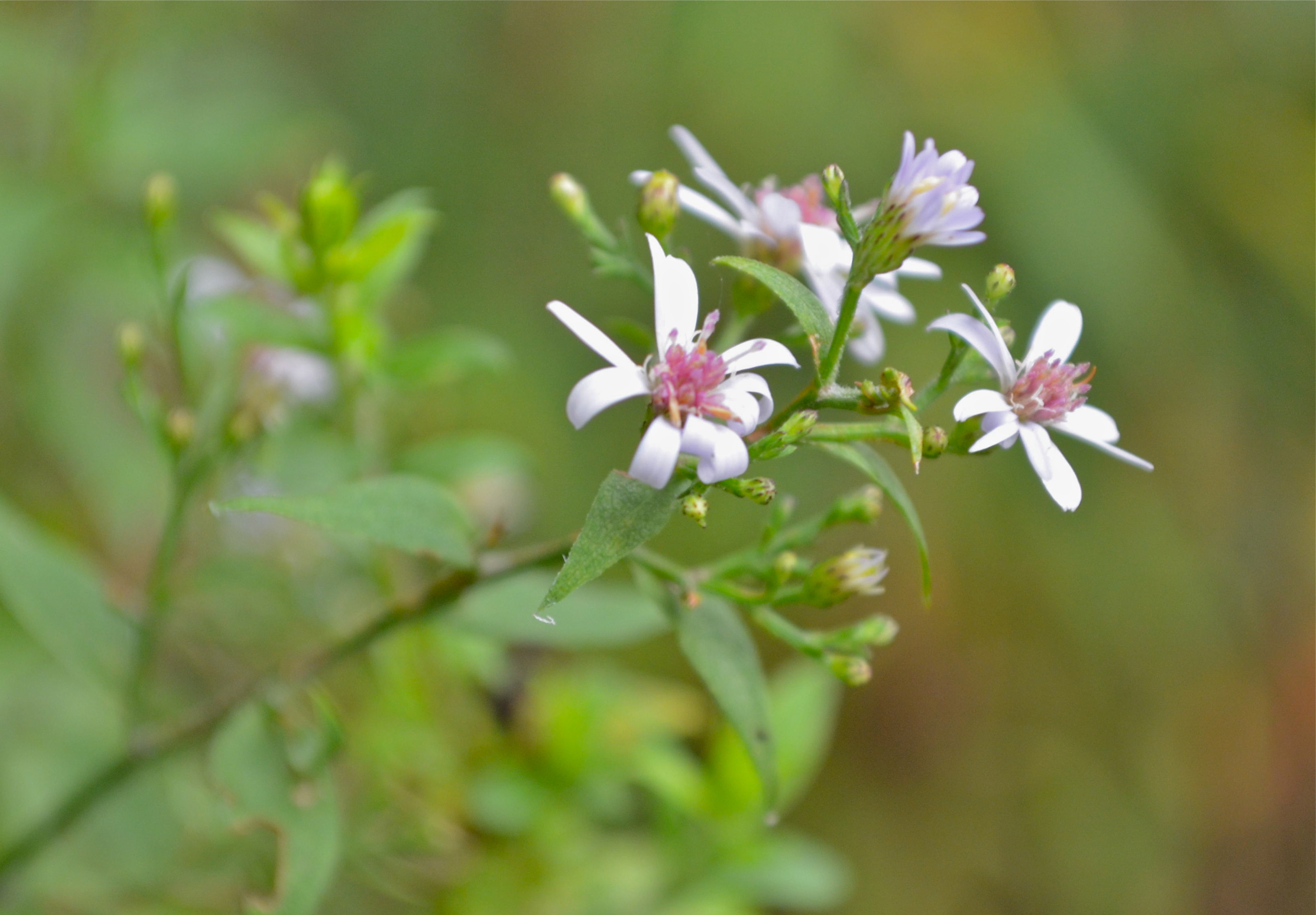
Small White Aster

The flowers similar to other asters, but this variety is loaded with flowers all along the little branches. Native.

Small White Aster (Symphyotrichum racemosum)

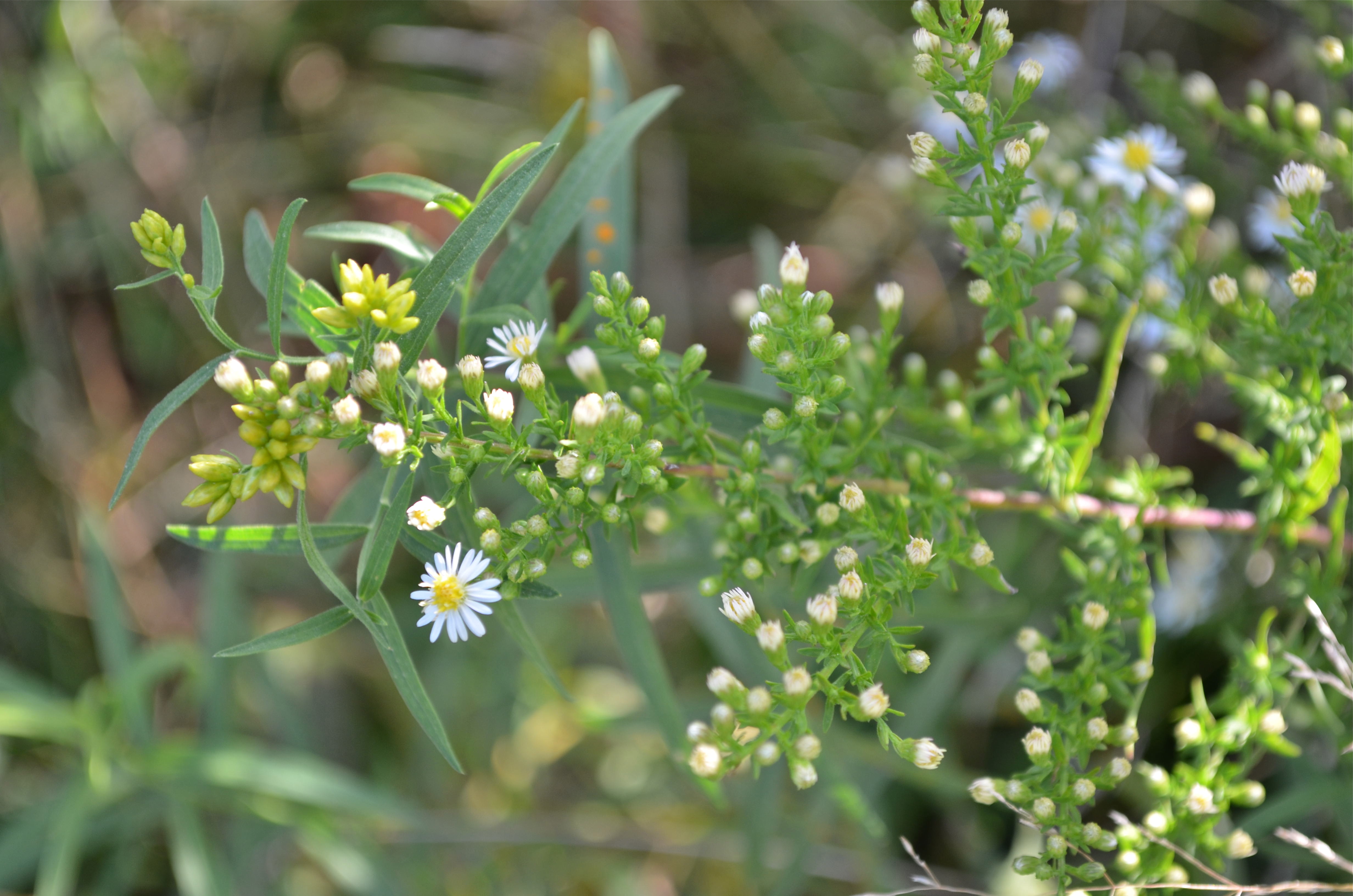
Awl Aster

A new flower appears at Centennial, I’m on it like a spider discovering something new in the web. There is a large area covered with these, just starting to come into bloom. (There are many similar kinds of asters, difficult to distinguish, and they randomly hybridize. In the reference books and sites I consult, there is some disagreement about what the common name of this aster is, although I think the latin name identification is correct.) Composite family. Native.

Awl Aster, Heath Aster, Frost Aster (Aster pilosus)

Calico Aster

It’s like someone checked the calendar and then flipped the Autumn switch. Labor Day weekend was summery beautiful, then suddenly Tuesday was cool and rainy. Today plenty of yellow leaves are plastered to the wet black driveway. Now we just need some bright yellow school buses to rumble by to complete the portrait of September.

Aster family. Native. The central disk starts out pale yellow but matures to brown or red-violet– this color variety is evidently the source of the calico name. Rays can be white or purple-tinged.

Calico Aster, Starved Aster (Aster Lateriflorus)

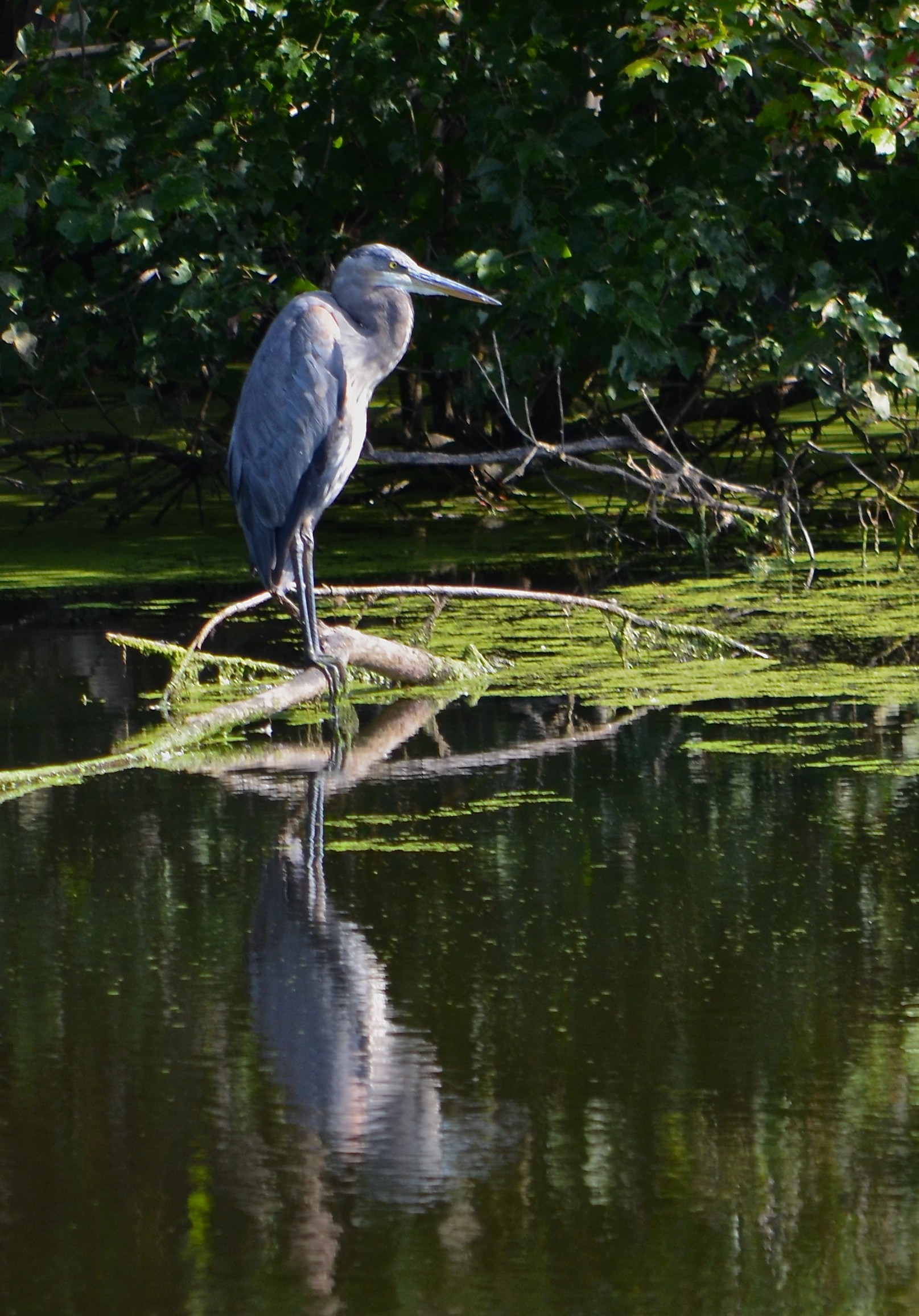
Great Blue Heron

I happened to take Lucy for an early walk and lo, there was a big heron on the other side of the pond. It looked very slate blue. This is about one minute from our house… I feel lucky to live here and see this!

Great Blue Heron (Ardea herodias)

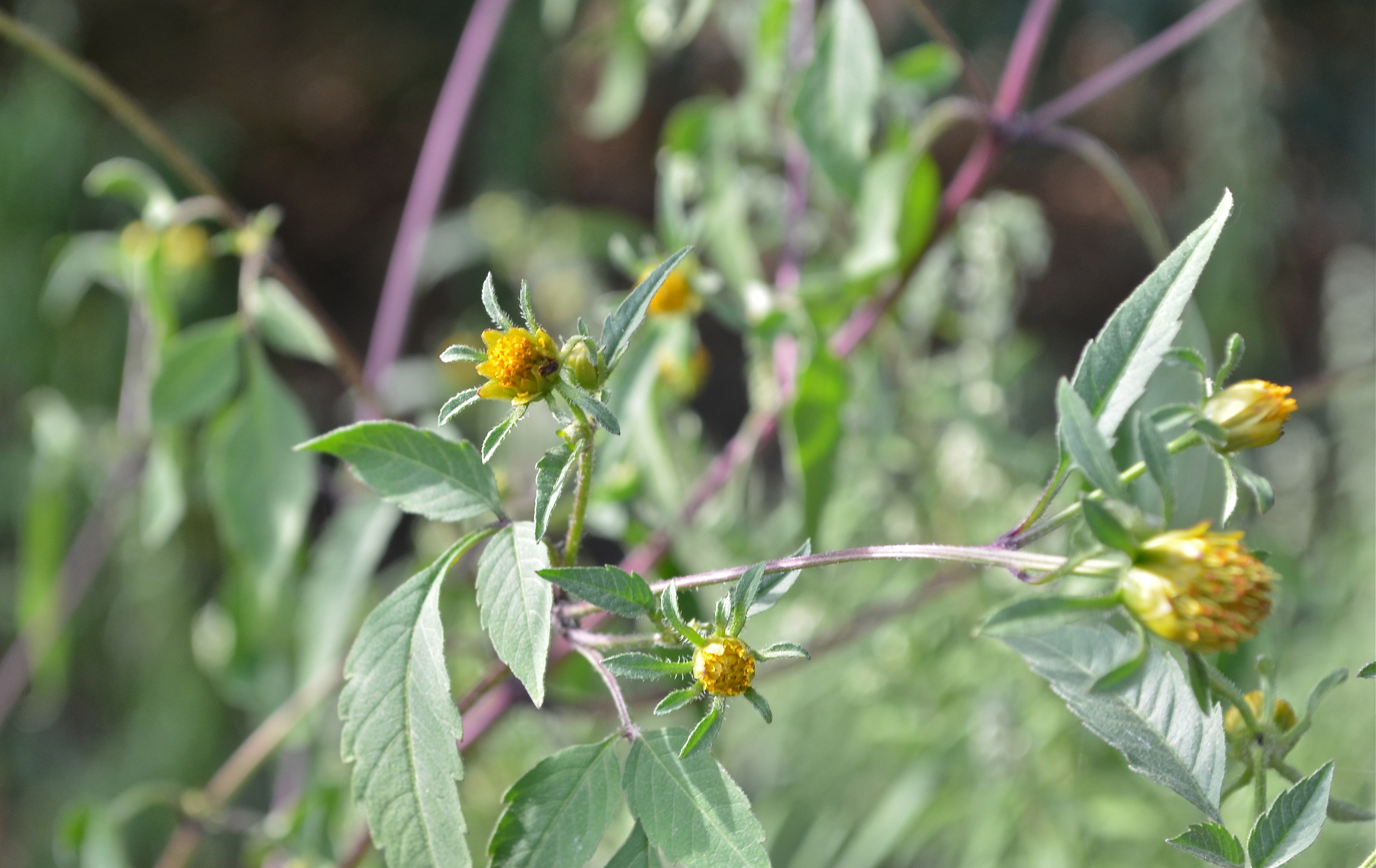
Common Beggarticks

Another tall plant in the Centennial meadows. Like the other plants with tick in their name, this has barbed seeds that attach to passing creatures for distribution. Aster family.

Common Beggarticks (Bidens frondosa)