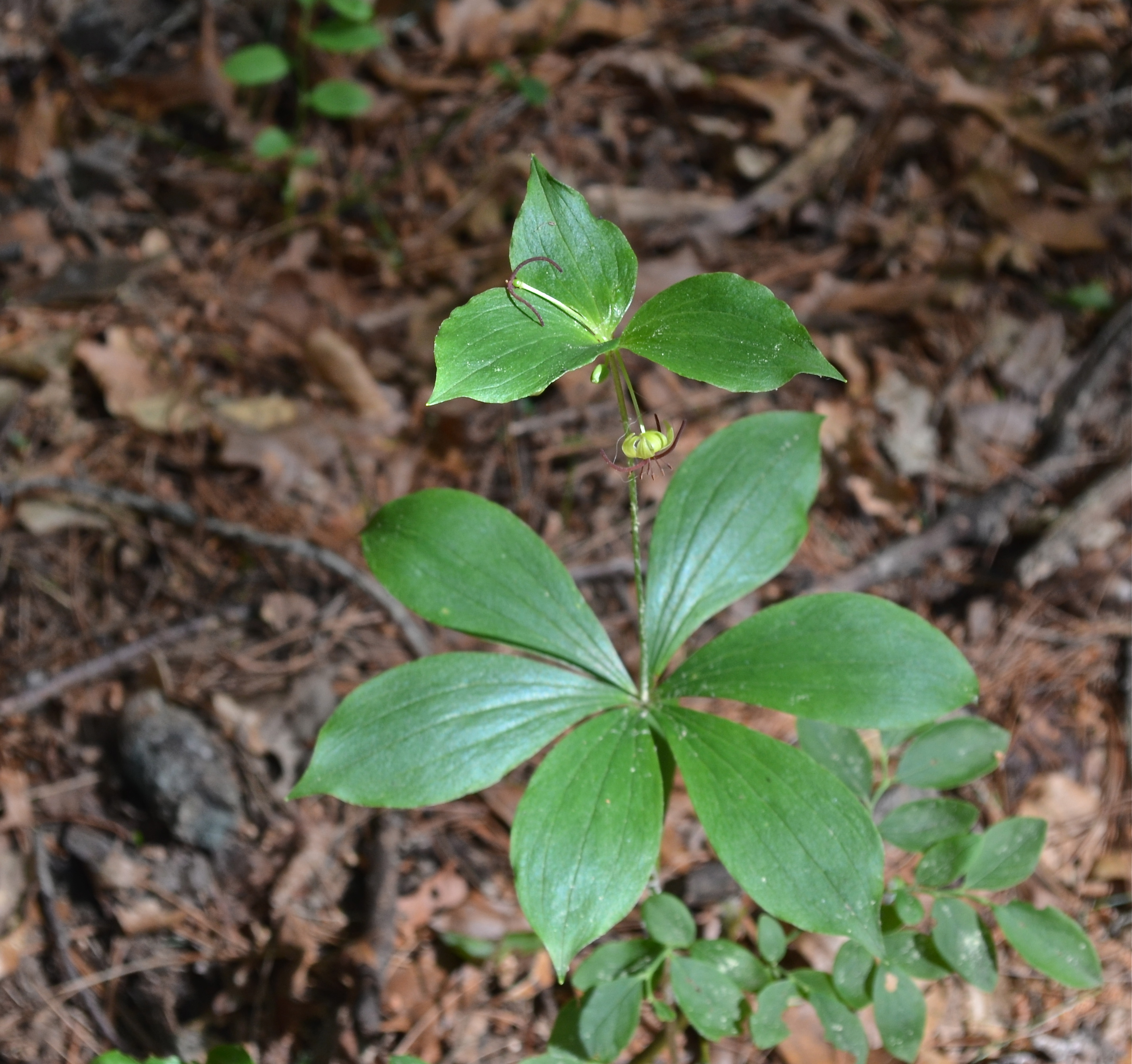
Look at this two-tier leaf structure! Very distinctive. Grows 1-2 feet tall with a greenish-yellow flower that hangs down. Will have dark purple fruit. The roots are edible raw or cooked. Lily family.
Indian Cucumber Root (Medeola virginiana)
Look at this two-tier leaf structure! Very distinctive. Grows 1-2 feet tall with a greenish-yellow flower that hangs down. Will have dark purple fruit. The roots are edible raw or cooked. Lily family.
Indian Cucumber Root (Medeola virginiana)
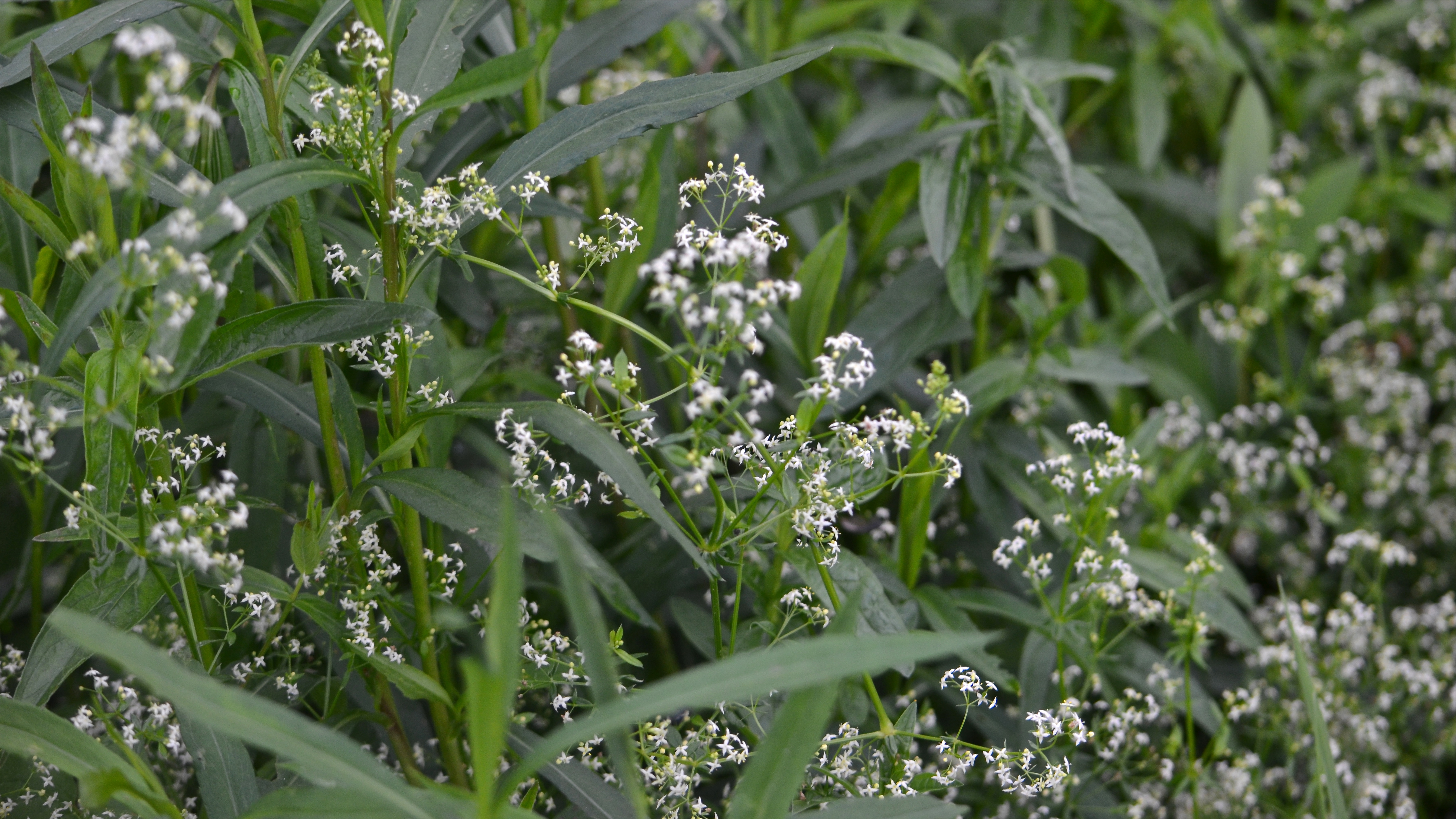
Growing tall in big drifts at Red Wing Bay. Small whorled leaves, meaning they circle completely around the stem. A kind of Bedstraw. Madder family.
Wild Madder (Galium mollugo)
 A lovely rose growing in moist soil on the lakeshore. Extremely fragrant. Native to the eastern U.S. While I took this, Lucy scouted out a big turtle.
Swamp Rose (Rosa palustris Marsh)
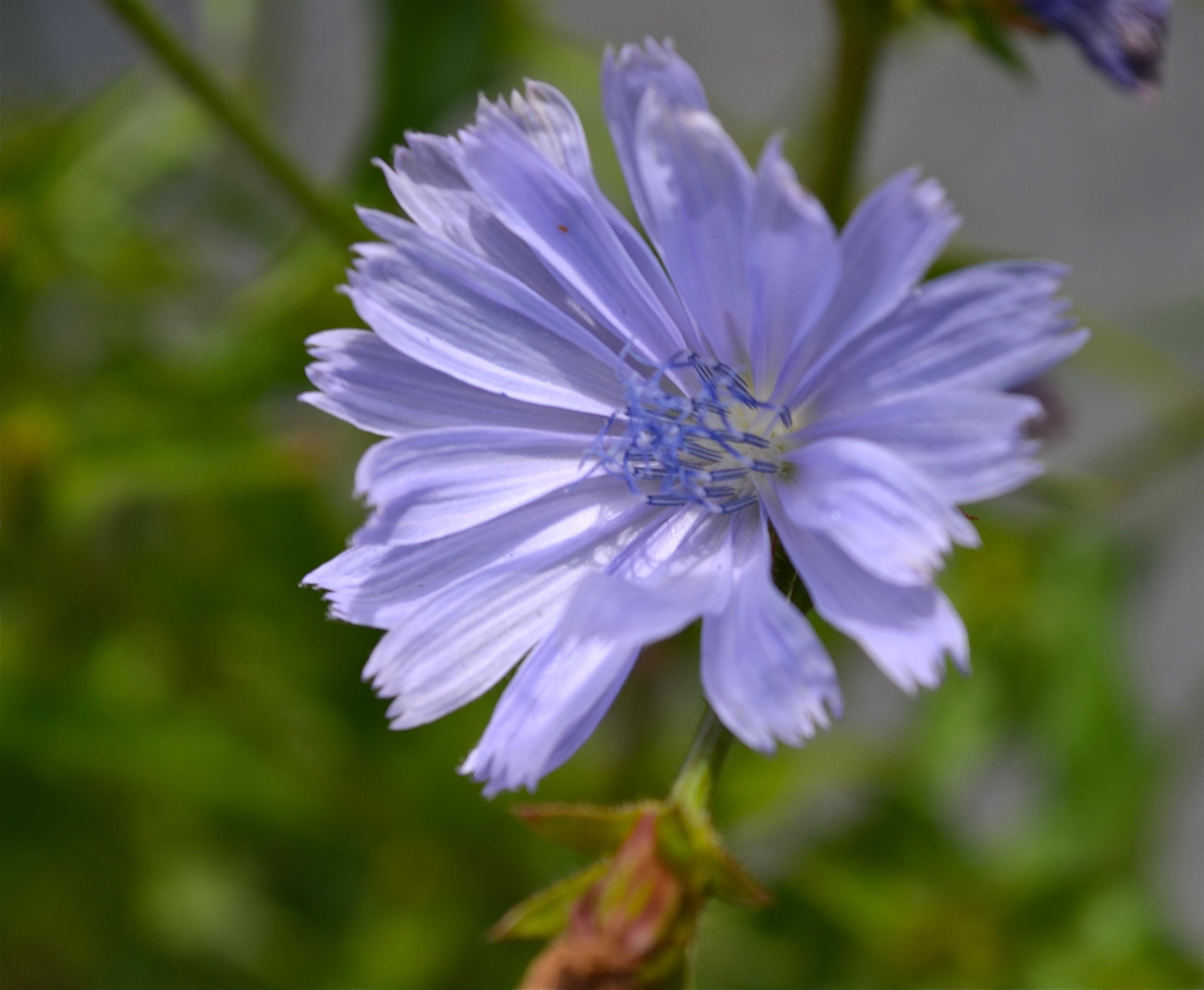 This must have a short blooming season, because I noticed a large area blooming in front of a long-empty house, and a couple of days later when I came back with a camera, there were very few blooms left. Many parts are edible, but the interesting thing is that you can roast and grind the roots, and brew them as a coffee substitute or additive. Has a smooth taste, no caffeine, and is still included in New Orleans-style blends. Also known to be toxic to internal parasites — now THAT’s coffee. Also, the chicory plant is one of the earliest plants mentioned in literature, and was cultivated in ancient Egypt. Native to Europe.
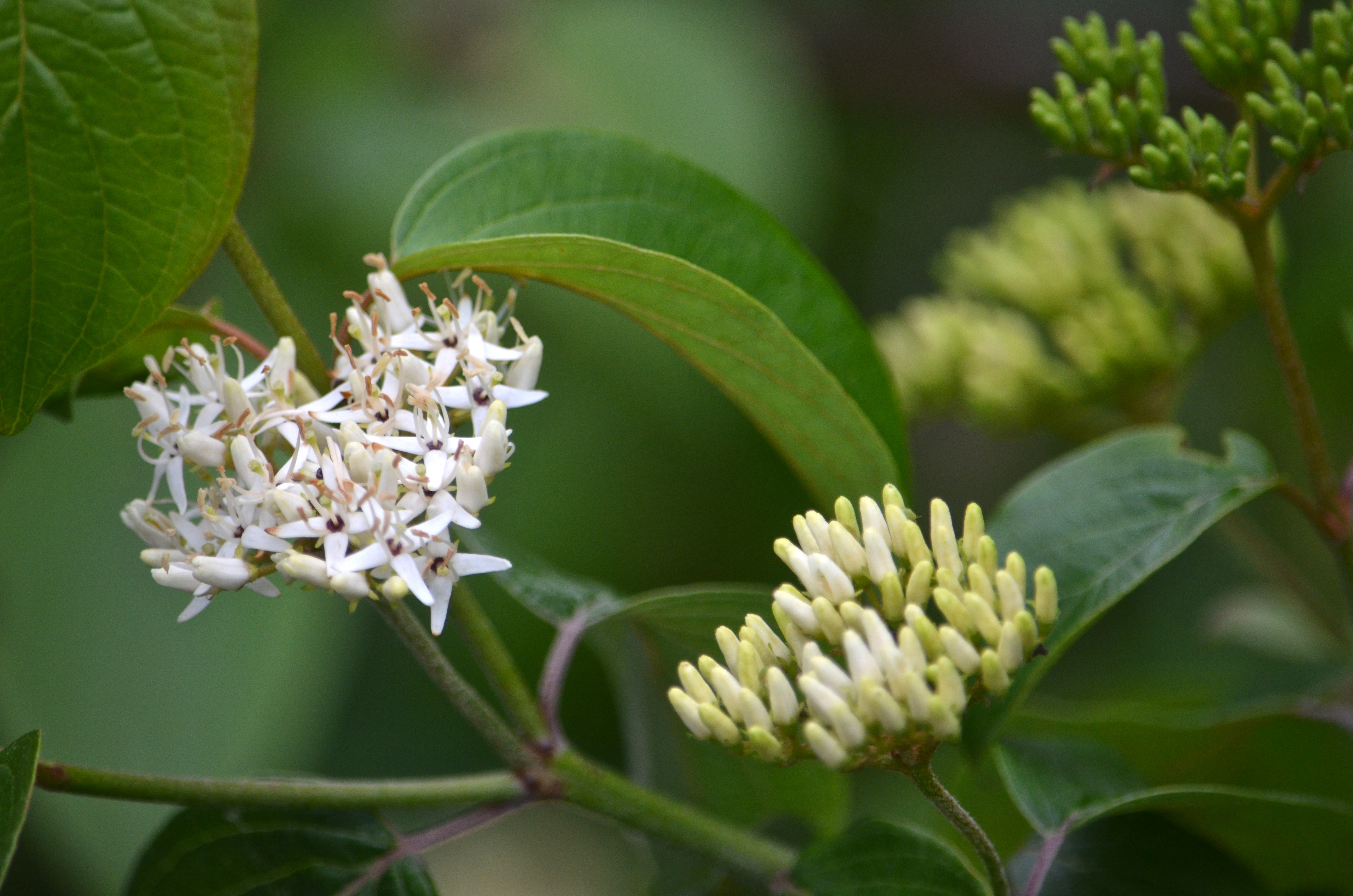 On the shore of Walker Pond. A favorite with butterflies. Will have blue/lavender berries. Dogwood familly.
Silky Dogwood, Swamp Dogwood (Cornus amomum)
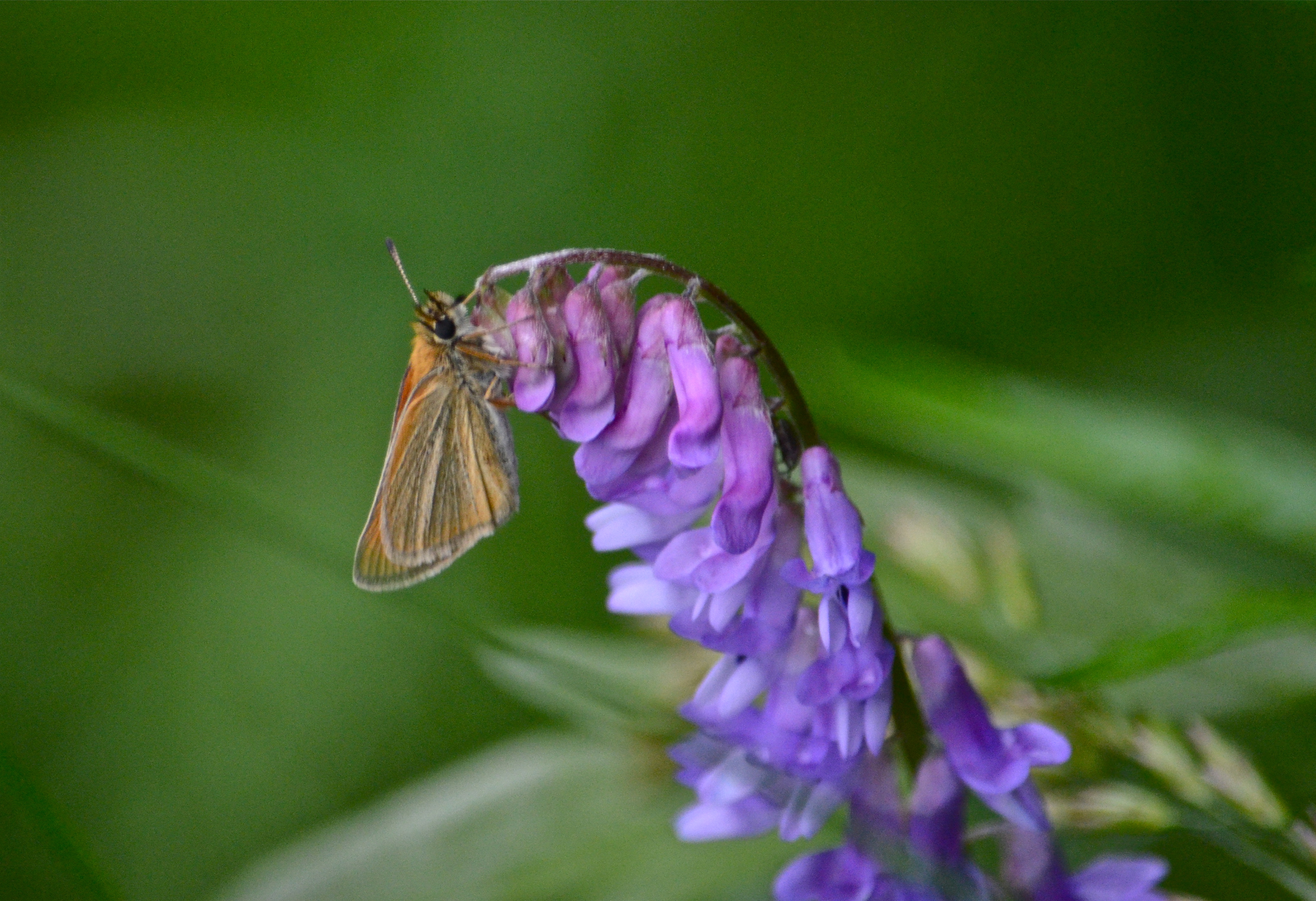
I have already posted photos of common vetch and crown vetch. This is another species of vetch, similar to a pea in habit, with tendrils that fasten on to other plants. Widely used as forage for cattle. Pea family. Origin: Eurasia.
Cow Vetch, Tufted Vetch, Bird Vetch (Vicia cracca)
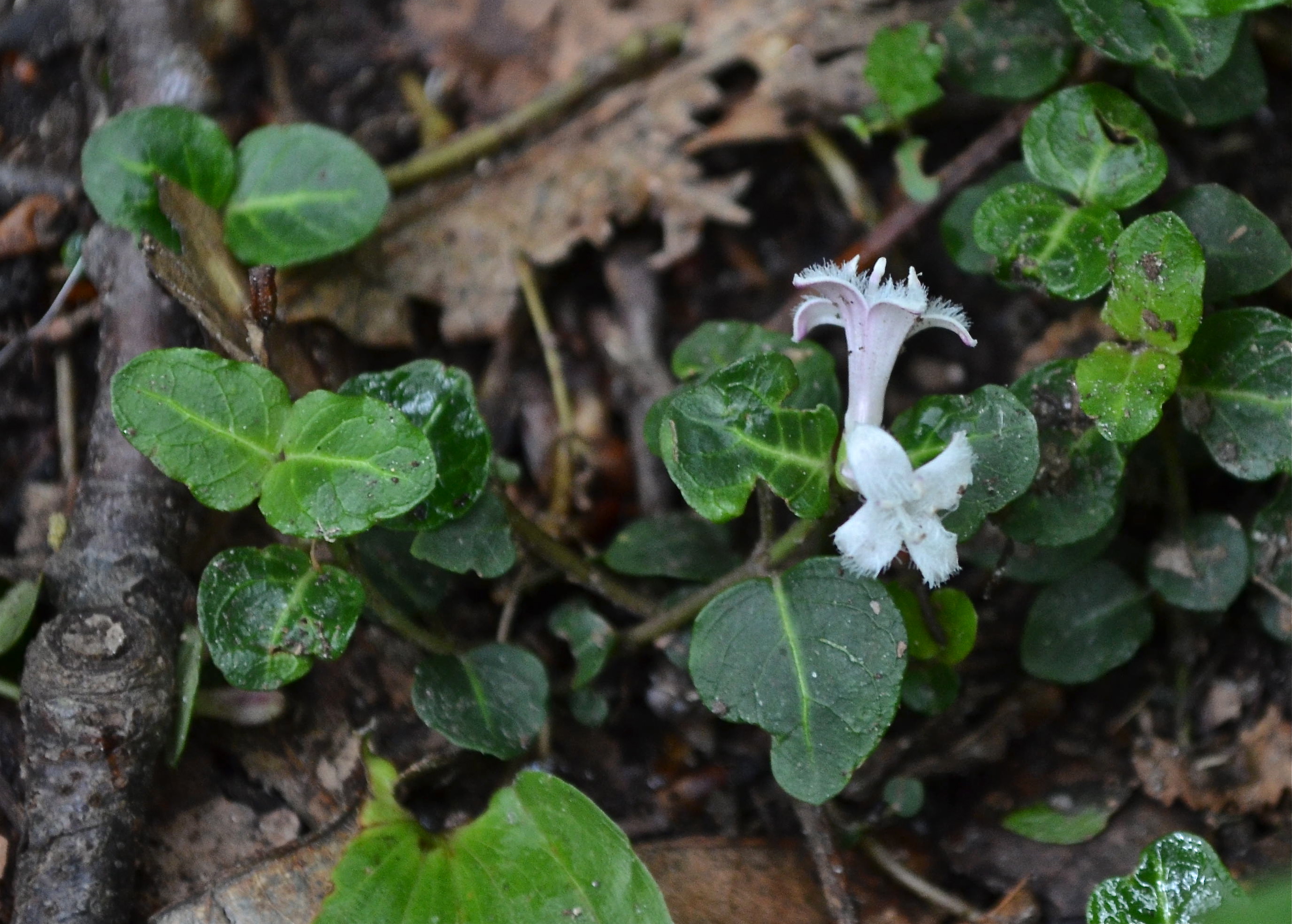

This is a small ground creeper. The species name repens refers to its trailing habit. Will bear red berries. The blossoms occur in pairs, and both must be pollinated to result in a single berry. Evidently people grow this in their gardens for the green leaves and red berries in winter. Native vine.
Partridge Berry (Mitchella repens)
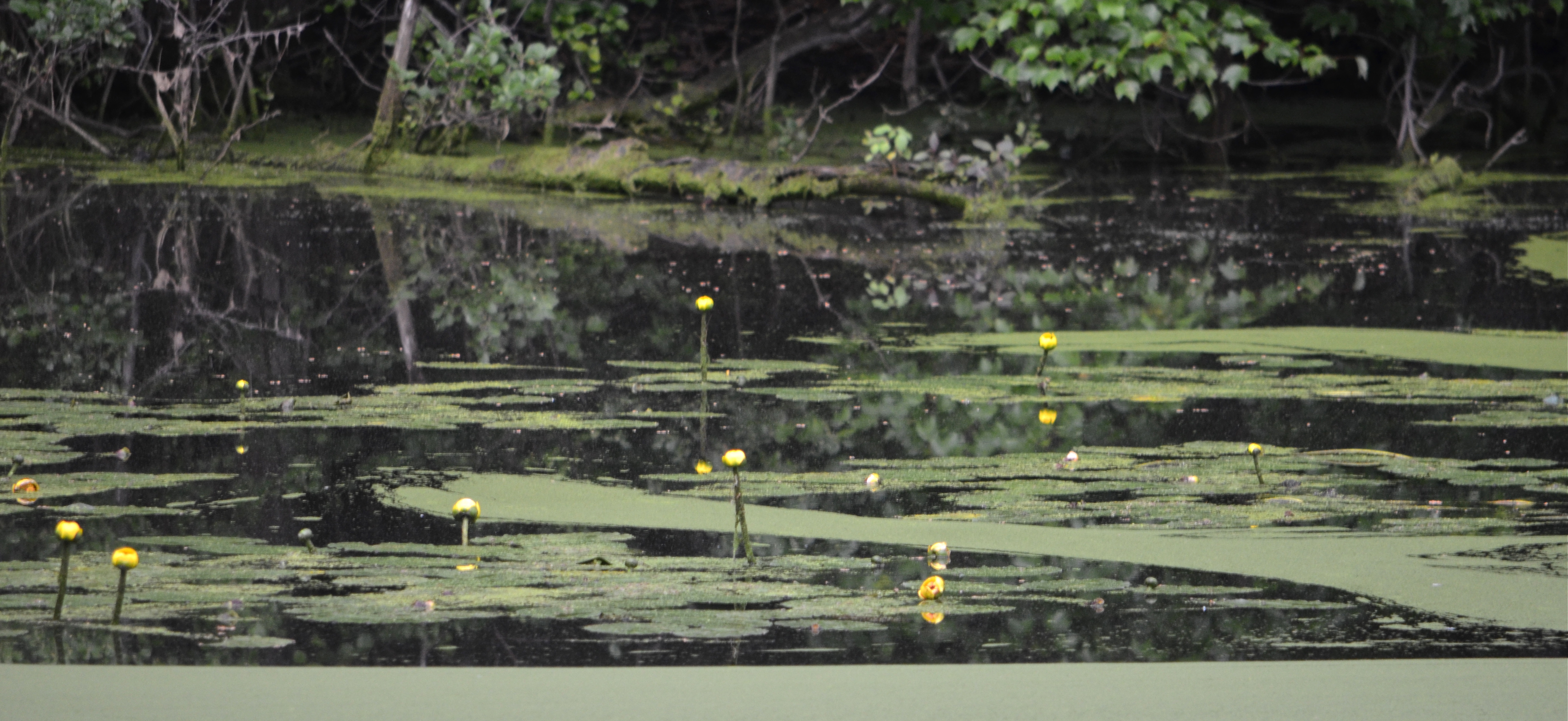
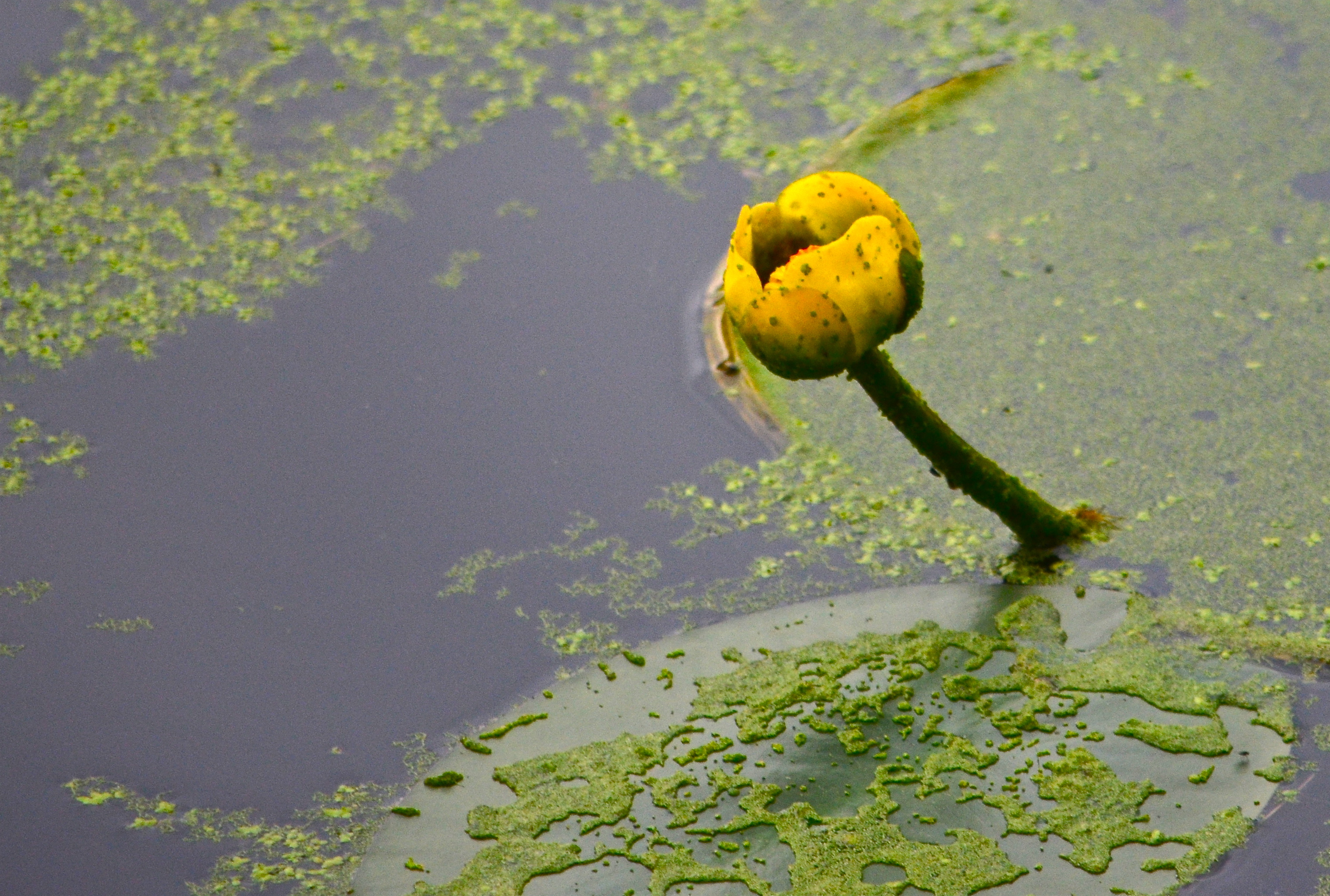 A rooted plant with floating leaves. In early spring the leaves are light green and below the surface, but by late spring they float on the water, and in summer, they often stand above the water. They have long horizontal roots in the lake’s sediments. The roots can be up to 6 inches in diameter and several feet long. The flower gives off a strong brandy-like odor that attracts insects.
Many cultures ate the roots cooked or dried and ground into flour for baking. The seeds were ground or popped like popcorn. The leaves and roots were used for dyeing and tanning. Leaves used to stop bleeding! and the roots as a pain remedy. Seeds are eaten by birds, and muskrats and beaver eat the roots. Native.
Yellow Pond Lily, Spatterdock, Cow Lily, Bullhead Lily (Nuphar lutea)
Bonus picture: other denizens of the pond.
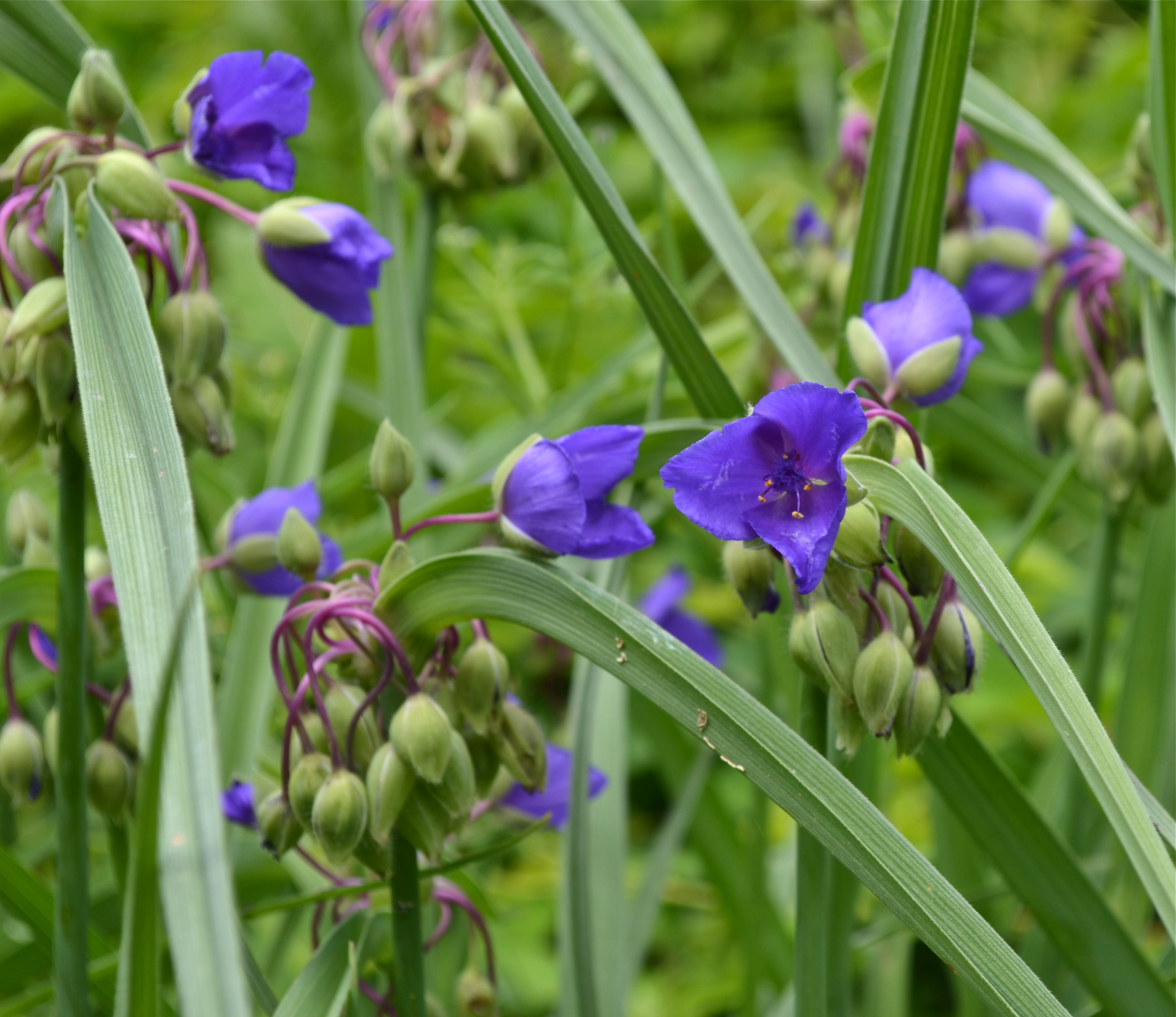 Each flower lives only one day, but each plant produces 20 or more flowers per stem. The sap has a viscous quality and can be stretched between your fingers like a thread of spider silk. Maybe this is where the name came from. Plus it’s also called Cow Slobber and I guess that could be related. The stems, leaves and flowers are edible, raw or added to stew. The flowers can garnish your salad! The spiderwort genus is named after John Tradescant, who was a gardener for King Charles I of England (1600-1649). Spiderwort seeds were brought back from the new world, and he planted them and popularized spiderworts. Love the curly purple stems.
Spiderwort, Cow Slobber (Tradescantia sp.)
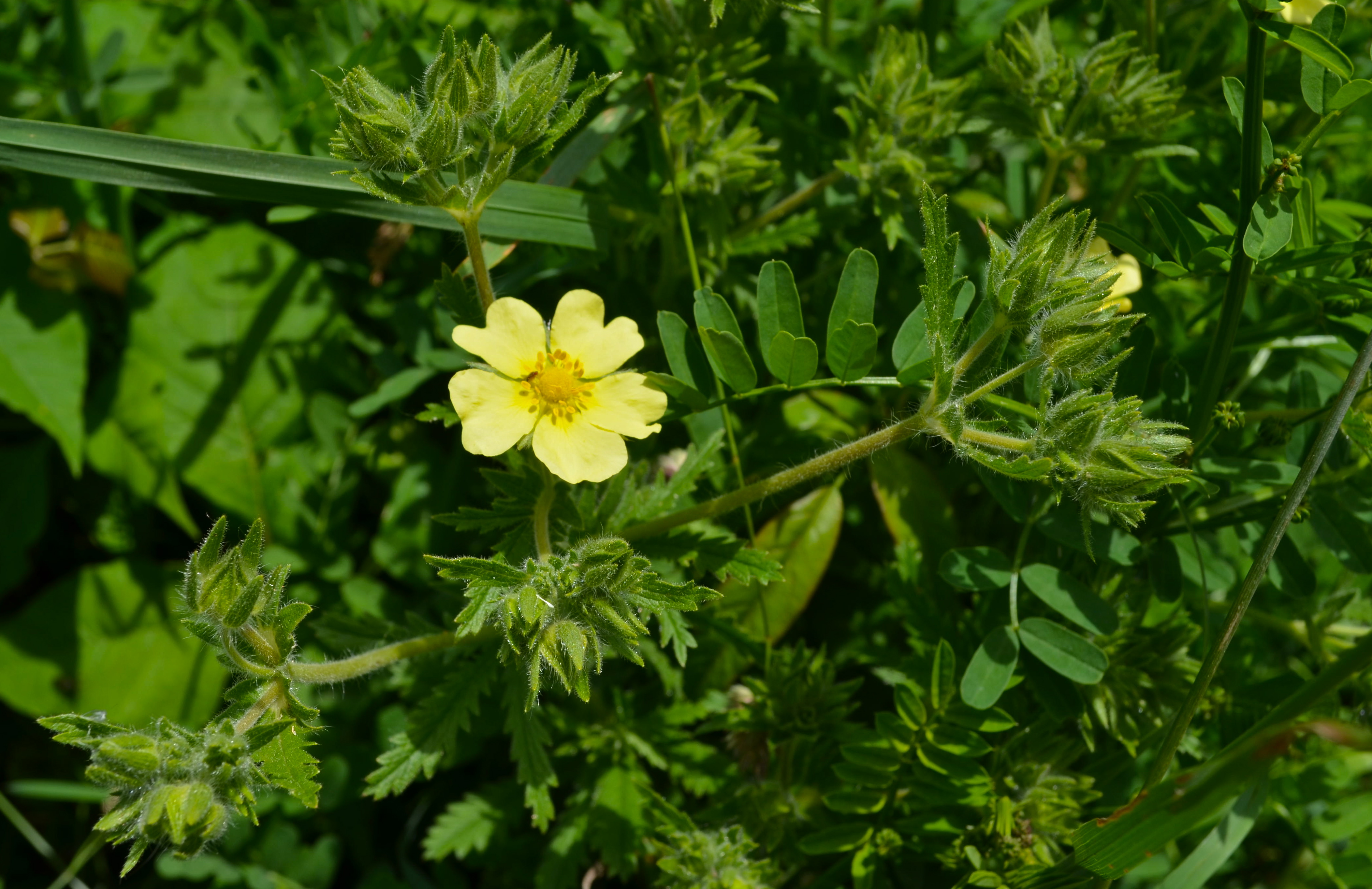
I think this is the third variety of cinquefoil I’ve posted. It’s the tallest (1 to 2 feet tall) and the palest yellow, with the biggest flowers. Heart-shaped petals. Native to Europe and Asia. Rose family.
Rough-fruited Cinquefoil, Sulfur Cinquefoil (Potentilla recta)