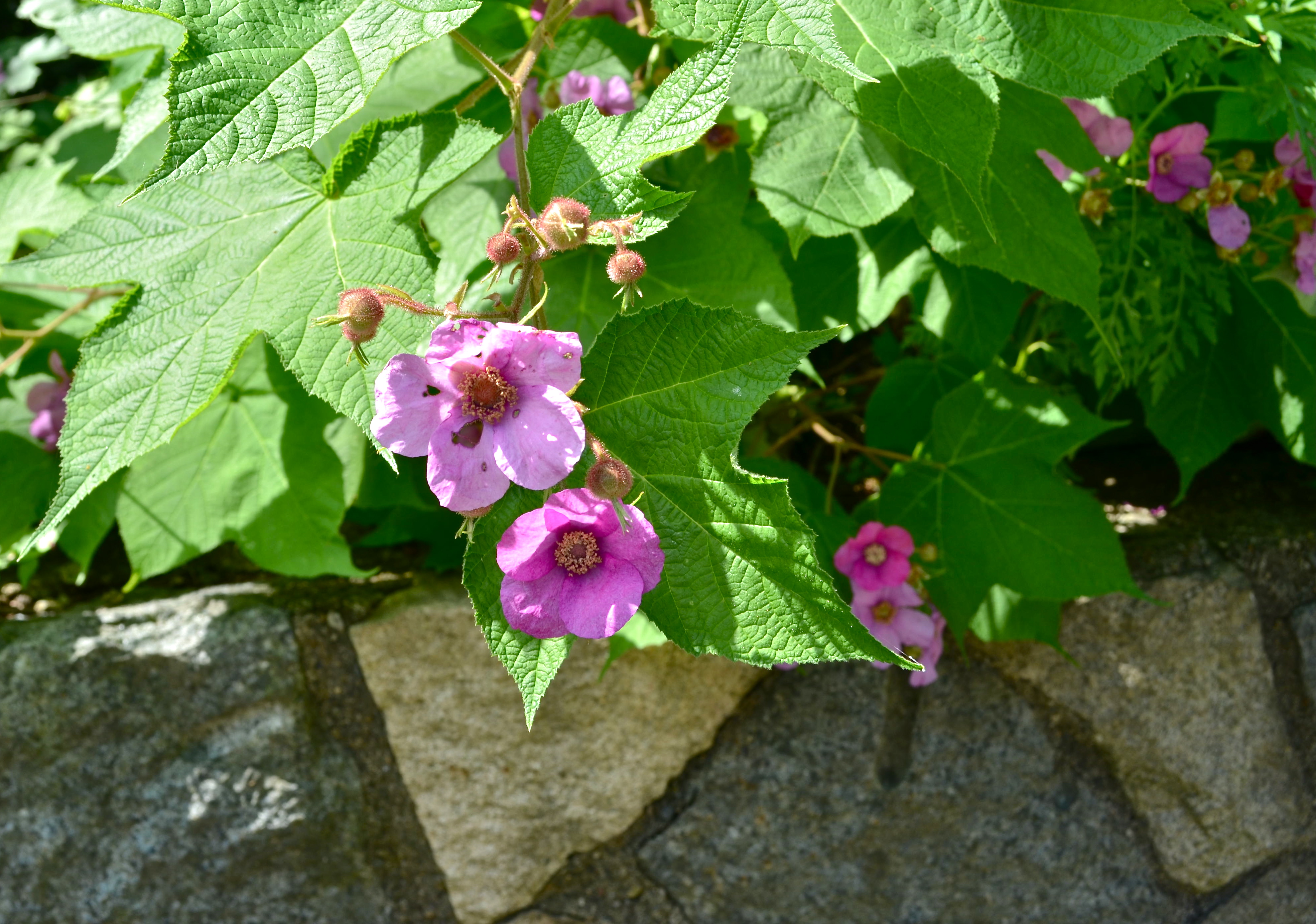
Has red berries. The leaves are distinctively not like common raspberries, and the flowers look like wild roses. They are flowering when other raspberries are fruiting. Rose family. Native.
Purple-flowering Raspberries (Rubus odoratus)
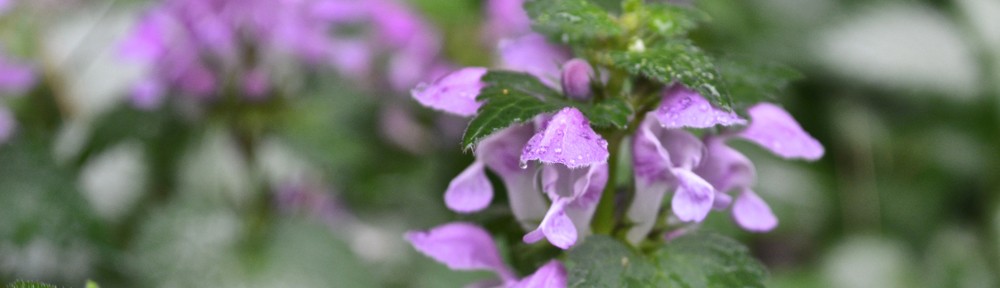
Has red berries. The leaves are distinctively not like common raspberries, and the flowers look like wild roses. They are flowering when other raspberries are fruiting. Rose family. Native.
Purple-flowering Raspberries (Rubus odoratus)
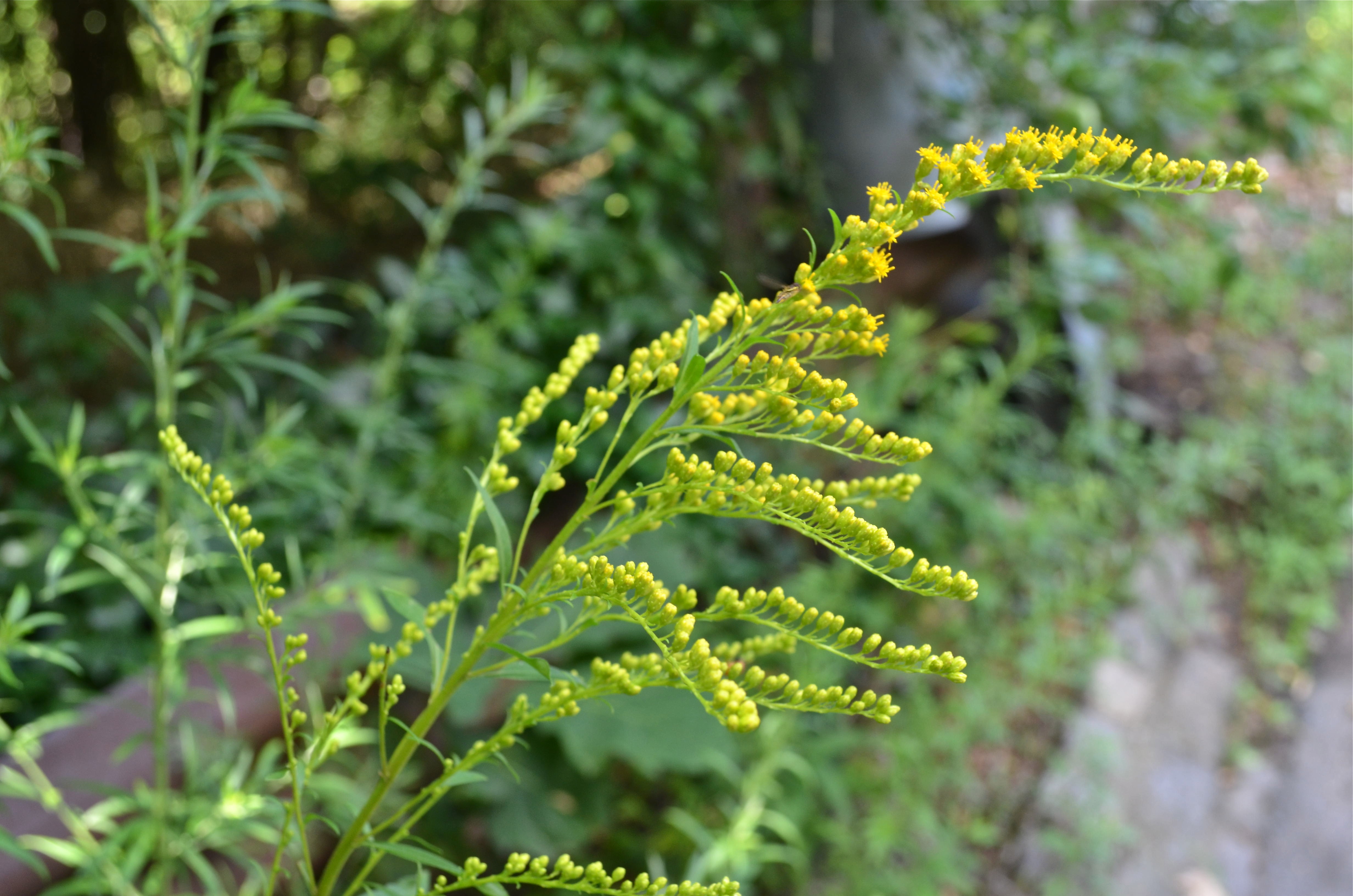
I thought of Goldenrod as a sinister figure in the hay fever department, but apparently the pollen that causes allergy problems is mainly from Ragweed, which blooms at the same time but is pollinated by the wind. Goldenrod pollen is too sticky and heavy for wind pollination so it relies on insect pollination. They are popular garden plants in Europe, and roadside weeds here. It contains rubber, and Thomas Edison experimented with making goldenrod a practical domestic source of rubber. Aster Family.
Goldenrod (Solidago altissima)
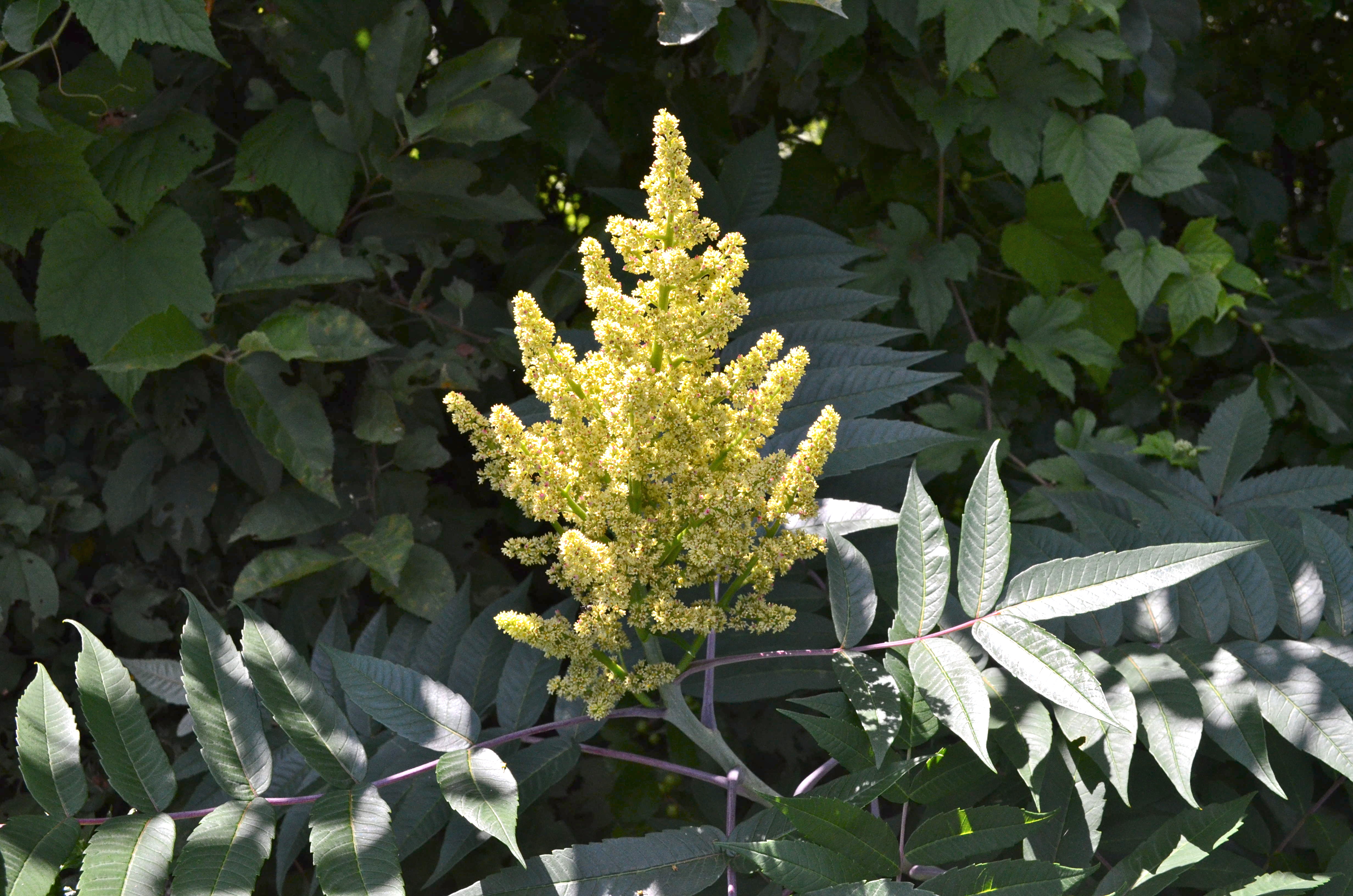
3-10 feet tall. This is an early stage of blooming. Foliage bright red in autumn. The fruit can be made into a lemonade-like drink, but make sure you aren’t using the related plant, POISON sumac. The leaves and berries were mixed with tobacco and smoked. Also used as a dye. Cashew family. Native.
Staghorn Sumac (Rhus typhina)
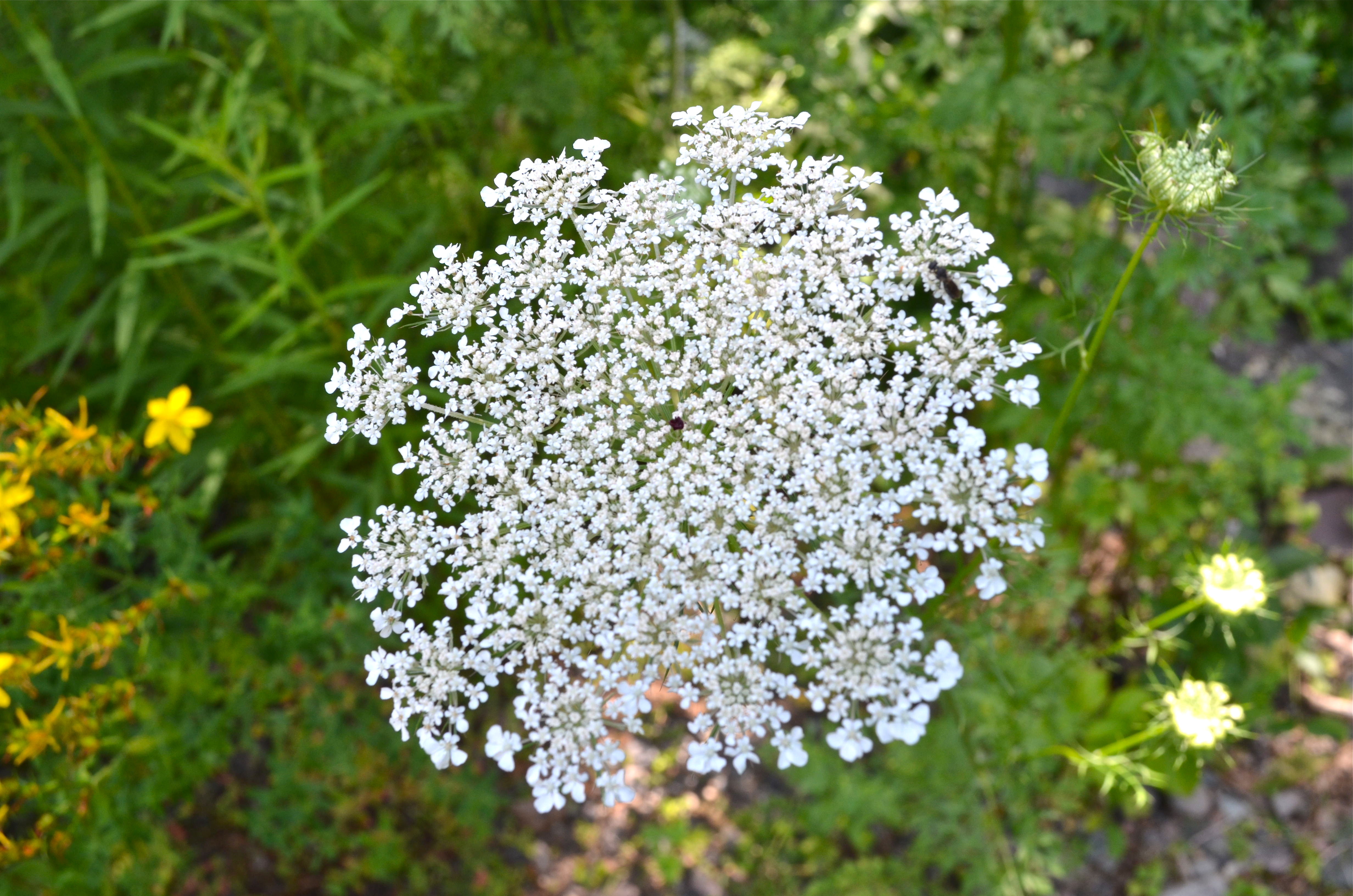
I posted about this flower previously and when I researched it, I found out that it sometimes has a tiny dark red flower in its center, supposedly to attract insects (but it’s so tiny, would they really notice?) So when I saw this group of plants, I checked, and some did have this little flower, tiny and almost black– see it?. (It’s the drop of blood where Queen Anne pricked her finger while making lace.)
Queen Anne’s Lace, Wild Carrot (Daucus carota)
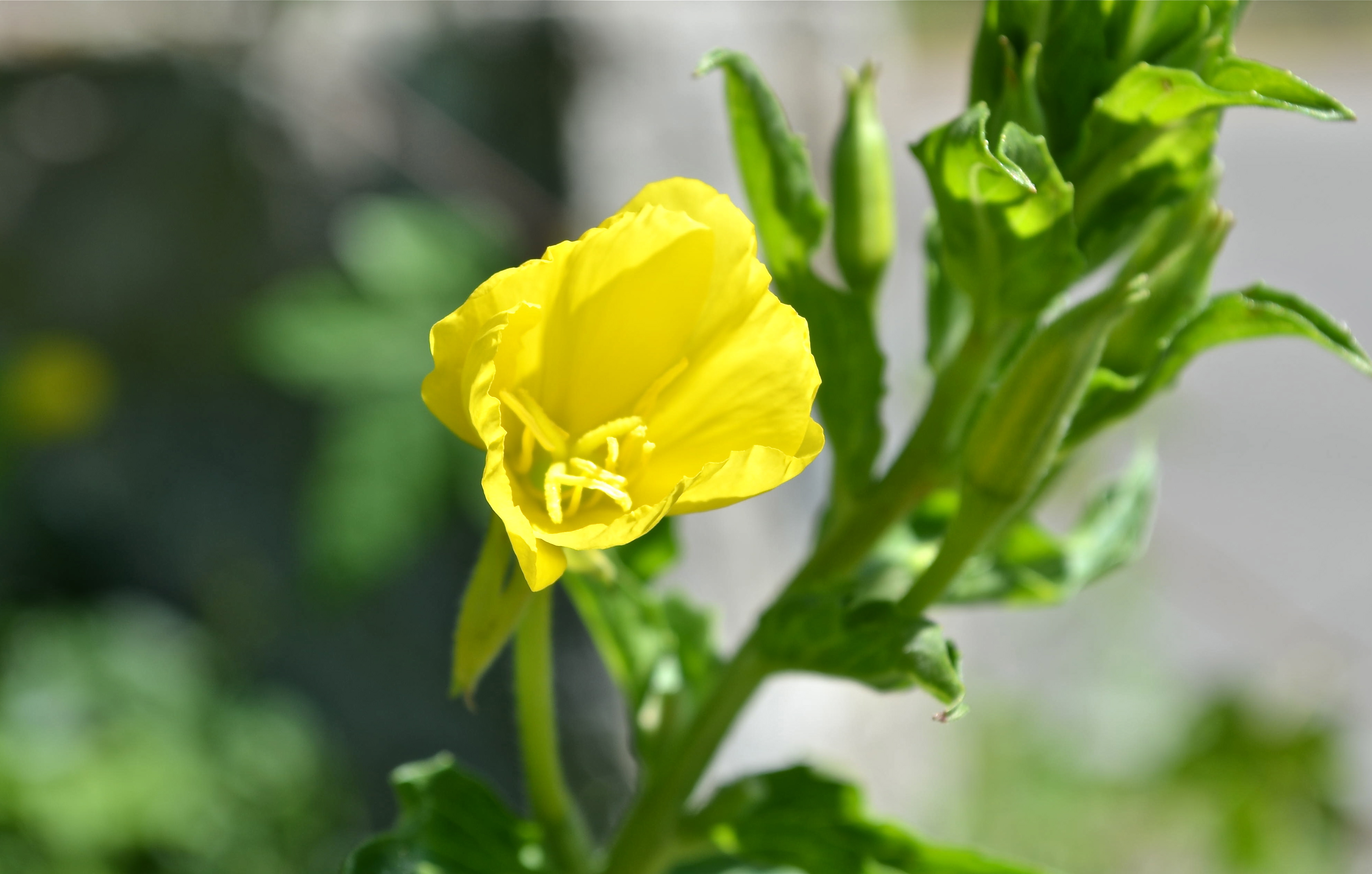
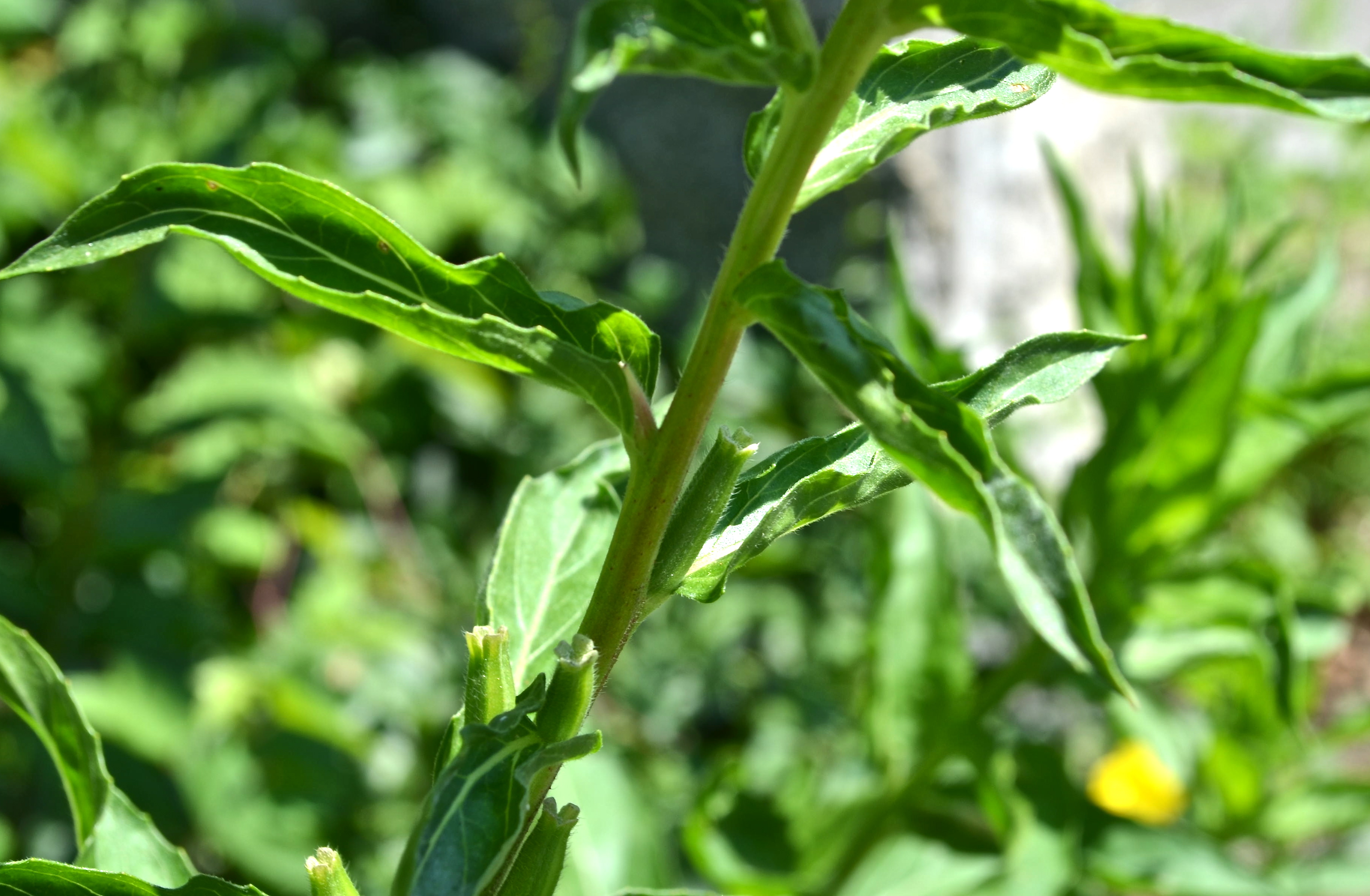
At the Arboretum, even their weeds are impressive. This bloom is at eye level. This is how it appears during the day, and will open fully at at dusk. Each bloom only lasts until the following noon. In the second picture you can see how the buds snuggle into the leaves. As usual, it’s edible (the leaves) and was used medicinally (to heal bruises and wounds). Evening Primrose family. Native. (The day I took this, I found about a dozen new plants to add. I need an “I brake for wildflowers” bumper sticker.)
Common Evening Primrose, German Rampion, Hog Weed, Fever Plant (Oenothera biennis)
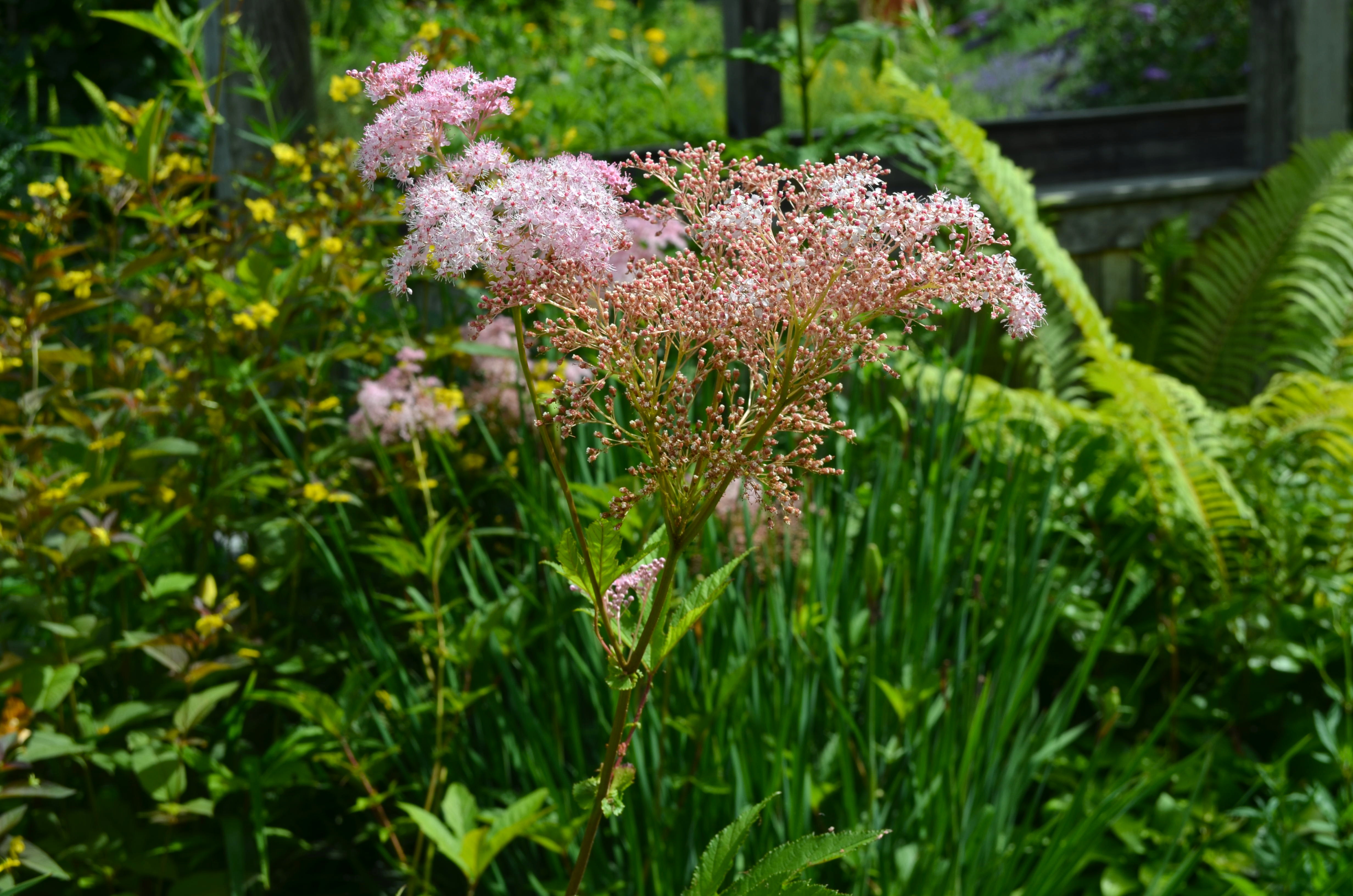
In the native plants area at Elm Bank. Spectacular, about 5 feet tall and fluffy pink, like Astilbe on steroids. Rose Family.
Queen of the Prairie, Meadowsweet (Filipendula rubra)
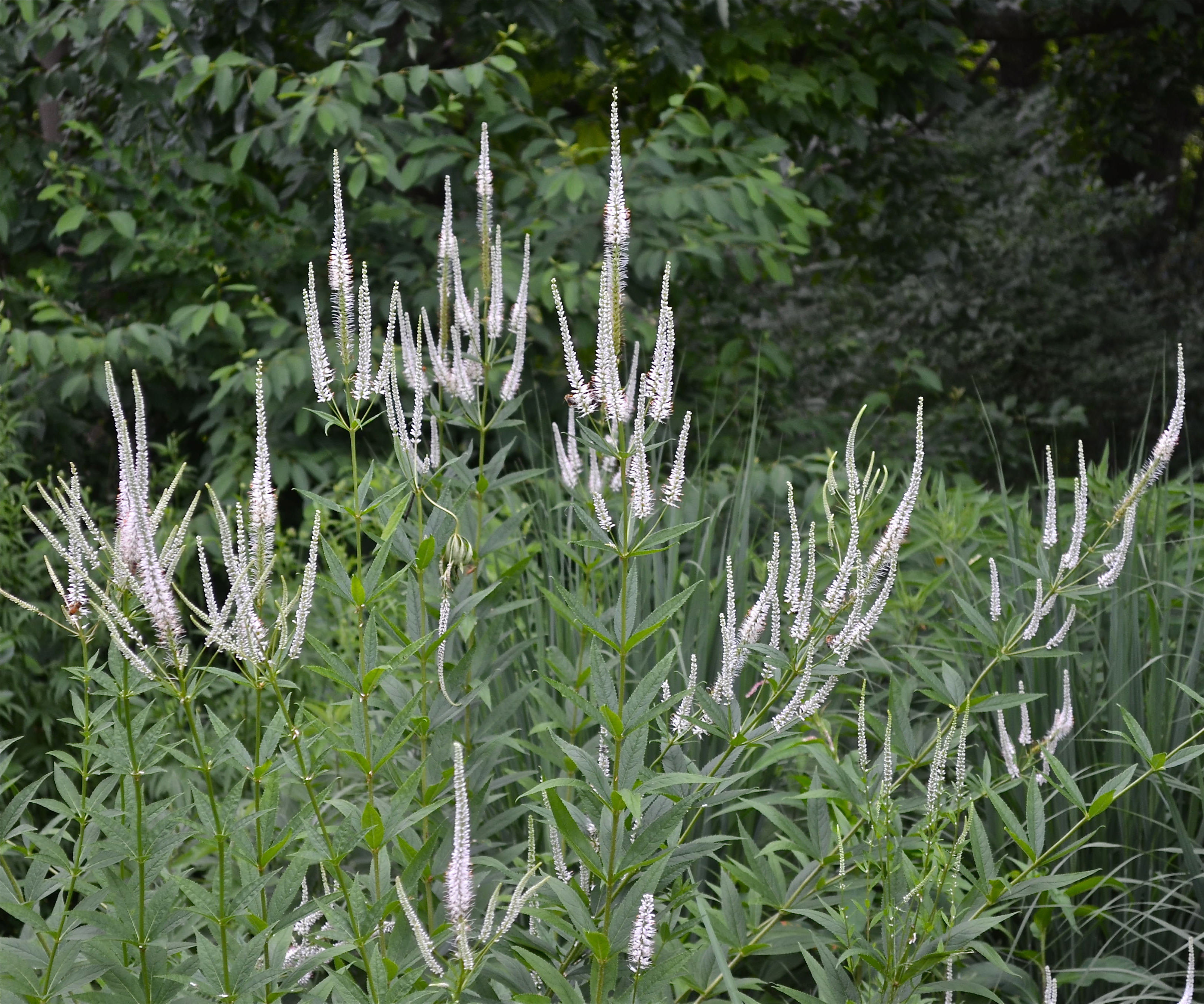
This is in the native plants area at Elm Bank. Around 6 feet tall. Very striking. Can easily be cultivated in gardens! Several native tribes made a tea of the roots to use an an emetic. Culver was an 18th century doctor who popularized its use. It’s related to digitalis (foxglove) and is toxic if ingested. Cotton Mather’s daughter died of Culver’s Root poisoning when she was treated with it for some minor malady. (Cotton Mather, 1663 – 1728, was a Puritan minister in Massachusetts, famous for his role in the Salem witch trials.) Snapdragon family.
Culver’s Root, Culver’s physic, Bowman’s root, Blackroot (Veronicastrum virginicum)

This big plant and several others, all blooming, are around an area that’s usually swampy but this year it’s dry. I was surprised to see it because all the ones in people’s gardens finished blooming weeks ago. Beautiful! This is the same woods that has the regular mountain laurel. Heath family. Native to eastern North America.
Great Laurel, Great Rhododendron (Rhododendron maximum)
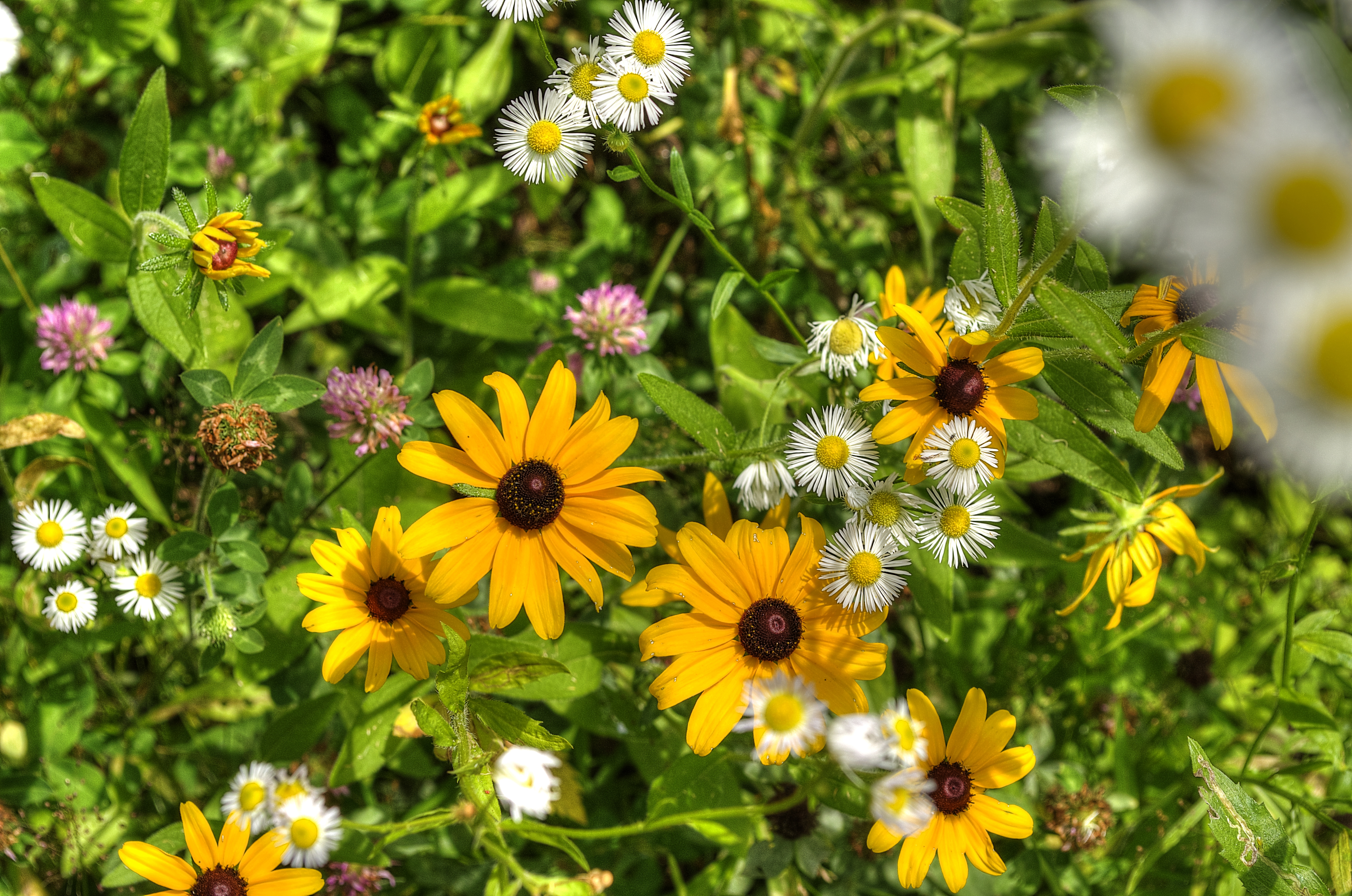
Bonus picture: The rhododendron was along a shady trail, a very short walk from a sunny field full of fleabane, black-eyed susan, and red clover.
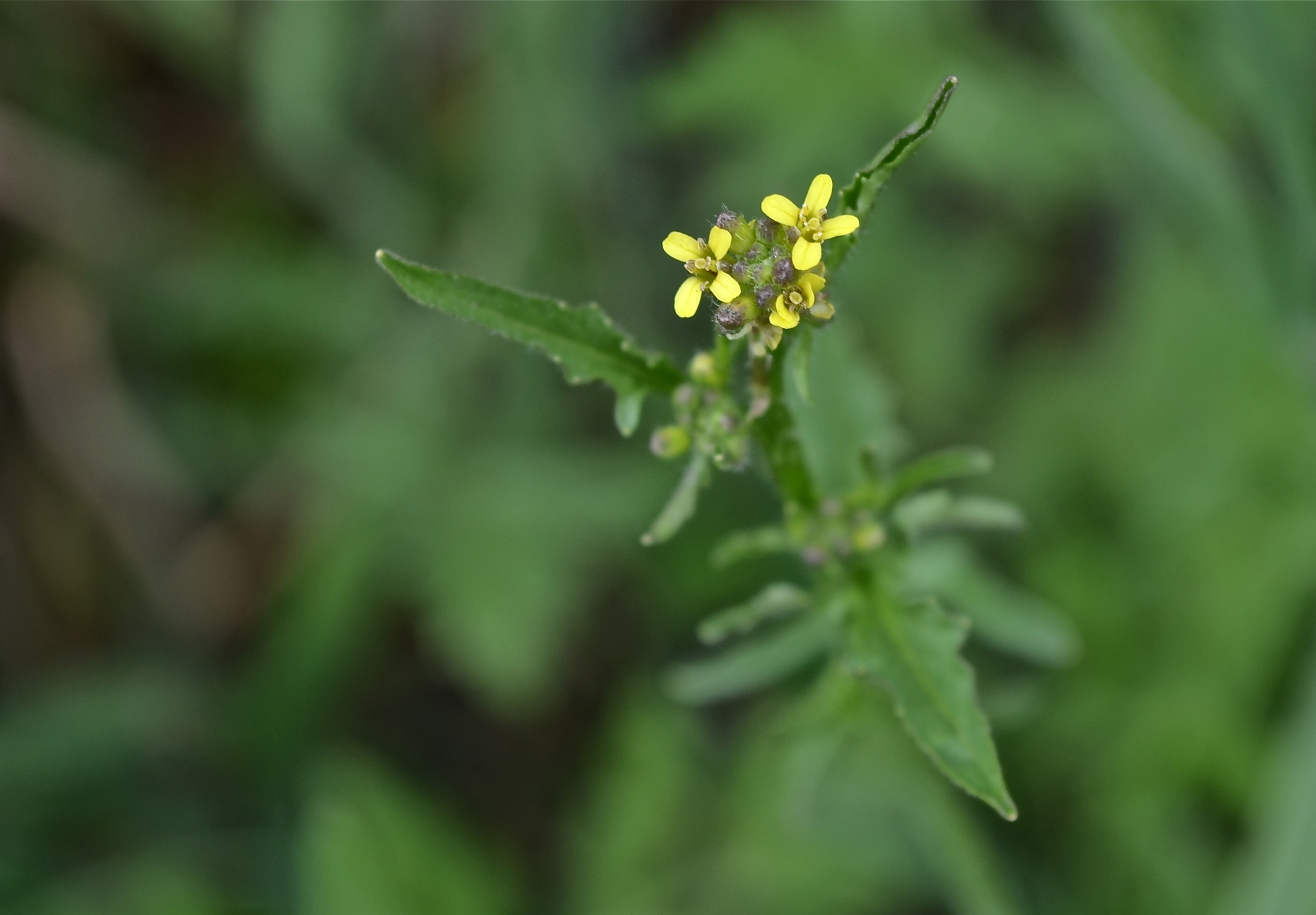
I took this picture a few weeks ago when it first bloomed, but couldn’t identify it until recently, now that it is a couple of feet taller and has developed distinctive narrow seed capsules (siliques) that vertically hug the stem. I should take new pictures. In Europe it’s cultivated as food, for the leaves and the seeds which can be ground into mustard paste. Used as a condiment particularly in northern Europe. Also, was used to soothe sore throats, and called Singer’s Plant. Family Brassicaceae. Native of Europe and North Africa.
Hedge Mustard (Sisymbrium officinale)
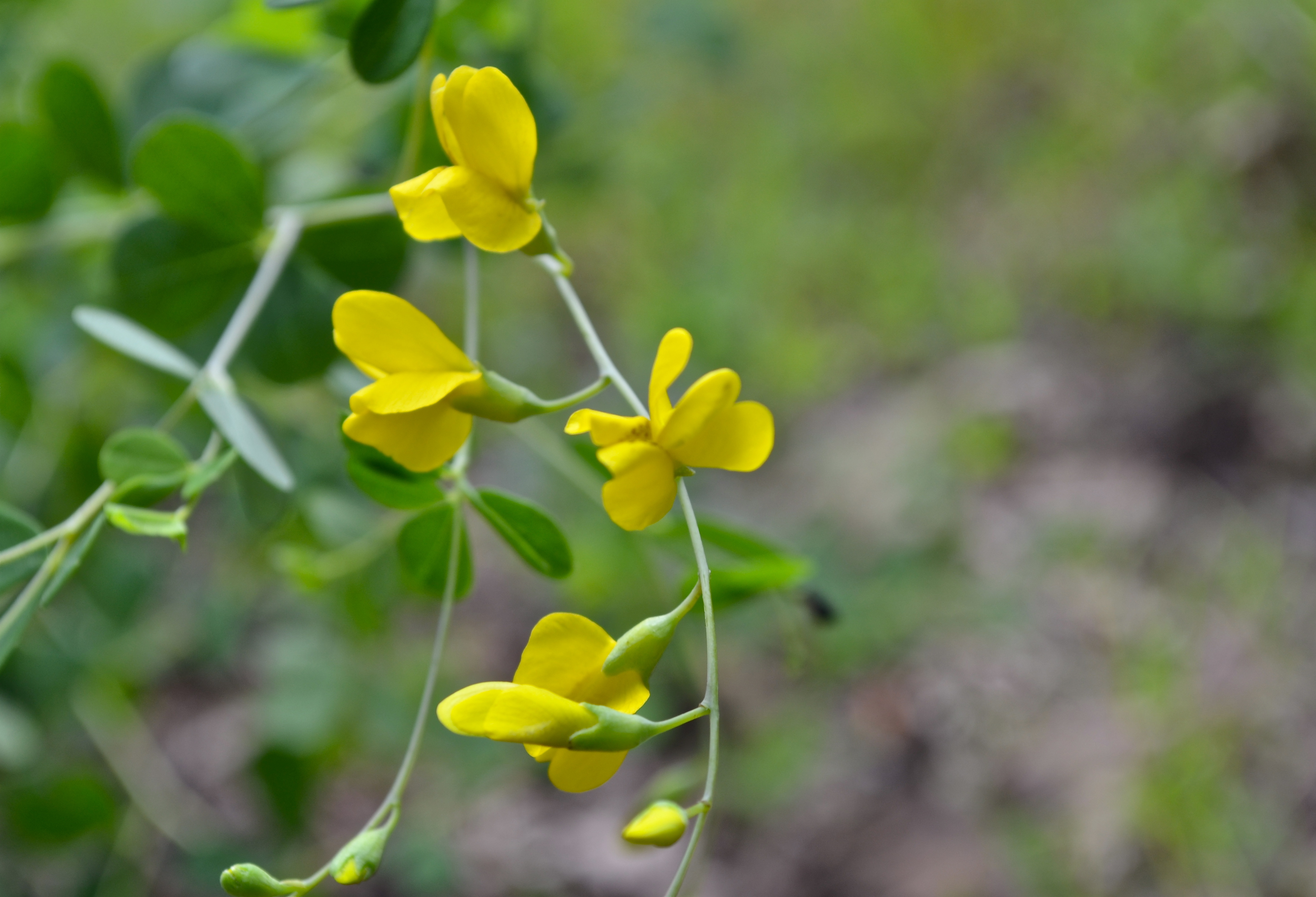
A nice surprise in the town forest parking area. In the fall, the foliage turns gray and the whole plant breaks off from the root and forms a tumbleweed, which rolls around distributing the seeds! Toxic. Pea family.
Yellow Wild Indigo, Horsefly-weed (Baptisia tinctoria)