Butter-and-eggs

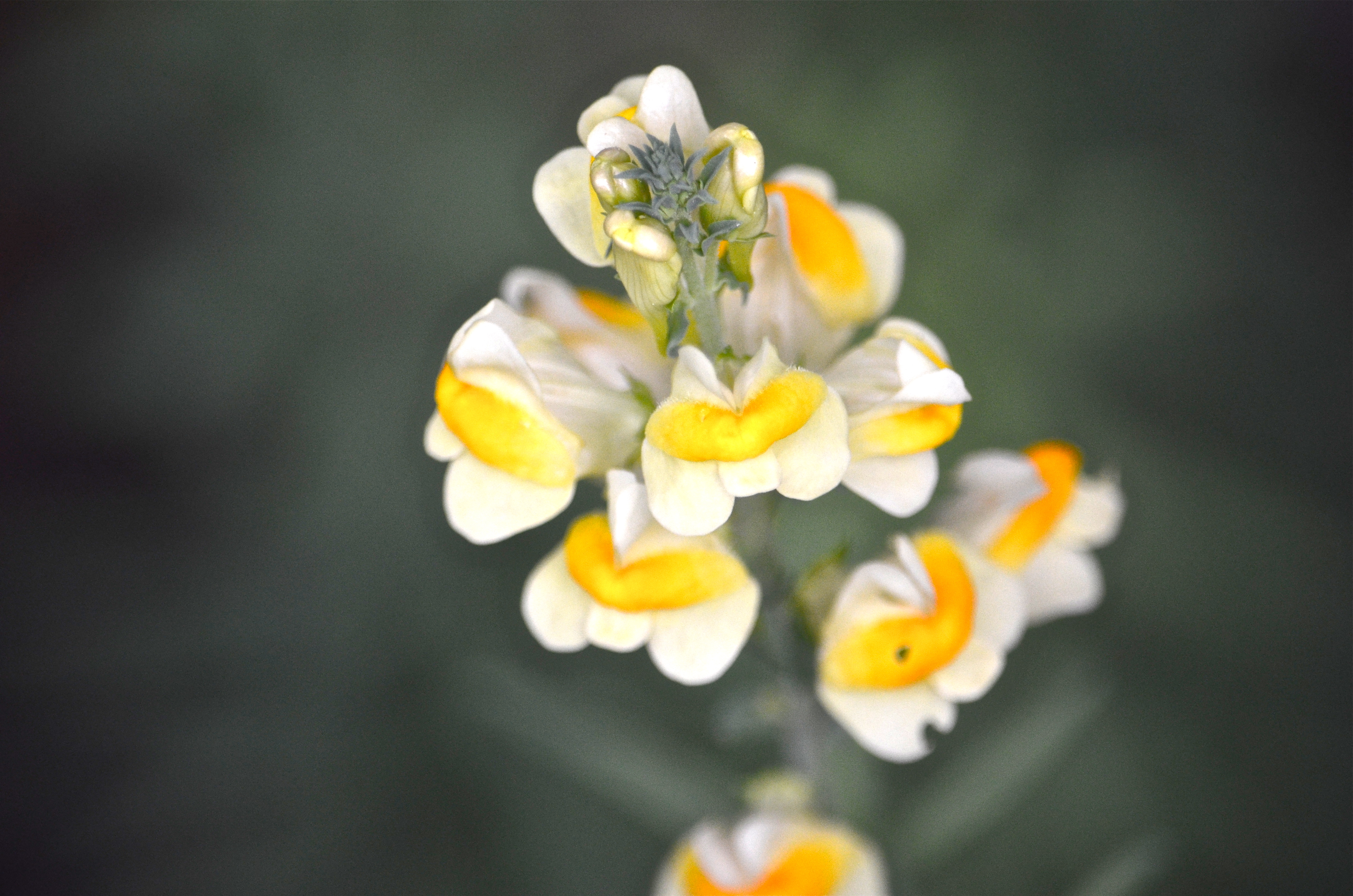
A food plant for many insects. Sometimes cultivated for cut flowers, and longlasting in a vase! A tea made from the leaves was used as a laxative and to treat skin diseases. Has diuretic and fever-reducing properties. This plant was common in an area where I played as a kid and I remember how you could open its little dragon jaws. A species of toadflax native to Europe and Asia, and now common in North America.

Butter-and-eggs, Common Toadflax, Yellow Toadflax (Linaria vulgaris)

Yellow Pond Lily


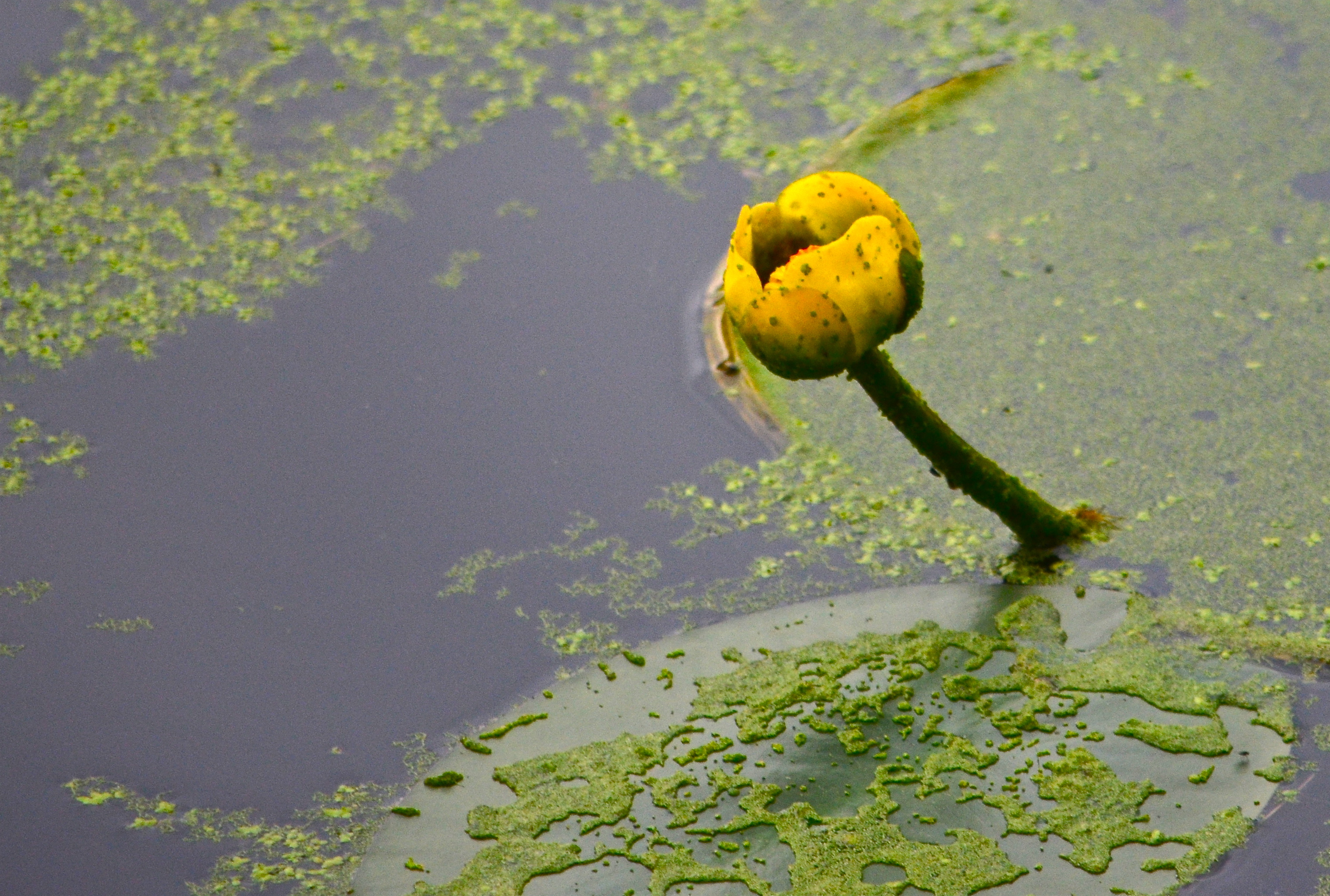
A rooted plant with floating leaves. In early spring the leaves are light green and below the surface, but by late spring they float on the water, and in summer, they often stand above the water. They have long horizontal roots in the lake’s sediments. The roots can be up to 6 inches in diameter and several feet long. The flower gives off a strong brandy-like odor that attracts insects.

Many cultures ate the roots cooked or dried and ground into flour for baking. The seeds were ground or popped like popcorn. The leaves and roots were used for dyeing and tanning. Leaves used to stop bleeding! and the roots as a pain remedy. Seeds are eaten by birds, and muskrats and beaver eat the roots. Native.

Yellow Pond Lily, Spatterdock, Cow Lily, Bullhead Lily (Nuphar lutea)

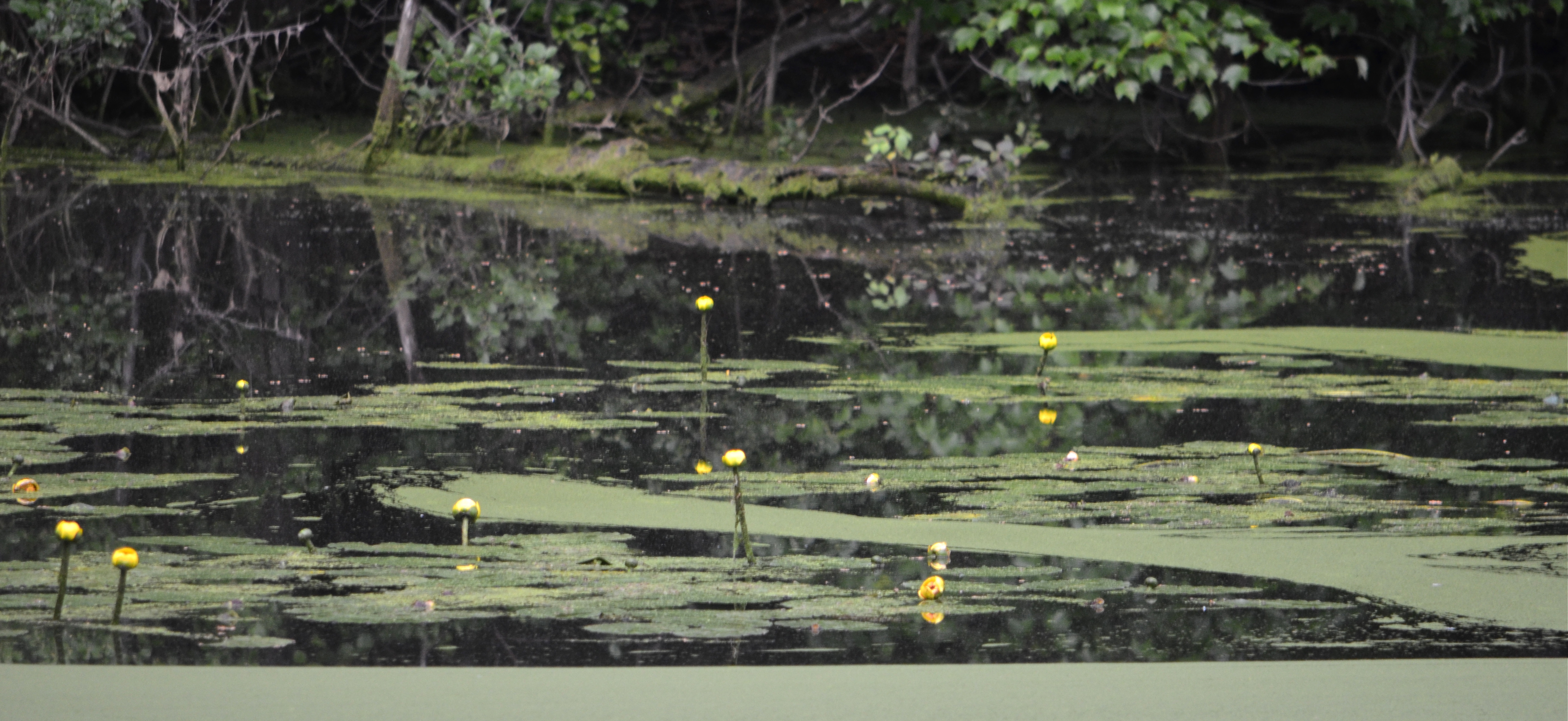
Bonus picture: other denizens of the pond.

Greens

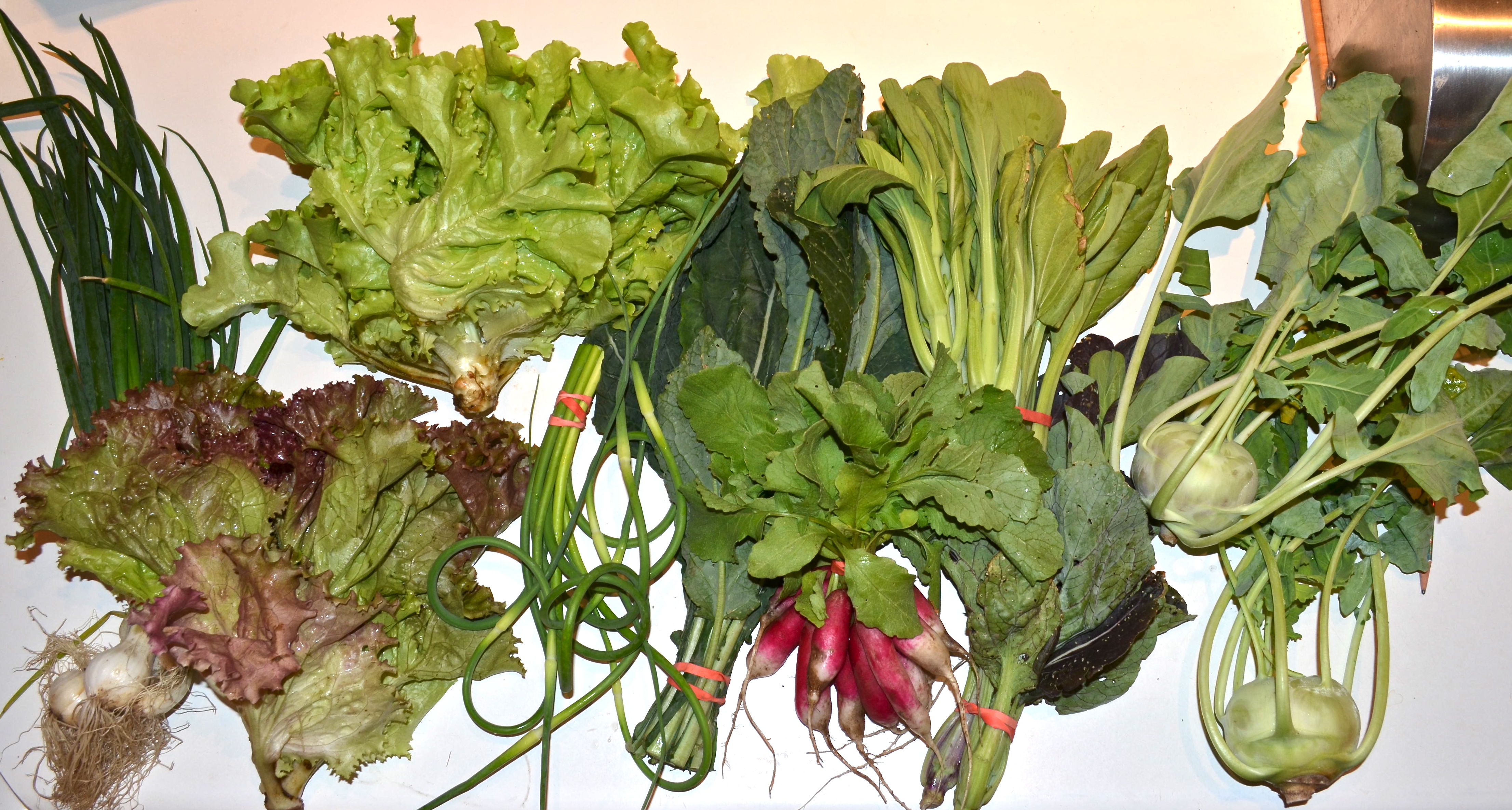
This is off the topic of wildflowers, but on the topic of local plants and growing seasons. We’ve bought a CSA share in The Dover Farm, which is pretty near here, and we just picked up our first bunch of chow (in the pouring rain). They had it in bins with signs: Take 1 bunch radishes, etc. Brian spread it out on the counter at home: two kinds of lettuce, japanese spinach, bok choy, kale, kohlrabi, scallions, radishes and garlic scapes. The salad that night tasted so crisp and interesting.

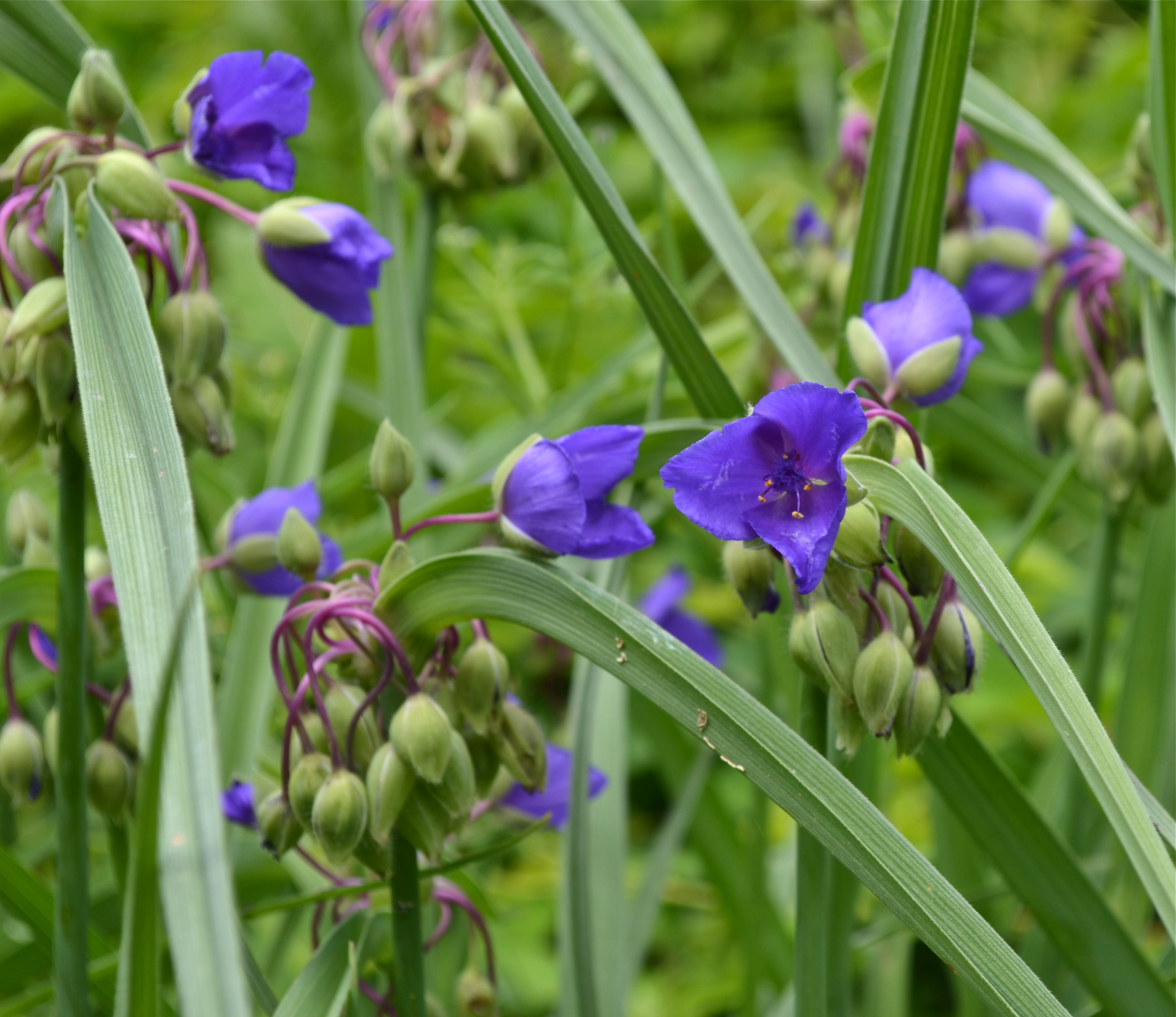
Spiderwort

Each flower lives only one day, but each plant produces 20 or more flowers per stem. The sap has a viscous quality and can be stretched between your fingers like a thread of spider silk. Maybe this is where the name came from. Plus it’s also called Cow Slobber and I guess that could be related. The stems, leaves and flowers are edible, raw or added to stew. The flowers can garnish your salad! The spiderwort genus is named after John Tradescant, who was a gardener for King Charles I of England (1600-1649). Spiderwort seeds were brought back from the new world, and he planted them and popularized spiderworts. Love the curly purple stems.

Spiderwort, Cow Slobber (Tradescantia sp.)

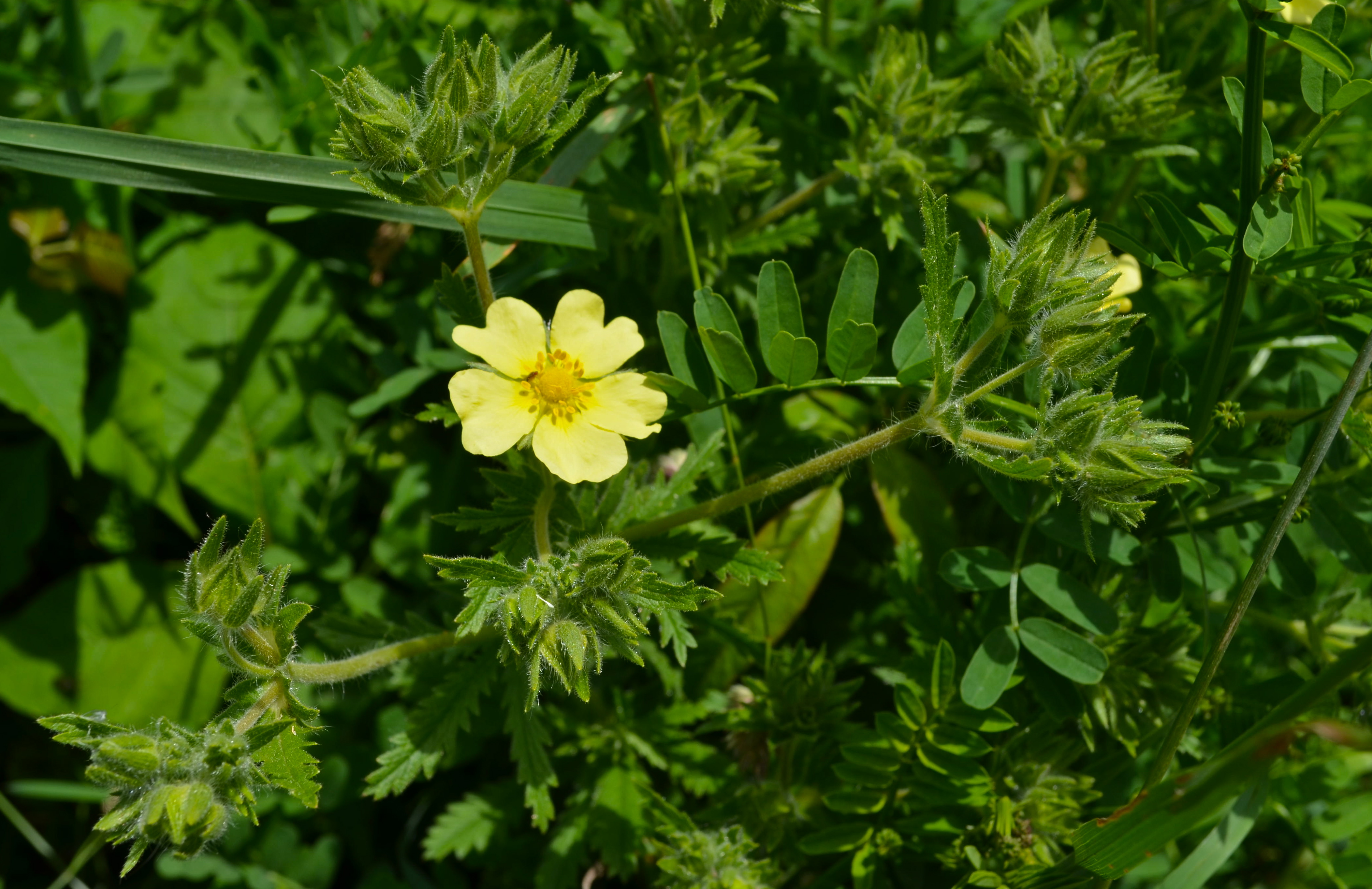
Rough-fruited Cinquefoil

I think this is the third variety of cinquefoil I’ve posted. It’s the tallest (1 to 2 feet tall) and the palest yellow, with the biggest flowers. Heart-shaped petals. Native to Europe and Asia. Rose family.

Rough-fruited Cinquefoil, Sulfur Cinquefoil (Potentilla recta)

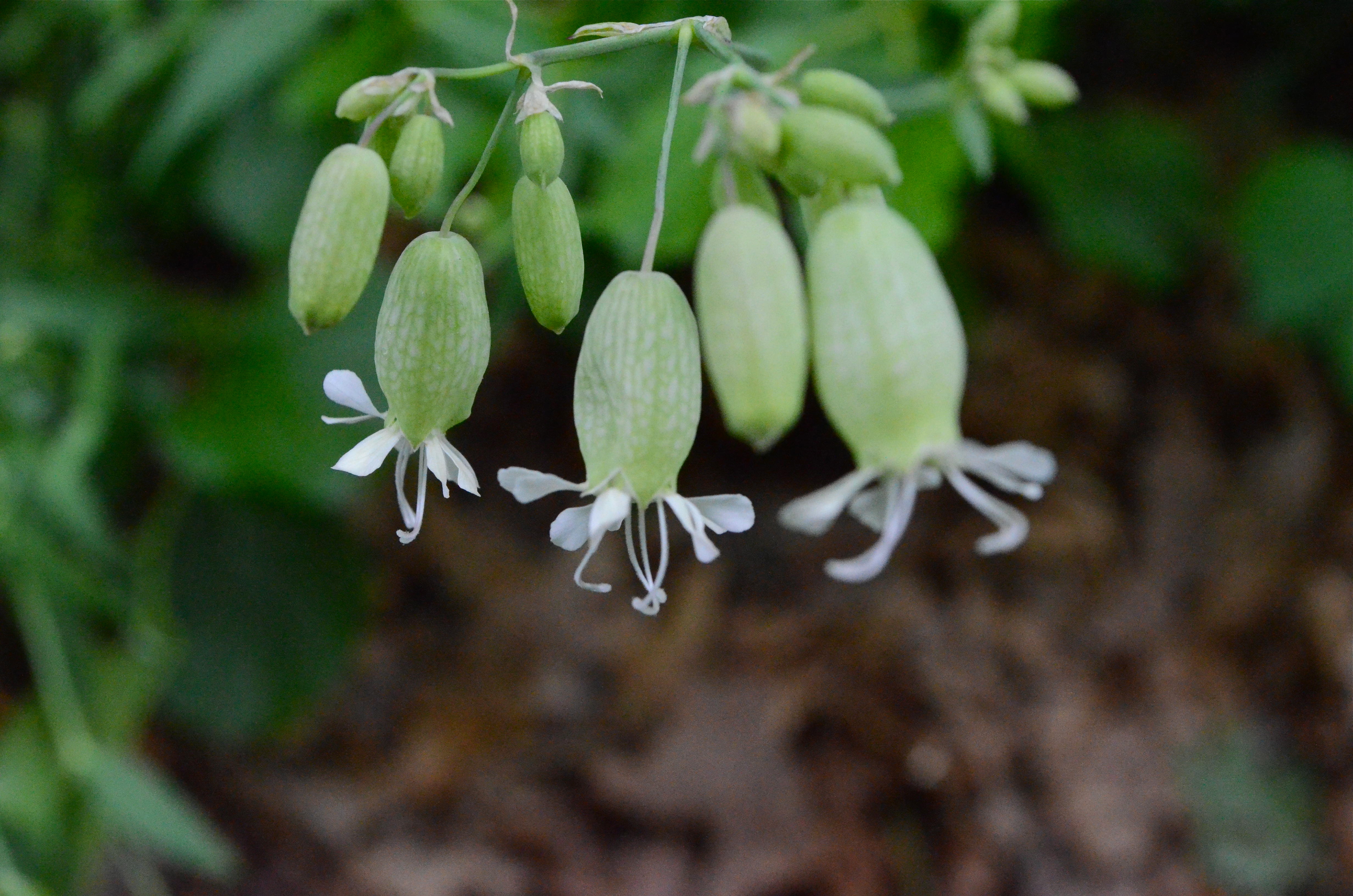
Bladder Campion

Little green balloons with frills. In parts of Europe, it’s considered food — the leaves are eaten raw in salads, older leaves sauteed in garlic, and also used for a dish called Widower Gazpacho. In Greece it’s cultivated and sold in food shops. Native to Europe.

Bladder Campion (Silene vulgaris)

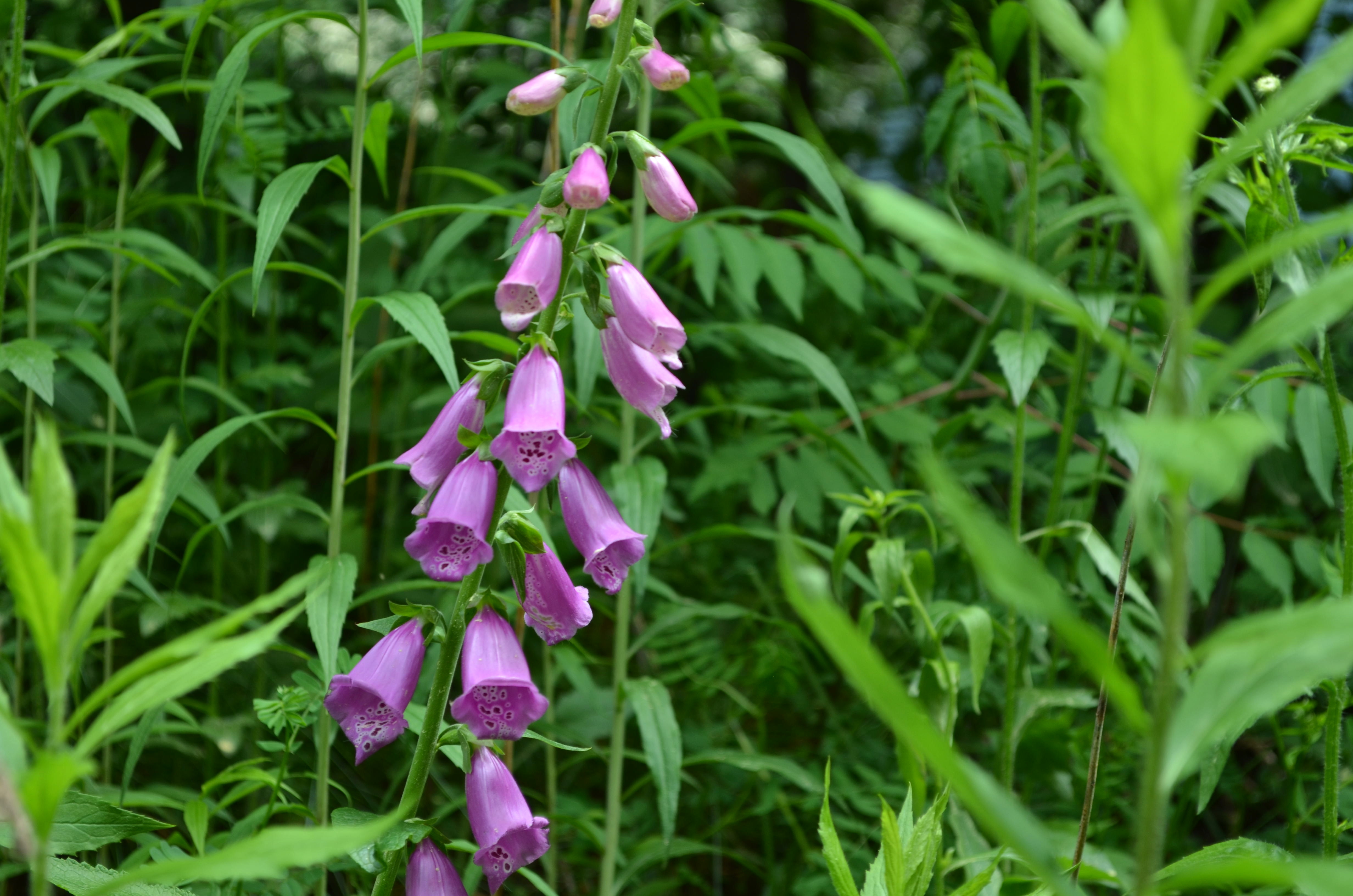
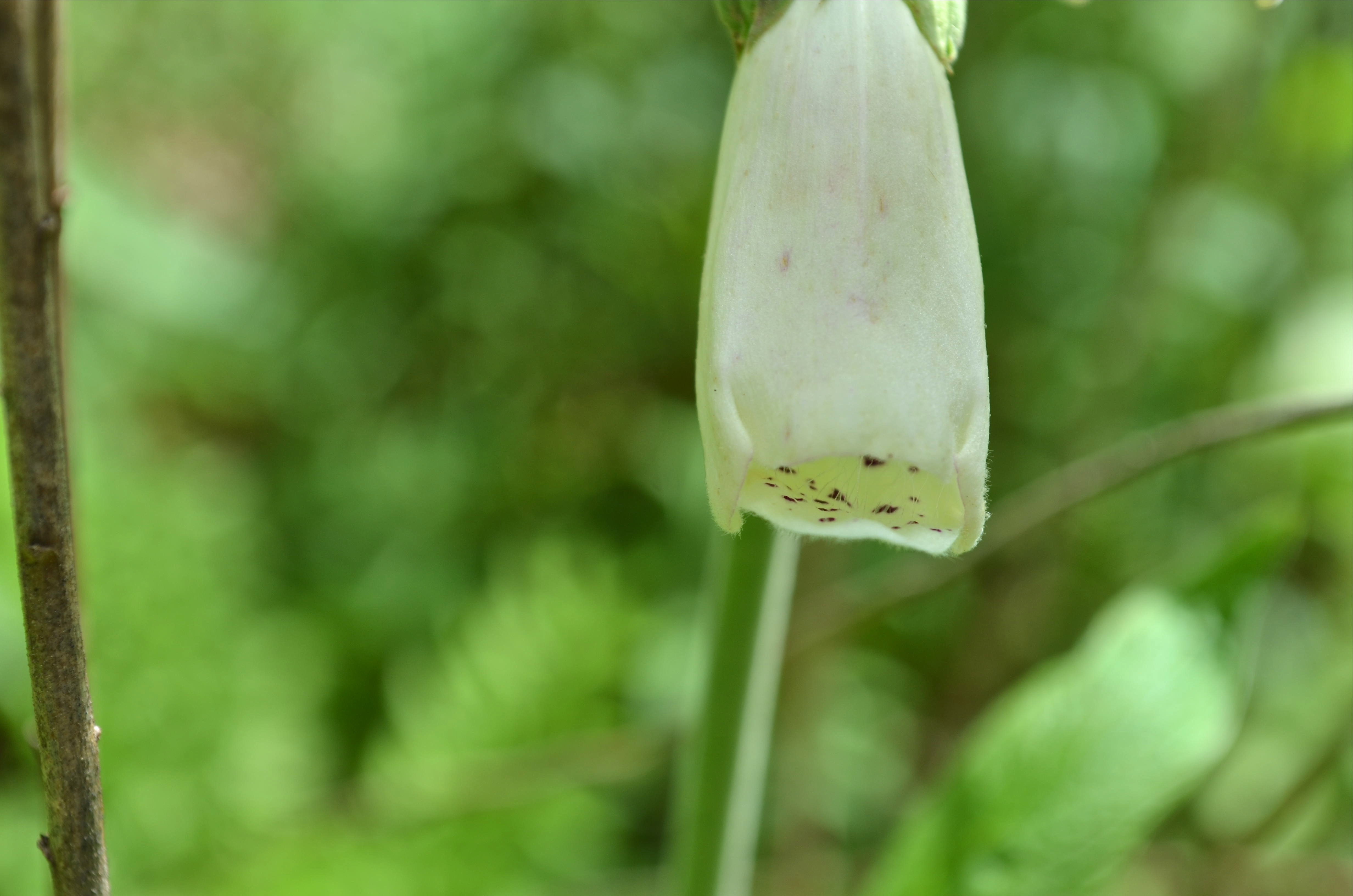
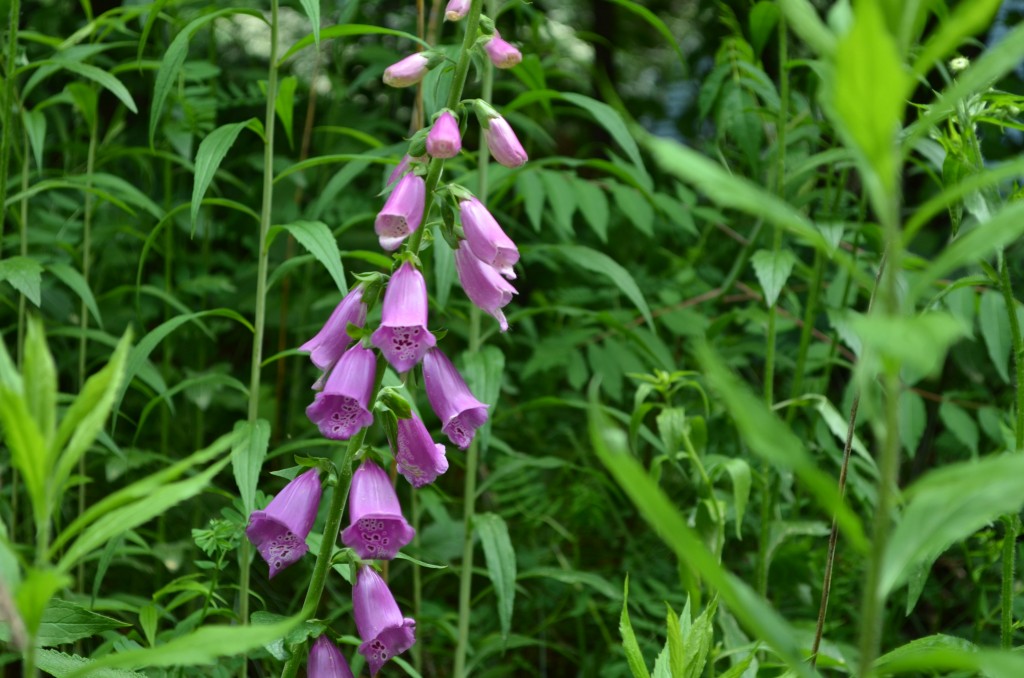
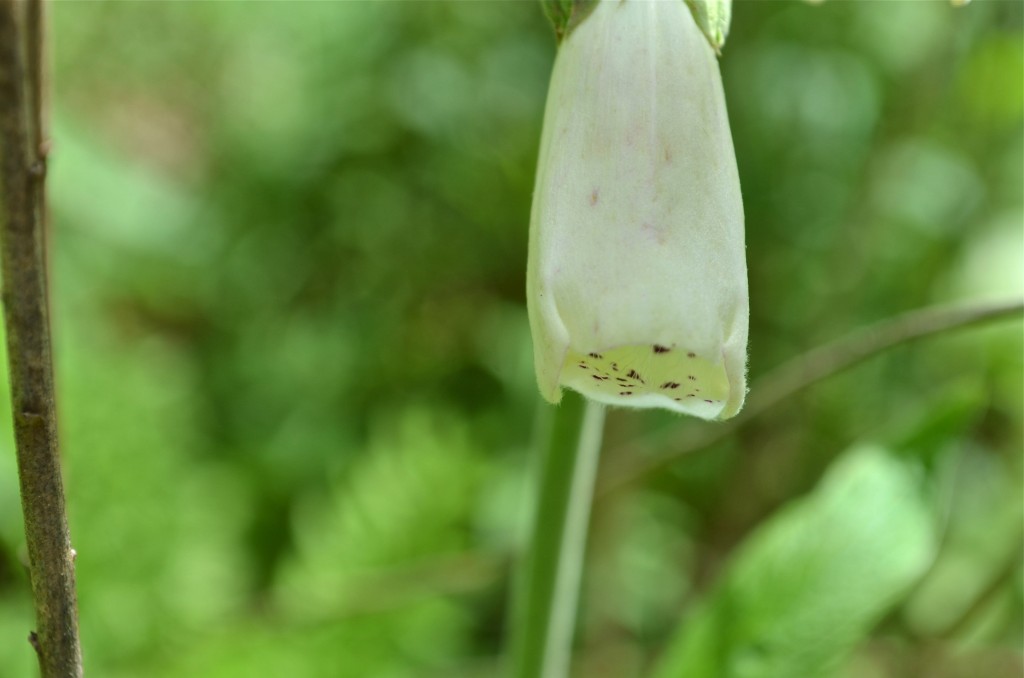
Foxglove


The scientific name (Digitalis) means “finger-like” and refers to the way the blossoms fit nicely on one’s fingertip. (What?) The entire plant is toxic, with the leaves of the upper stem being the most potent — can cause death! Also used for various cardiac-related drugs. Native to everywhere but here (Europe, Asia, Africa).

According to the 19th century book English Botany, Or, Coloured Figures of British Plants:

Dr. Prior, whose authority is great in the origin of popular names, says “It seems probably that the name was in the first place, foxes’ glew, or music, in reference to the favourite instrument of an earlier time, a ring of bells hung on an arched support, the tintinnabulum“… we cannot quite agree with Dr. Prior for it seems quite probable that the shape of the flowers suggested the idea of a glove, and that associated with the name of the botanist Fuchs, who first gave it a botanical name, may have been easily corrupted into foxglove. It happens, moreover, the name foxglove is a very ancient one and exists in a list of plants as old as the time of Edward III. The “folks” of our ancestors were the fairies and nothing is more likely than that the pretty coloured bells of the plant would be designated “folksgloves,” afterwards, “foxglove.” In Wales it is declared to be a favourite lurking-place of the fairies, who are said to occasion a snapping sound when children, holding one end of the digitalis bell, suddenly strike the other on the hand to hear the clap of fairy thunder, with which the indignant fairy makes her escape from her injured retreat. In south of Scotland it is called “bloody fingers” more northward, “deadman’s bells” whilst in Wales it is known as “fairy-folks-fingers” or “lambs-tongue-leaves”.

Common Foxglove (Digitalis)
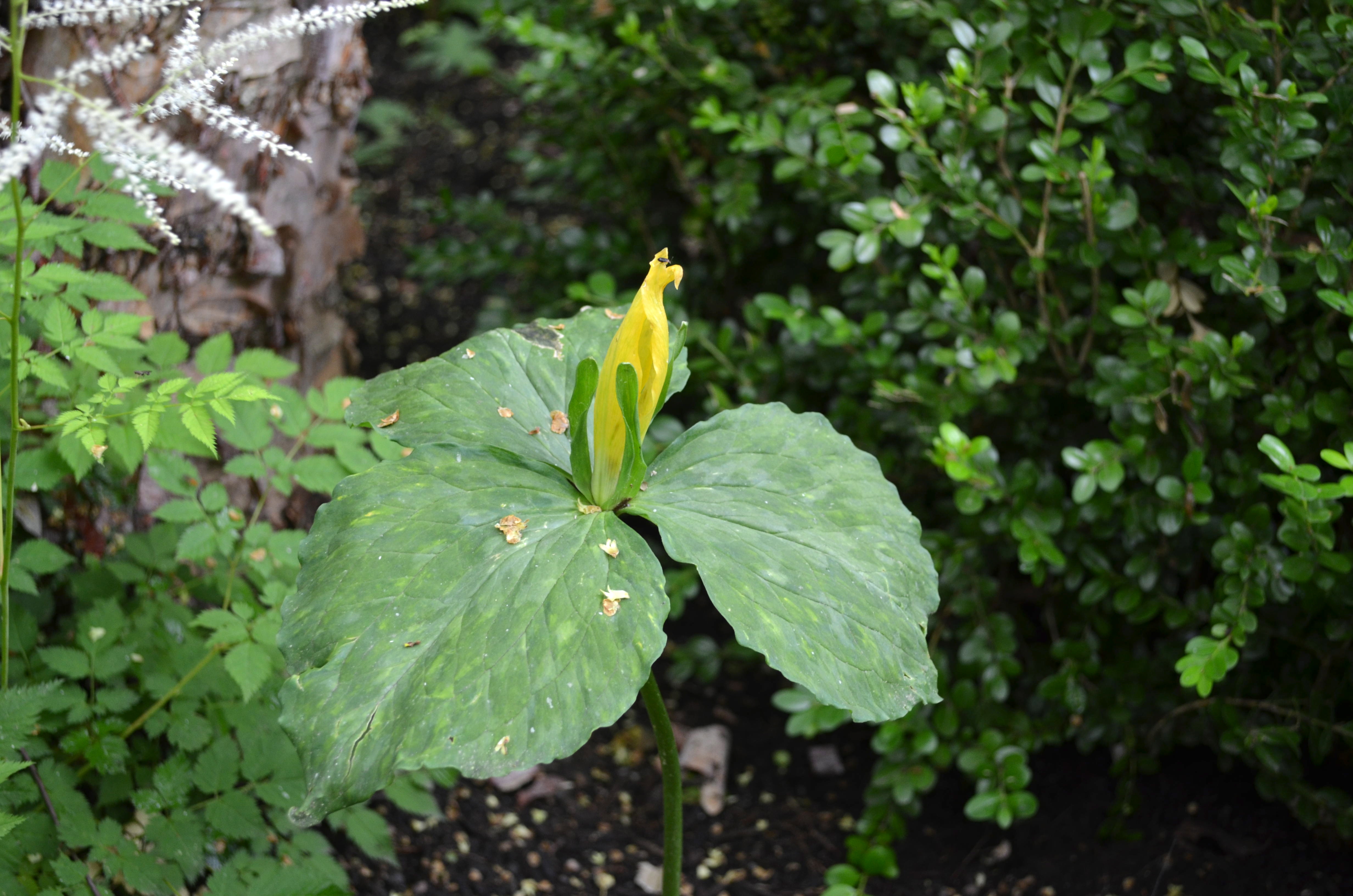
Yellow Trillium


Trillium plants can be divided into two groups: the kind where the flower is on a stem either above the leaves or curving under them (pedicellate) and the kind where the flower arised directly from the leaves with no stem (sessile). These are sessile. They have a lemony fragrance. Lily family. Native to more southern regions, and here, found looking very robust in a woodland garden.

Yellow Trillium (Trillium luteum)

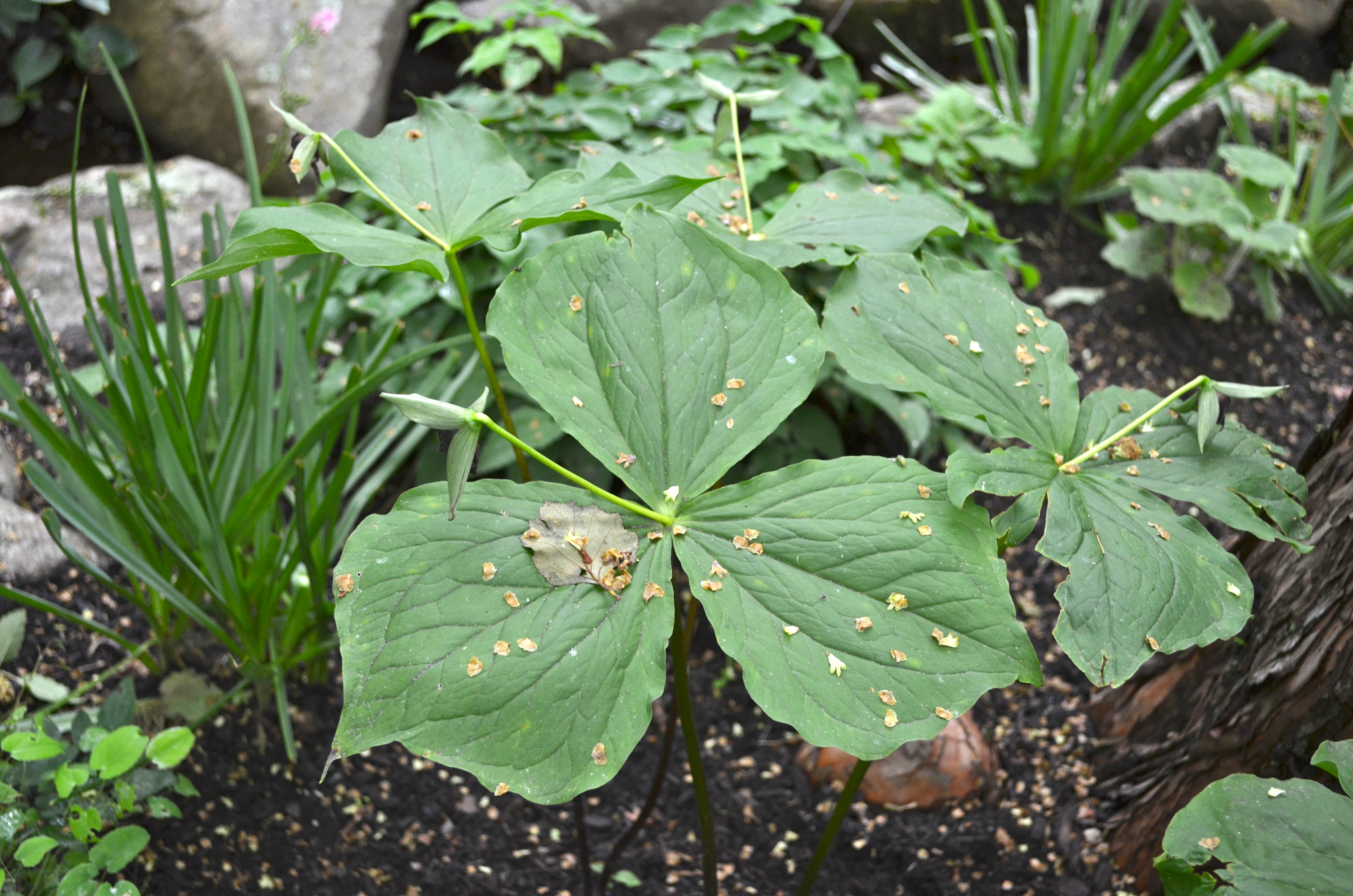
Wake-robin Trillium


I saw these maroon wake-robins and some yellow trilliums not in any wild woods, but in a Needham woman’s woodland garden (a spectacular stop on the Needham Garden Tour). But they’re native wildflowers and they’re (mostly finished) blooming, so here they are. Picking a trillium seriously hurts the plant, because then it can’t produce food for the next year. It takes many years to recover. Trillium seeds are spread by ANTS! Ants are attracted to the decaying ovary, take the seeds to their nests, eat the spongy “elaisosome” part of the seeds, and discard the rest of the seeds, which then germinate in the ant compost heap. Lily family. Native.

Wake-robin, Purple Trillium, Birthroot (Trillium erectum)

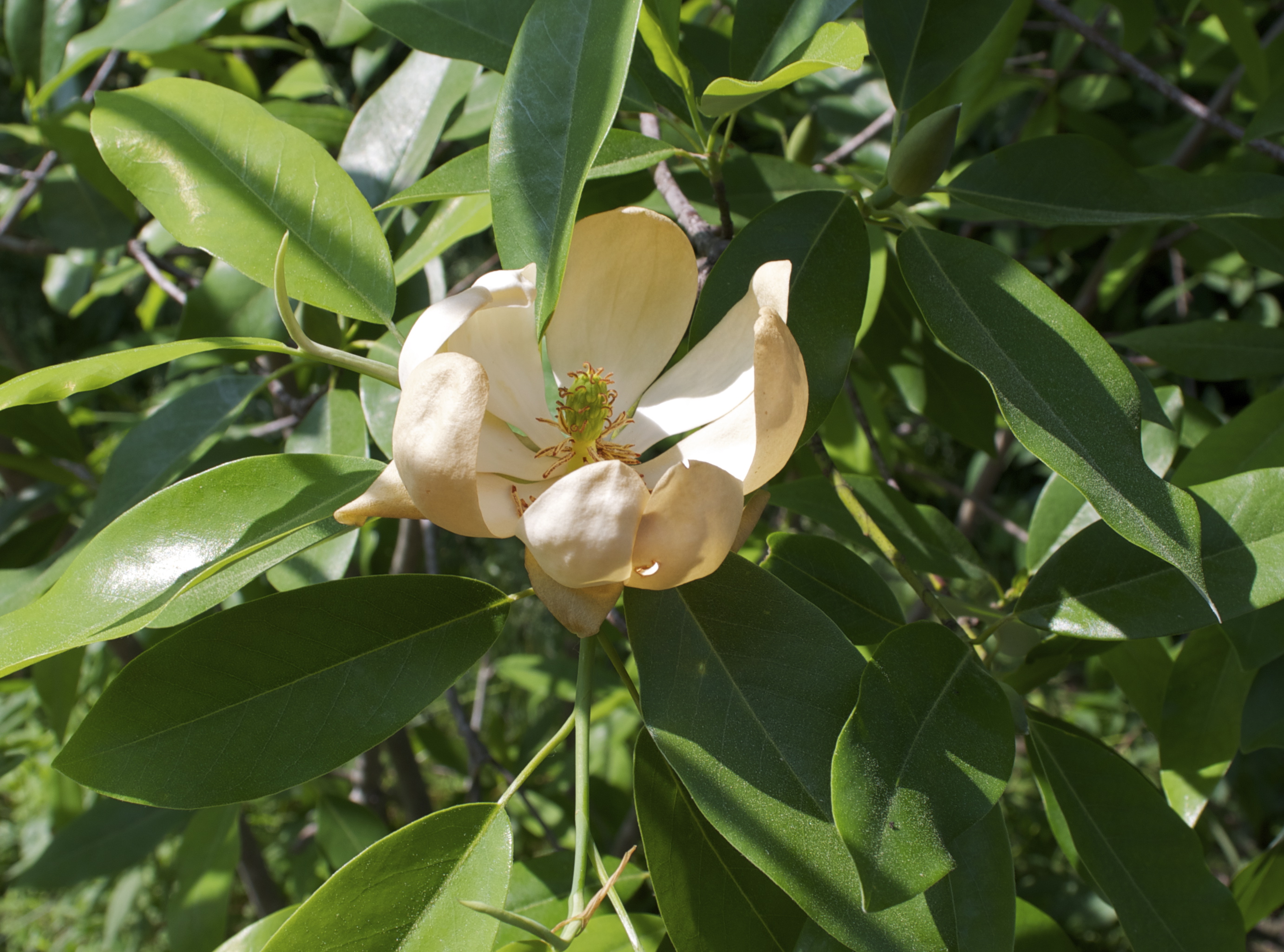
Sweetbay Magnolia

This is growing near the pond at Centennial. It’s native to the southeastern U.S…. The inner bark is mildly scented, like bay laurel. The flowers have a vanilla scent. This species was collected in 1678 and sent to England, and was the first kind of magnolia cultivated in England.

Sweetbay Magnolia, Swamp Magnolia, Beaver Tree (Magnolia virginiana)