Violet varieties

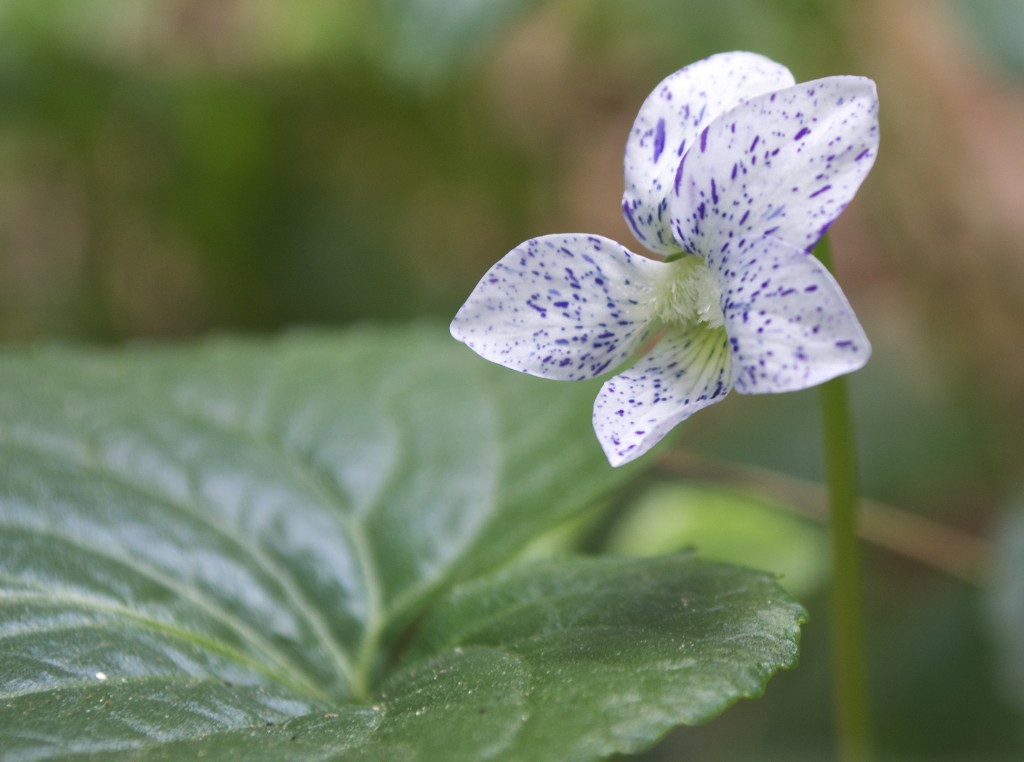
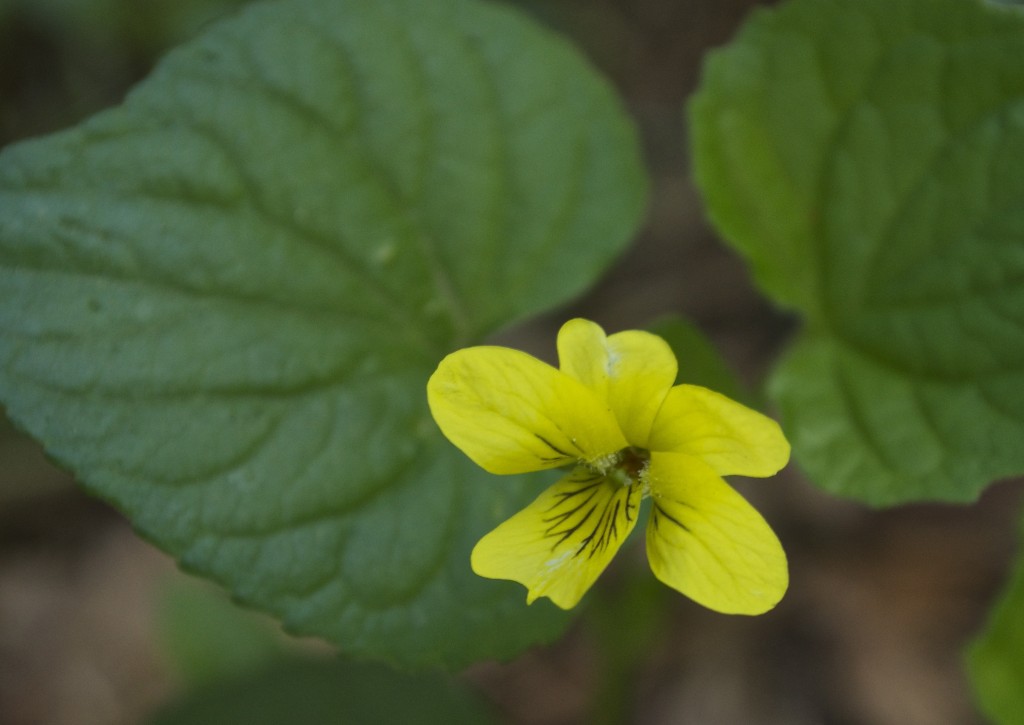
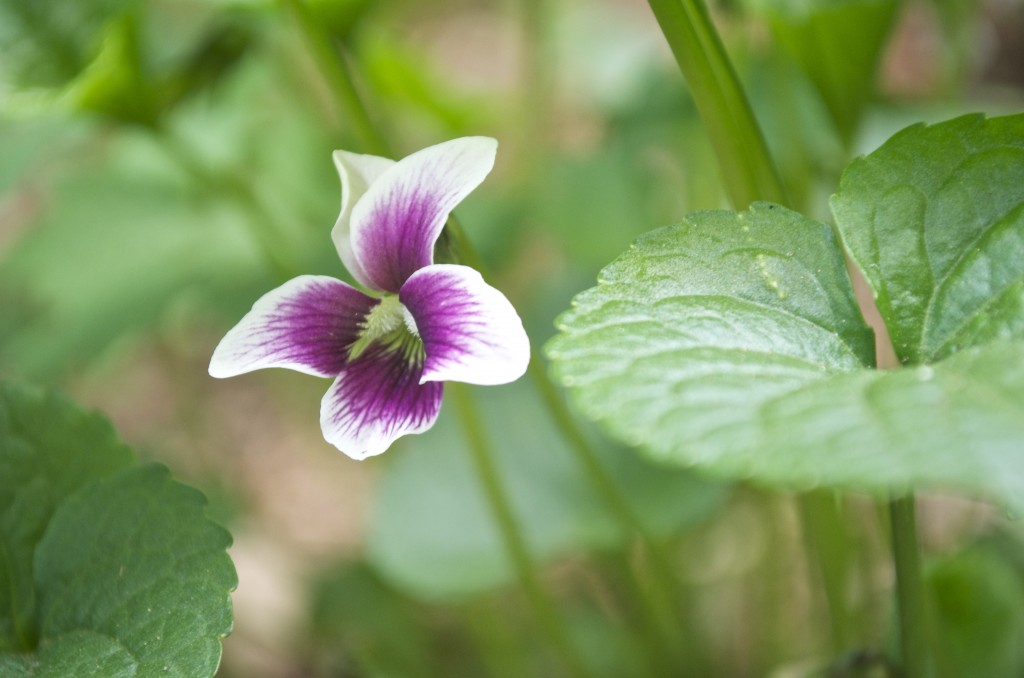
Freckles violetYellow violetRed-eye violet

Varieties of violet originally from Dr. Whiteside’s garden in Charleston, Illinois, now growing in my yard. Freckles, Common Yellow Violet, and Red-eye. Little masterpieces.

Freckles Violet (Viola sororia)

Common Yellow Violet (Viola pubescens eriocarpa)
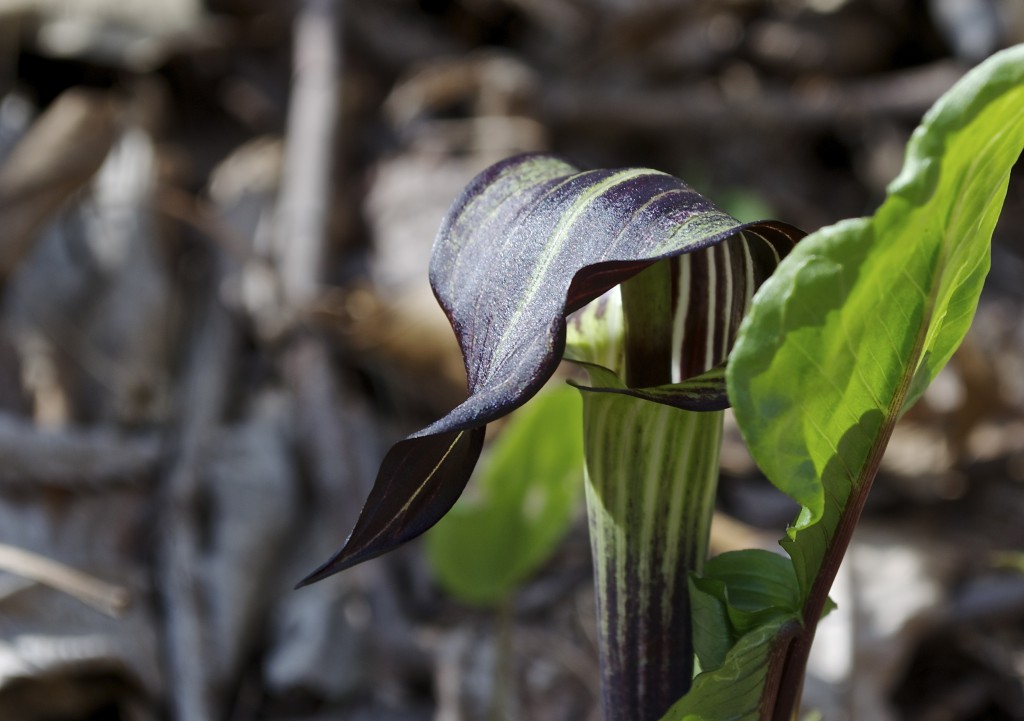
Jack-in-the-Pulpit

Jack in the PulpitThe first Jack in the Pulpit of the season, a very dramatic black and green striped and slightly ruffled one! Some folklore from Wikipedia: “One account from the Meskwaki Indians states that they used it to determine the fate of the sick by dropping a seed in a cup of stirred water; If the seed went around four times clockwise, the patient would recover, if it went around less than four times they would not.” Native. Photo: May 3, 2013.

Jack in the Pulpit, Indian Turnip (Arisaema triphyllum)

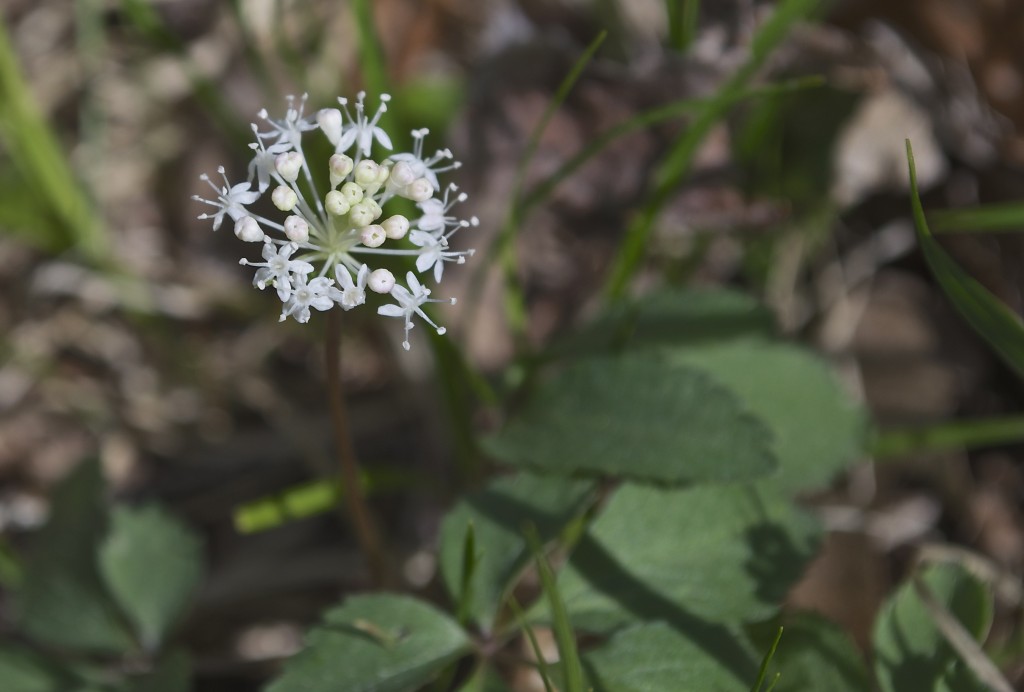
Dwarf Ginseng

DSC_0024This is not the ginseng used in herbal medicine but it’s the same family (Ginseng). Native. They bloom for about three weeks in mid to late spring. Has yellowish clustered berries in July to August. US Forest Service: Native Americans “used tea of the whole plant for colic, indigestion, gout, hepatitis, shortness of breath, fainting, and nervous debility. Its distinctive tubers can be eaten raw or boiled.”

Dwarf Ginseng (Panax trifolius)

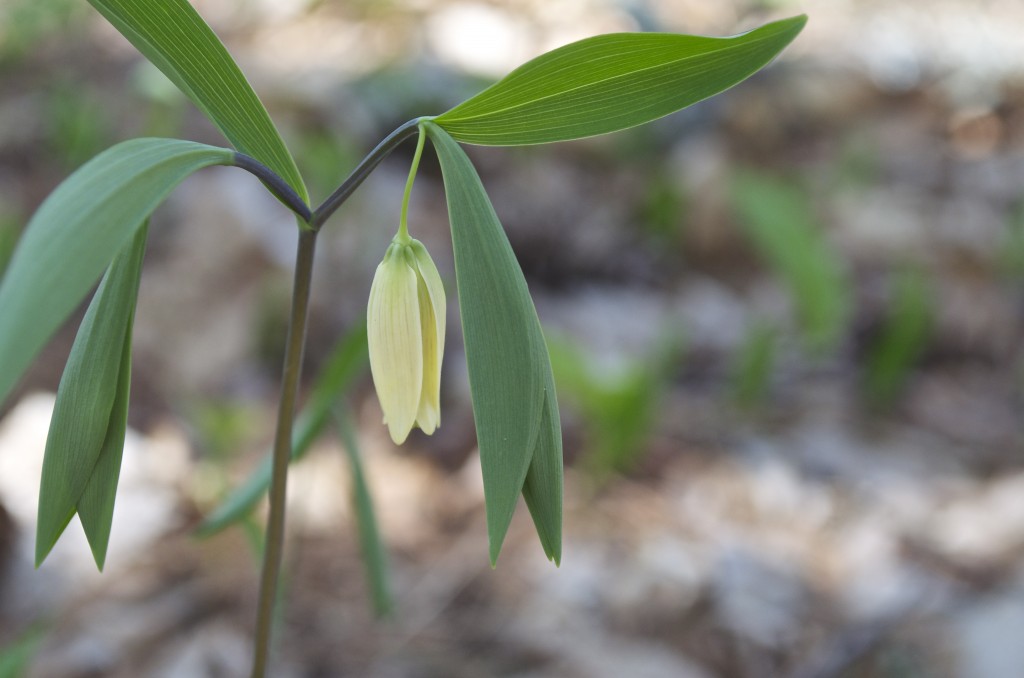
Sessile Bellwort

Sessile Bellwort

Sessile means sitting or resting on the surface —  these have sessile leaves, which means the leaf comes directly out of the main stem, but the leaf itself has no stem of its own. Lily family. Native. Photo taken May 3, 2013.

Sessile Bellwort, Wild Oats (Uvularia sessilifolia)

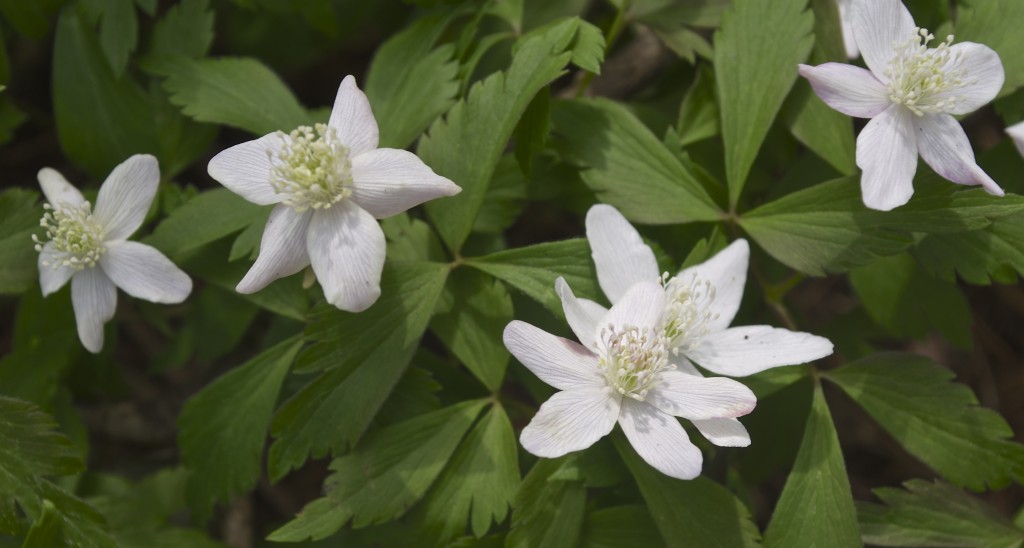
Wood anemone

Wood AnemoneThese are common in the local woods, can cover large areas. They grow from rhizomes. Buttercup family. Poisonous. Native. Photo: May 2, 2013.

Wood Anemone, Windflower, Nightcaps (Anemone quinquefolia)

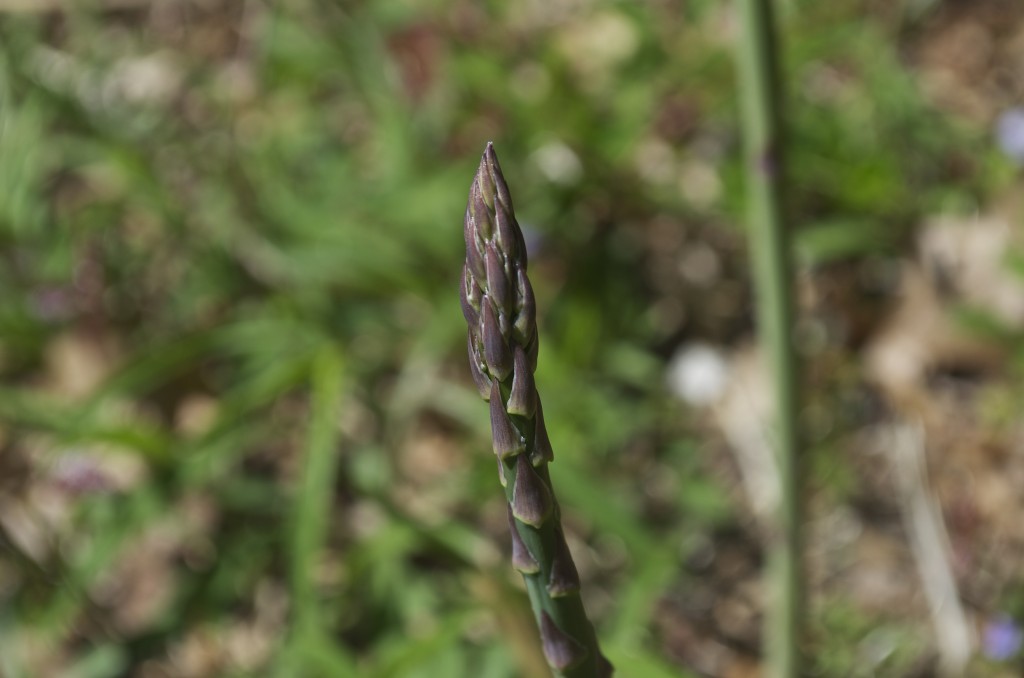
Wild Asparagus

Wild AsparagusThere is a bit of meadow where these stalks have emerged. They seem few and far between so I wouldn’t feel right harvesting them. But they look good! (Later when they fruit, they’ll have small red berries that are poisonous to humans.) There is an asparagus recipe in the oldest surviving cookbook, which is a Greek book from the third century AD. Native to Europe, Africa and Asia. Introduced to North America around 1850.

Wild Asparagus (Asparagus officinalis)

Cedar-Apple Rust

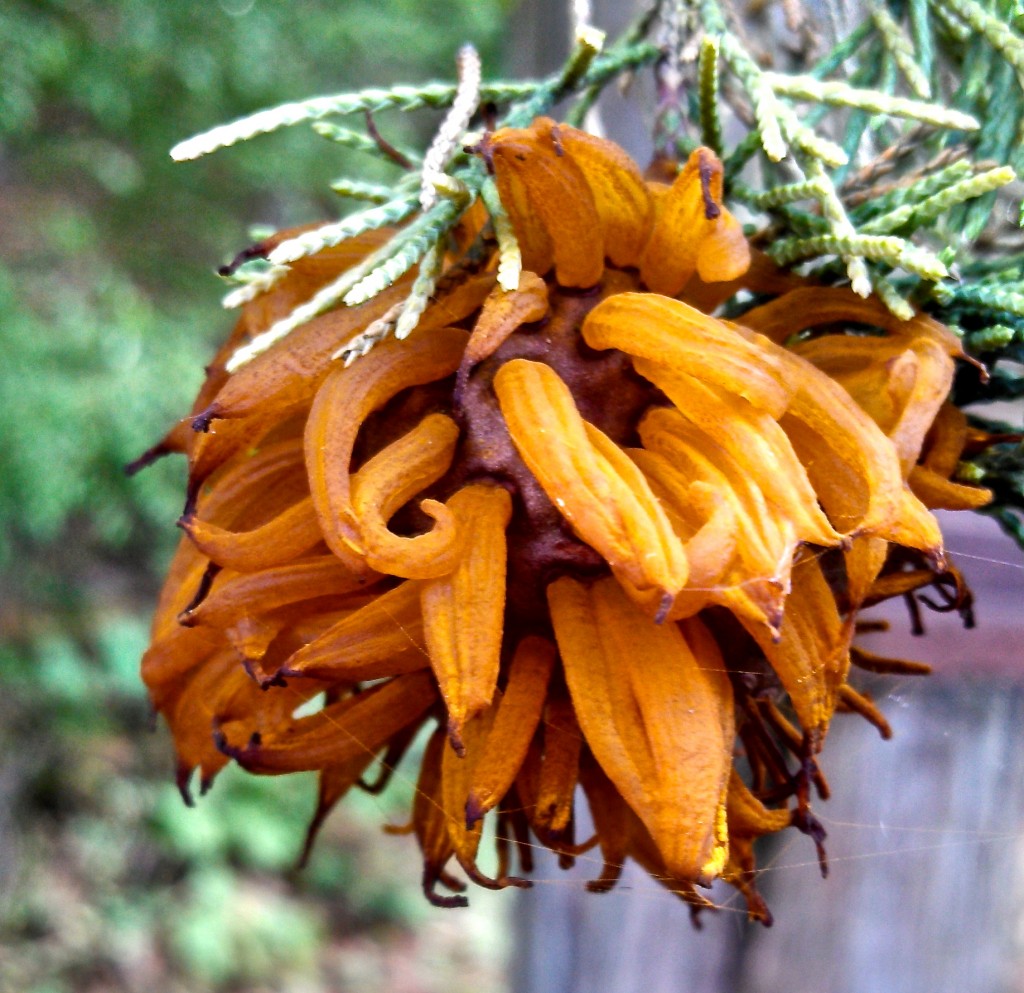
Orange fungusI’m including this parasitic fungus (which looks like a beached sea creature) because its life cycle is entwined with the wild crab apple trees. This fungus grows on eastern red cedars… but only if there is an apple tree nearby. To live, it requires two hosts: it has to alternate between an apple tree and a cedar. The fungal spores blow from the galls on the cedar onto the leaves of apple trees. They infect the apple tree and eventually the fungal spores from the apple tree blow back to the cedar and create new infections. Yuck.

Cedar-Apple Rust (Gymnosporangium juniperi-virginianae)

Wild Crab Apple

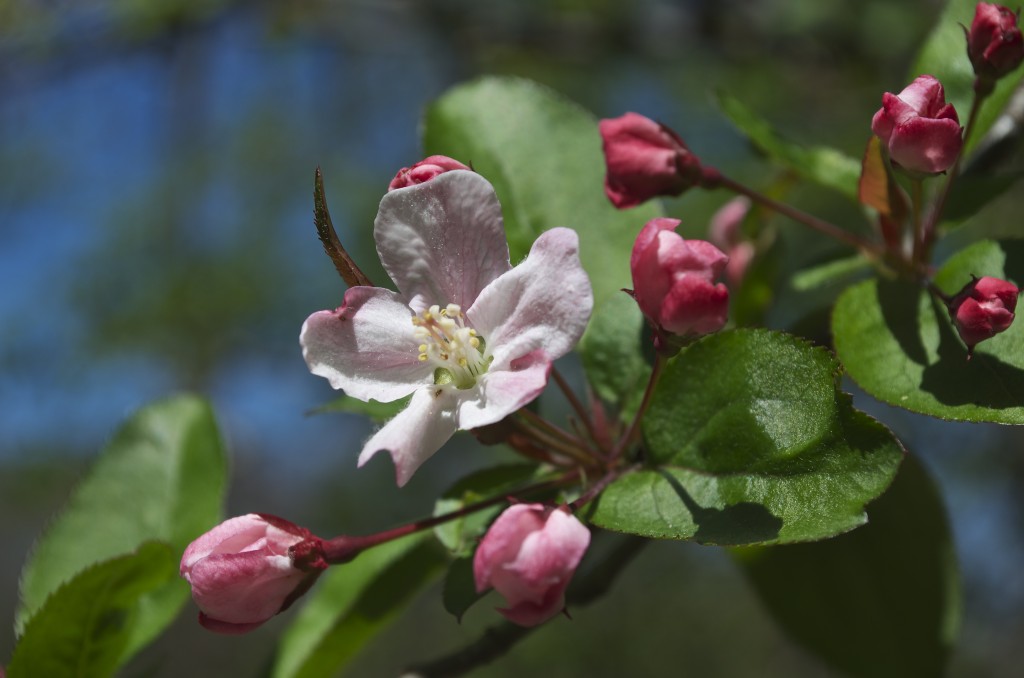
Flowering CrabNative to North America. They require cross-pollination by insects… they’re food for many butterfly larvae. Plus, a beautiful sign of spring. (Photo taken May 1, 2013)

Wild Crab Apple Tree (Malus coronaria)

Garlic Mustard

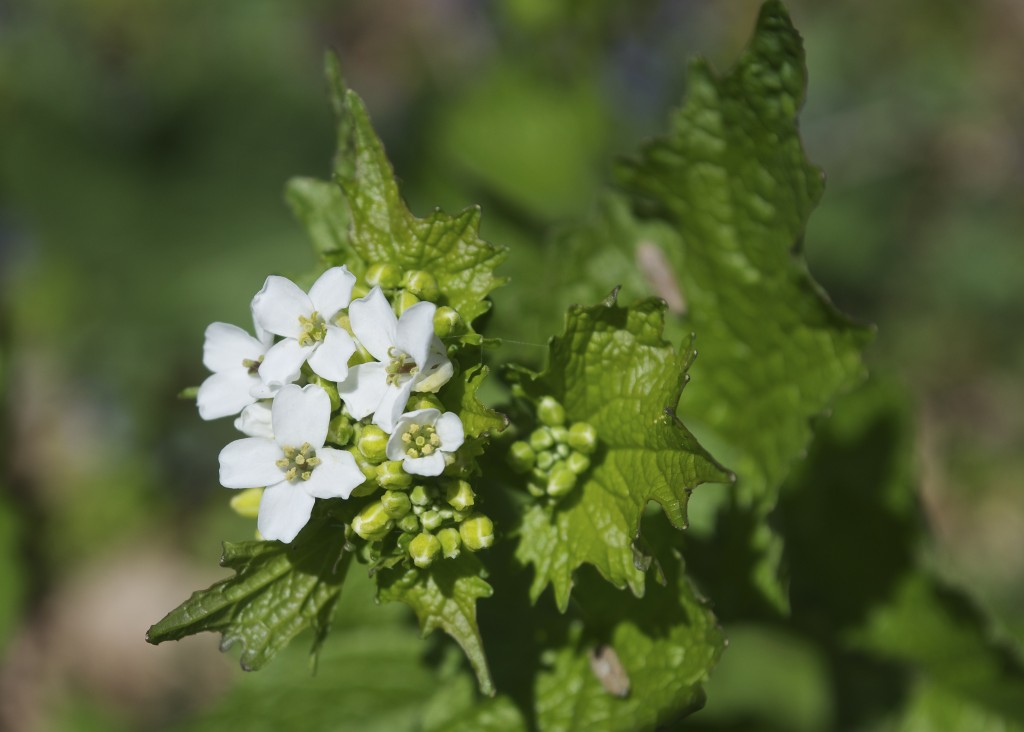
Garlic MustardLeaves smell garlicky when crushed. An invasive that crowds out more delicate native wildflowers. It was brought to North America as a cooking herb in the 1860s. Mustard family. (Photo taken April 30, 2013.)

Garlic Mustard (Alliaria officinalis)

Creeping Charlie

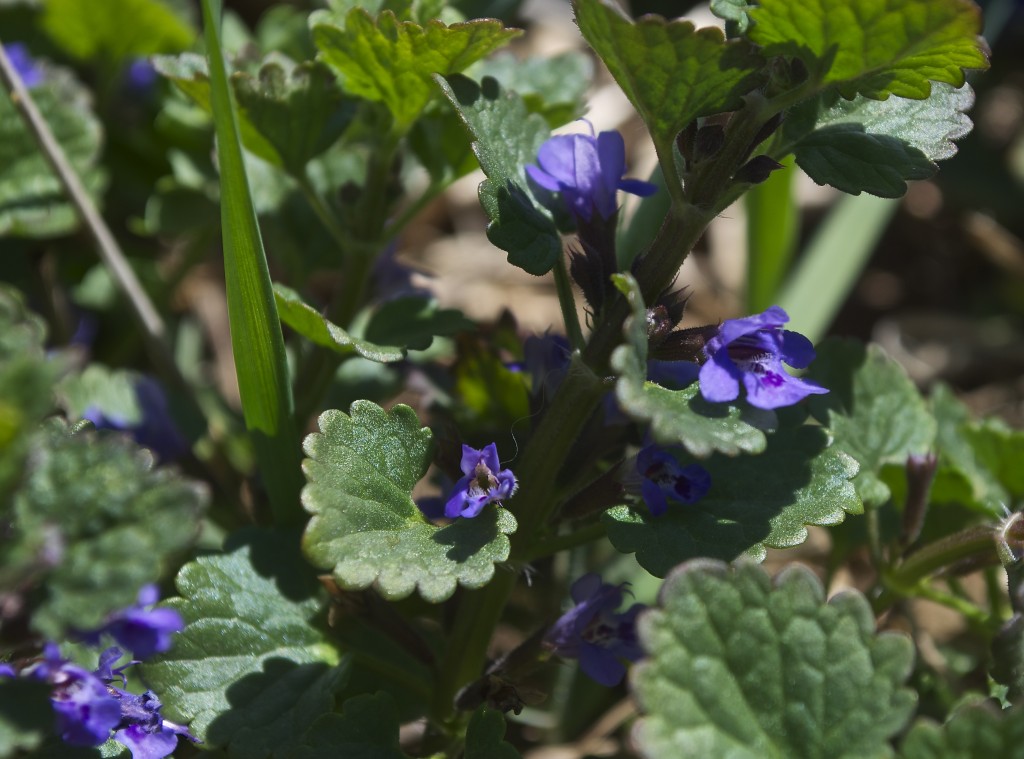
Creeping CharlieDark blue and purple orchid-like flowers. This plant is introduced and invasive. It belongs to the Mint family. (Photo taken April 30, 2013. I’m way behind on posting photos, so I’m going to add the actual dates I collected the photos, for the AFs who are trying to compare this year with last year—you know who you are!)

Creeping Charlie, Ground Ivy, Gill-over-the-ground, Haymaids (Glechoma hederacea)