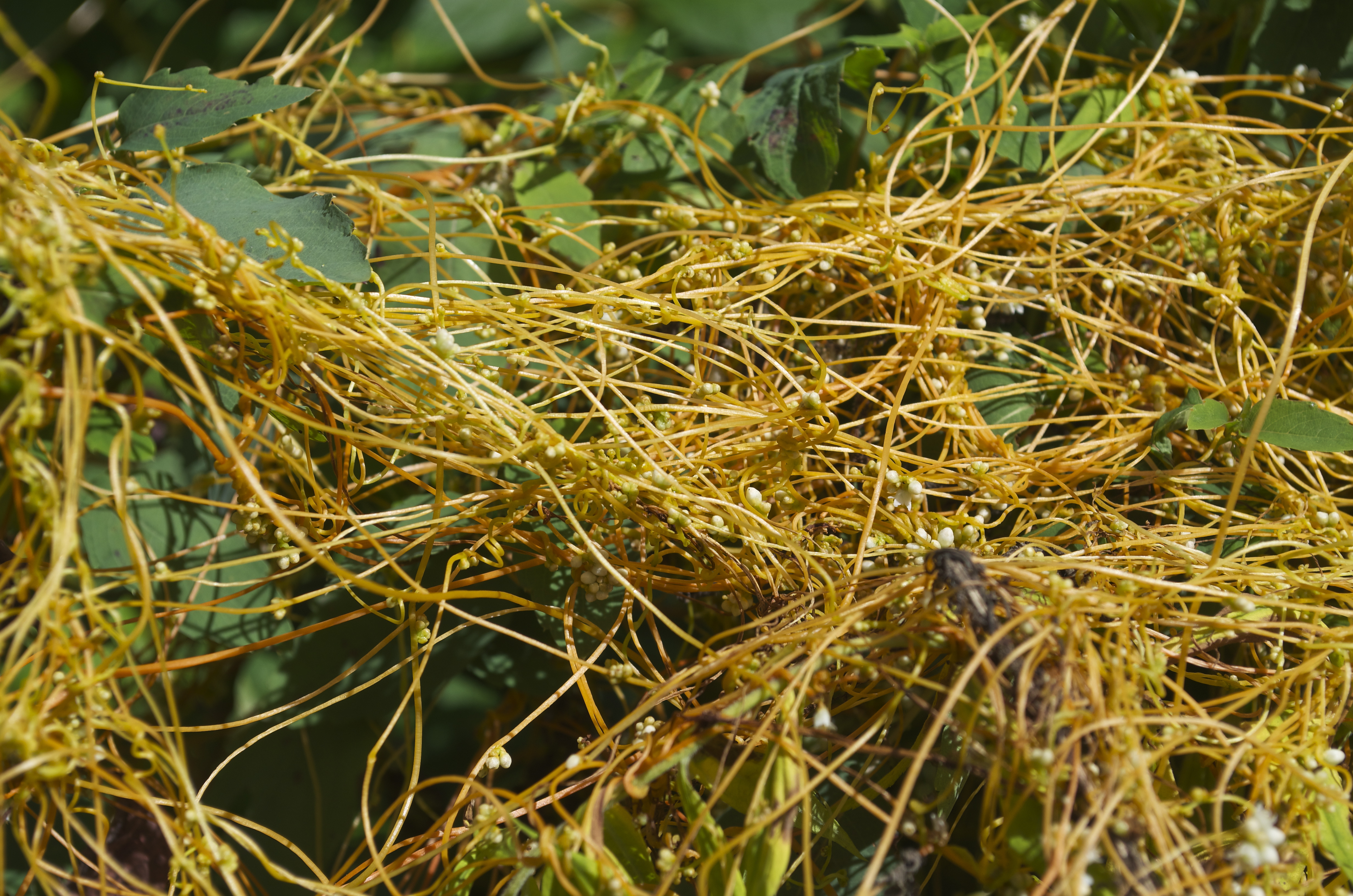
 This is a case of a shockingly fast-moving invasive, Common Dodder. Last year, it was not in this location, and this year, suddenly it’s draping and strangling a fairly large area — very striking. It looks like a great load of angelhair pasta ladled out on the landscape. But if you look closely, it’s twined tightly around the stems of the host plants.
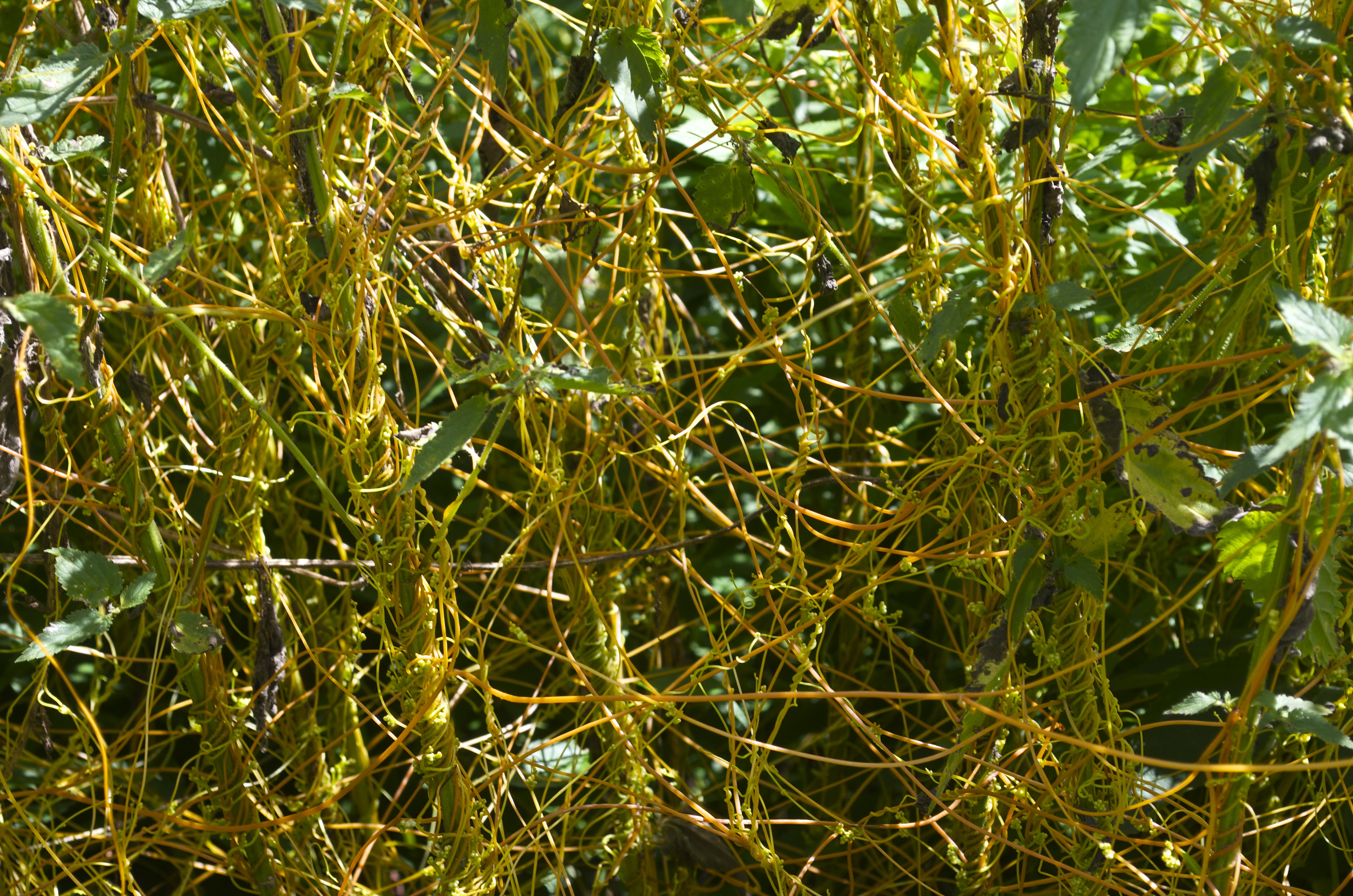 The first thing we noticed about it is that it has no leaves, and at first, no flowers — just a thin yellow vine. They’re annuals that grow from seeds every year. The seed germinates in the spring and must find a host. The seedlings find a host by slowly waving their stems in a clockwise direction until they feel a plant to grab! They twine on and have specialized “roots” that digest their way through the host’s stem and establish a vascular system between the two plants so that the dodder can suck its nutrition right out of the host (since dodder has basically no chlorophyll and no roots that go into the ground for feeding itself). When the connection with the host is established, the lower part of the dodder dies and there is no connection with the ground at all. And it grows and grabs other nearby plants, usually not killing them but weakening them.
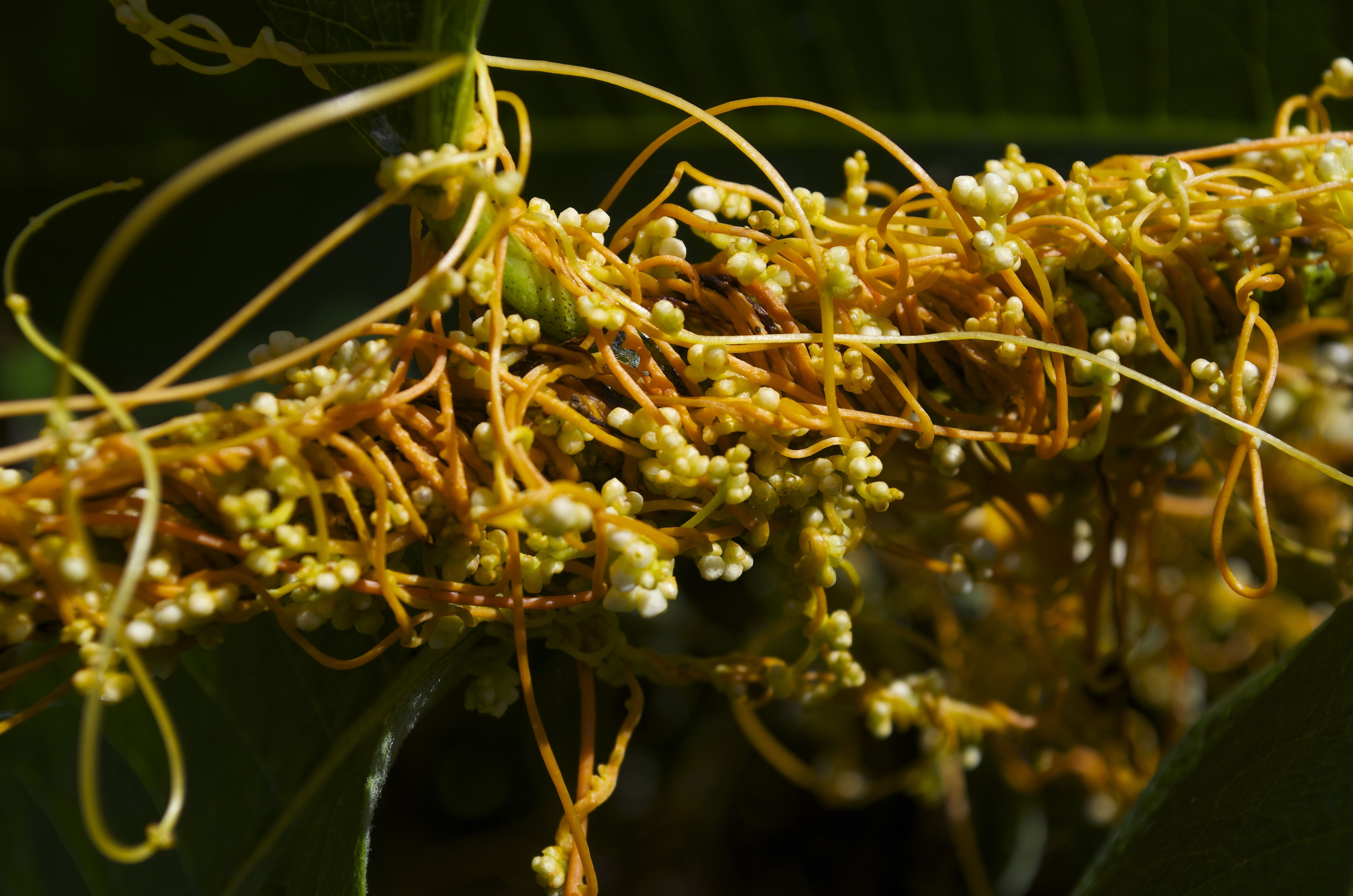
In summer, they put on tiny white flowers and then fruits containing seeds which can lay dormant for up to 5 years, waiting for the right time to pop! The seeds in the ground appear to wait if a good host (they have preferences) is not nearby. (What!?) It’s on the USDA’s list of 10 most problematic weeds.
Alert Flowerophile Donna has contacted the trails commission to let them know (and I did too). We hope they come collect it out of there because it has made such inroads in only one year, I would hate to see the long-term effect on this field full of so many wildflower varieties. Destroy!
Dodder, Hellbind, Goldthread, Stranglevine, Angel’s Hair, Witch’s Shoelaces (Cuscuta gronovii)
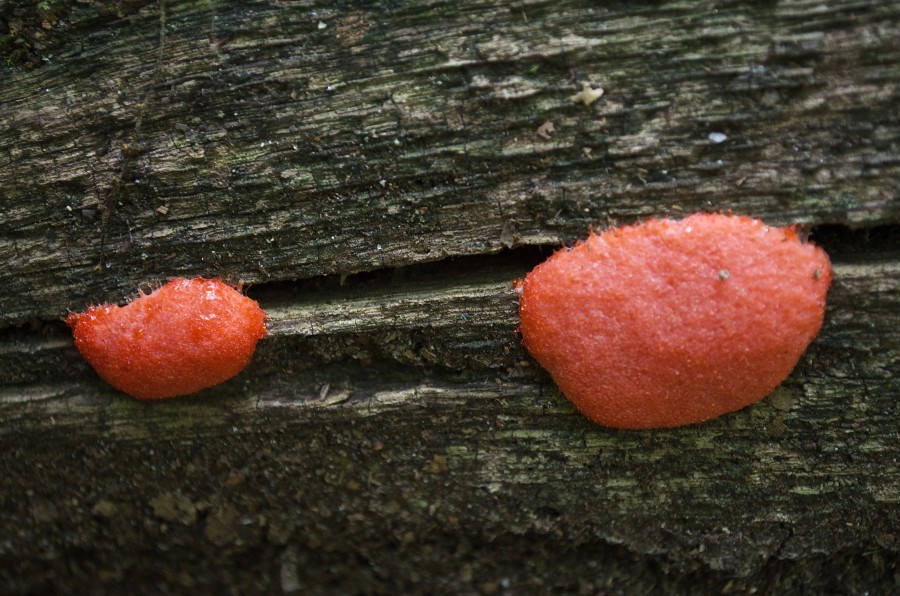 I saw this and wondered if somebody stuck their gum on there. But no, it’s slime mold! This is the young stage. As it ages, it becomes purplish and then brown and repulsive when mature. Inedible. (As if!) Slime molds don’t penetrate into the wood to draw nutrition. They are more like amoebas which move around on the surface of the wood engulfing bits of organic matter.